Soft Spots
Spongy Panels Underfoot
Panels that give slightly when walked usually sit over wet insulation. Those spots are read with a meter and opened if the reading is high. A quick check confirms what the meter shows.

As a Highland metal roof coating contractor, we map wet and dry areas on older shop and retail roofs, repair the wet ones, and coat what is ready.
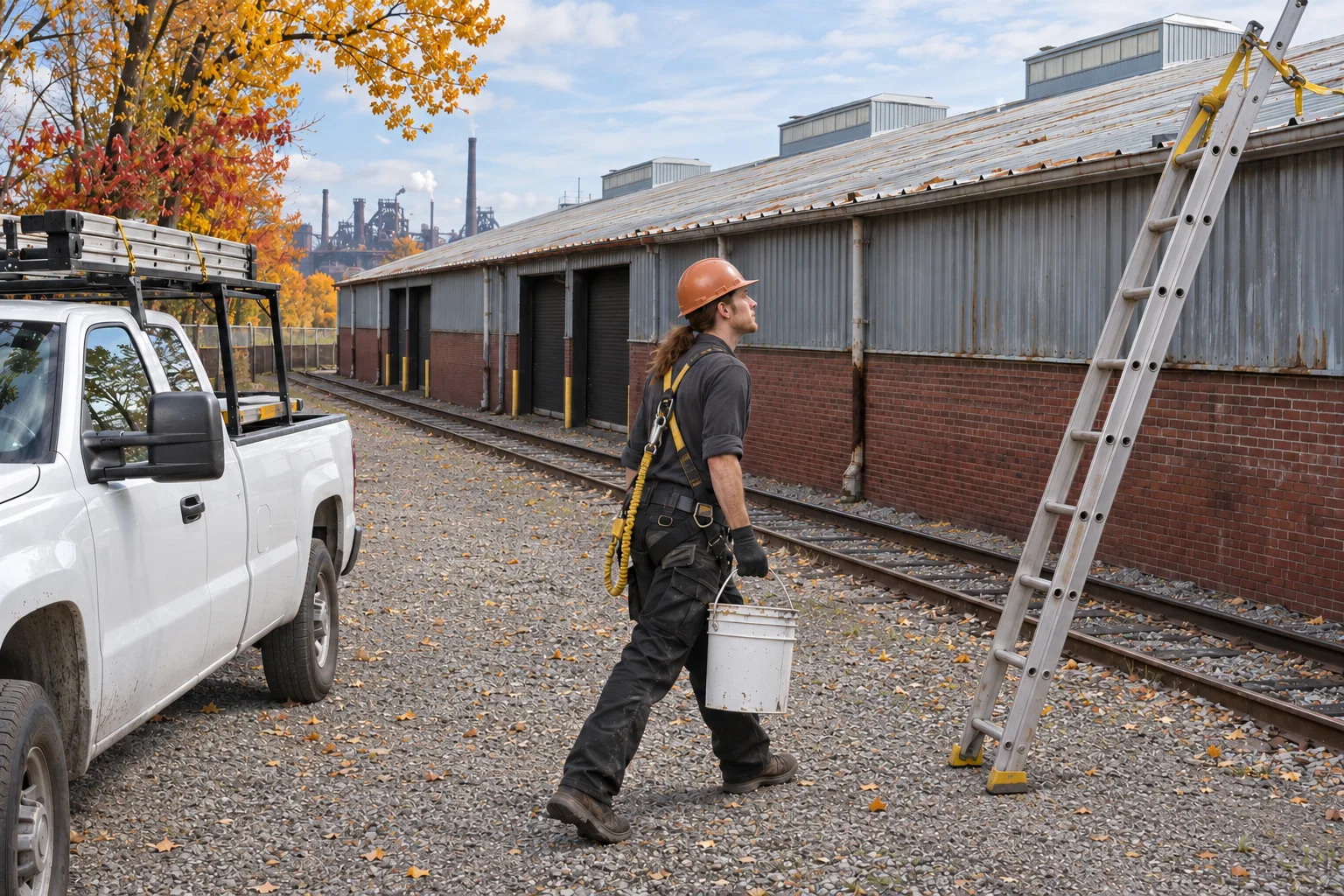
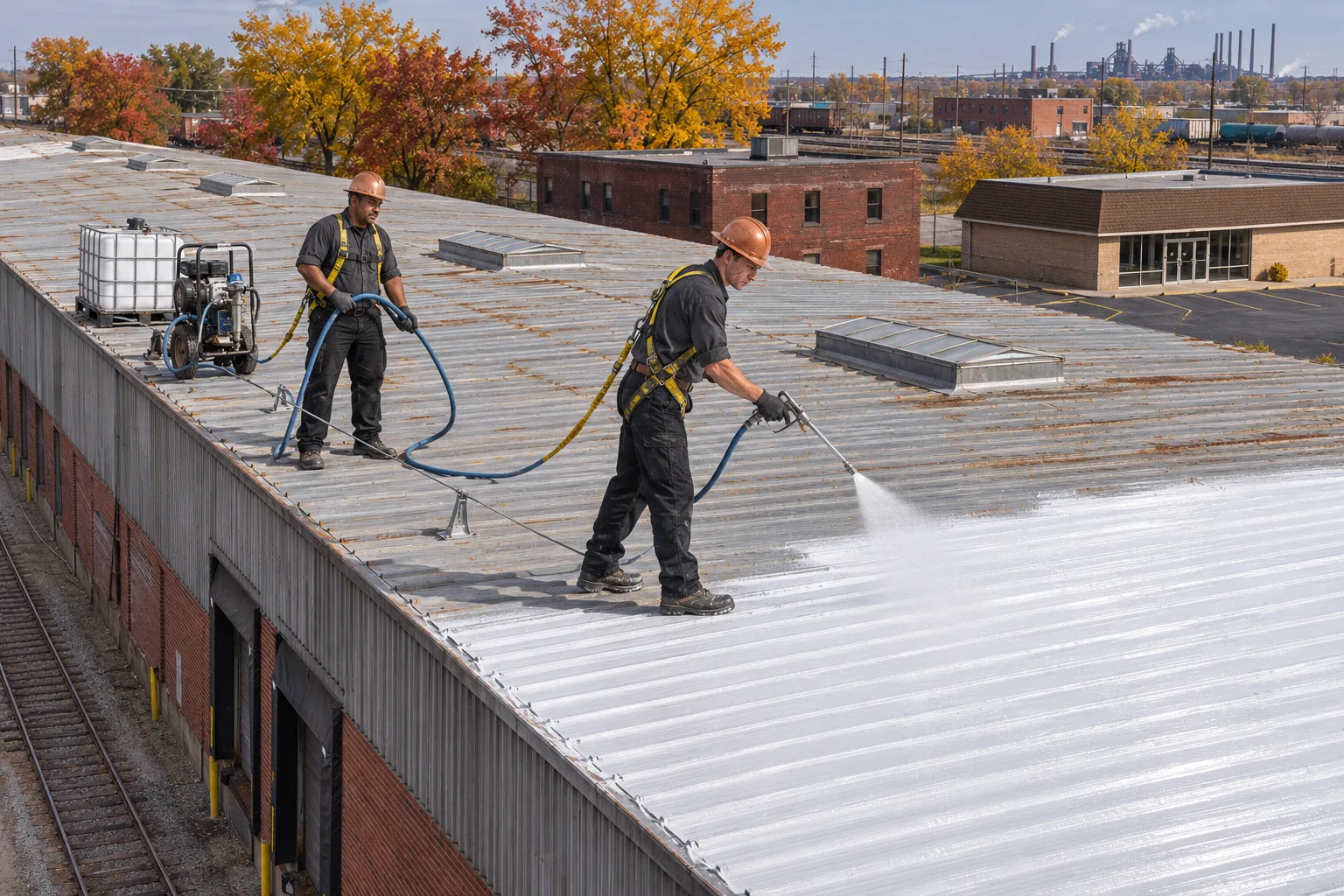
Highland metal roof coating on older roofs depends on one question: is the insulation under the panels dry?
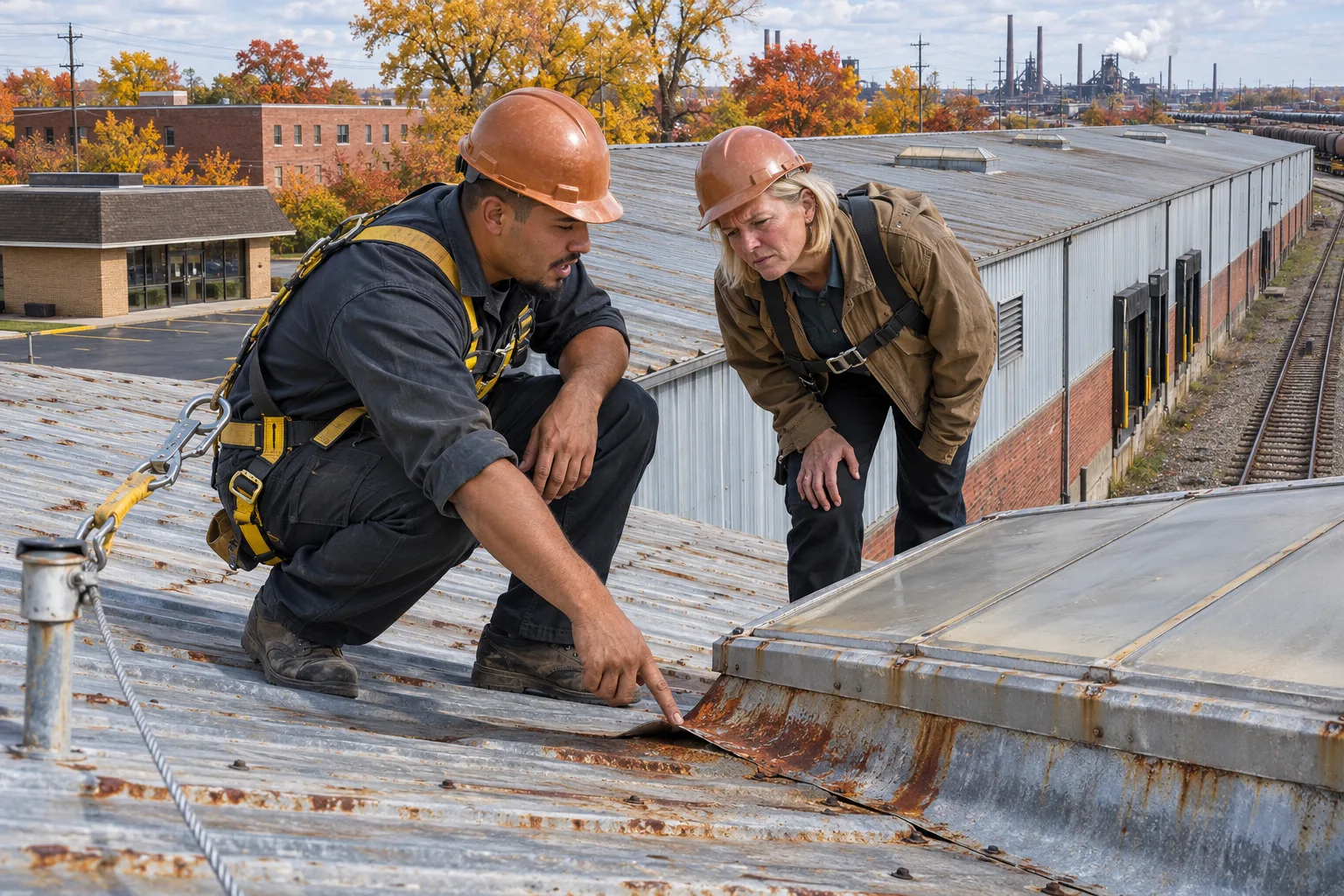
Many Highland roofs have been patched more than once over the years, and some patches hide soaked insulation. Coating over it traps the water against the steel, where it keeps rusting the panels from below.
We take moisture readings in a grid across the roof and mark each area as ready to coat or in need of repair. Wet sections are opened, dried or replaced, and closed before coating. Areas that read dry are cleaned, sealed, and coated without waiting on the repairs.
These four signs point to moisture or old repairs that need attention first.
Panels that give slightly when walked usually sit over wet insulation. Those spots are read with a meter and opened if the reading is high. A quick check confirms what the meter shows.
Tar, tape, and caulk from past repairs often trap water and block adhesion. They are removed down to the panel before new sealant goes on. The bare panel is primed after cleaning.
Water runs along purlins and drips well away from the hole. Moisture readings on the roof find the source faster than chasing stains inside. The source is marked on the roof sketch.
Older buildings often have long panel runs whose end laps have opened. Each one is cleaned, sealed, and reinforced. Fabric bridges each lap before coating.
Finding wet areas first protects the coating and the building under it.
Once the wet areas are fixed, the dry roof takes one of these systems.
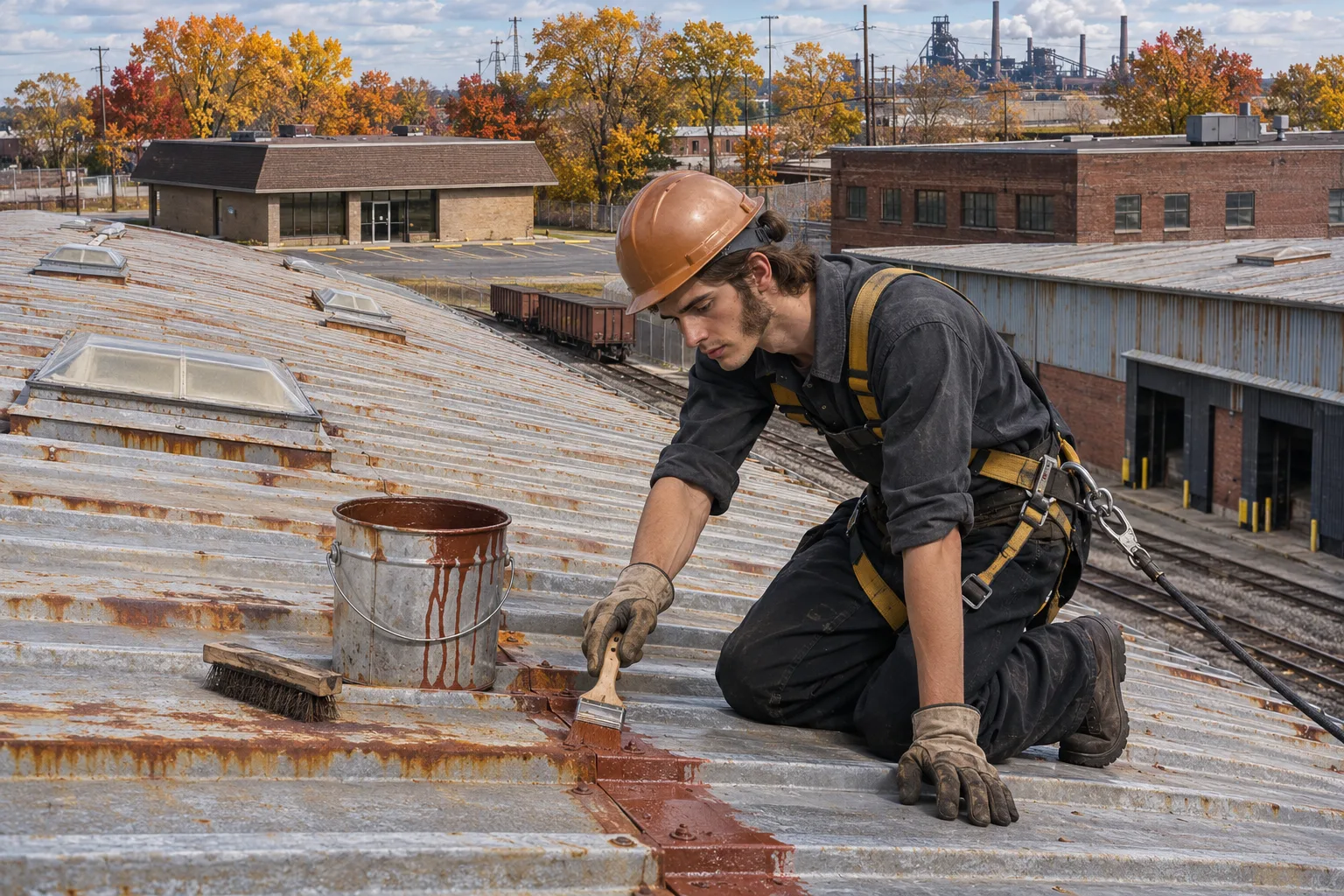
Firm, dry steel gets screws and laps sealed and a full coat. Screws are replaced where panels were opened.
Hammond commercial metal roof coating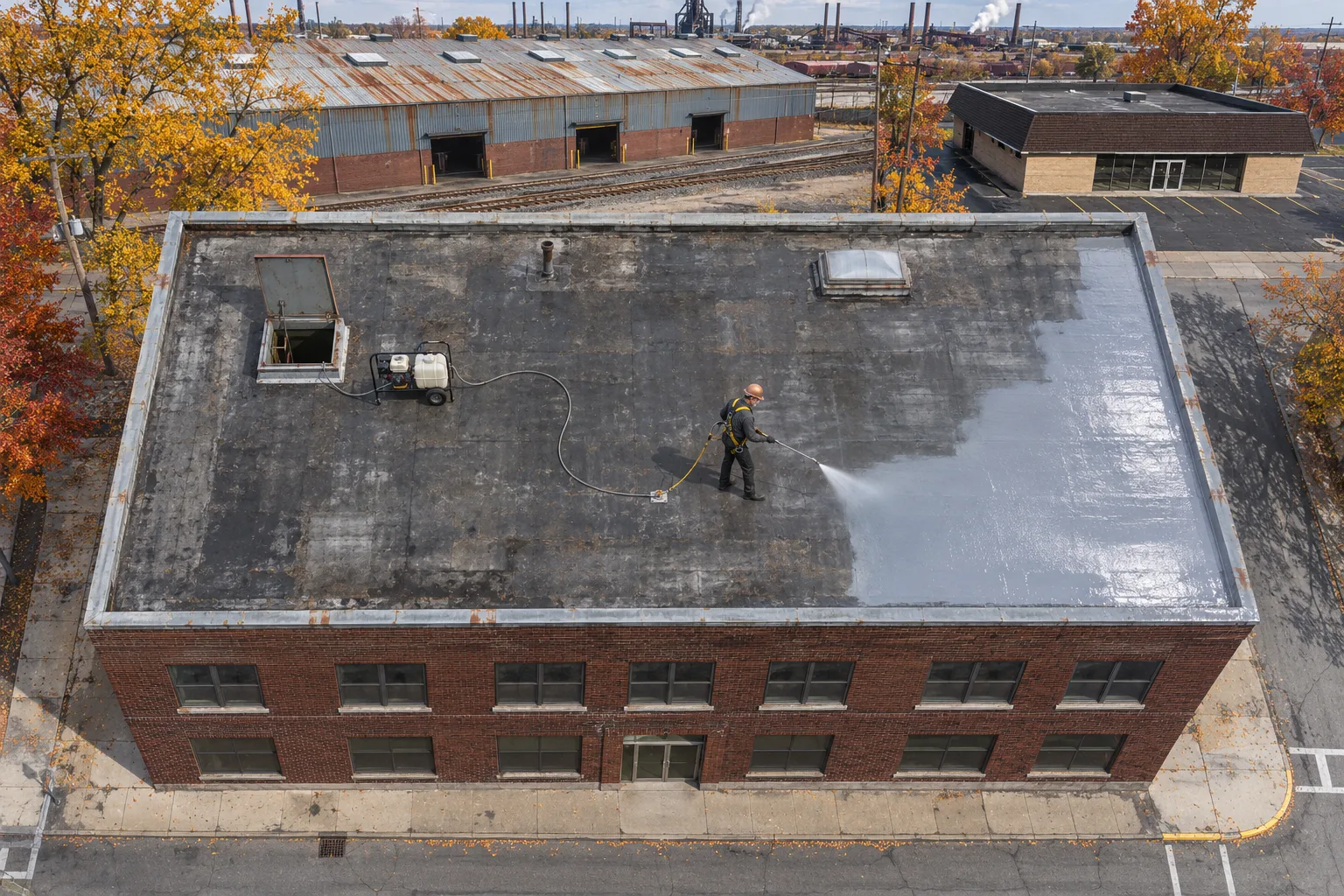
Low sections near the drains get silicone over the primed surface. Low areas are rechecked after repairs.
Hammond silicone roof coating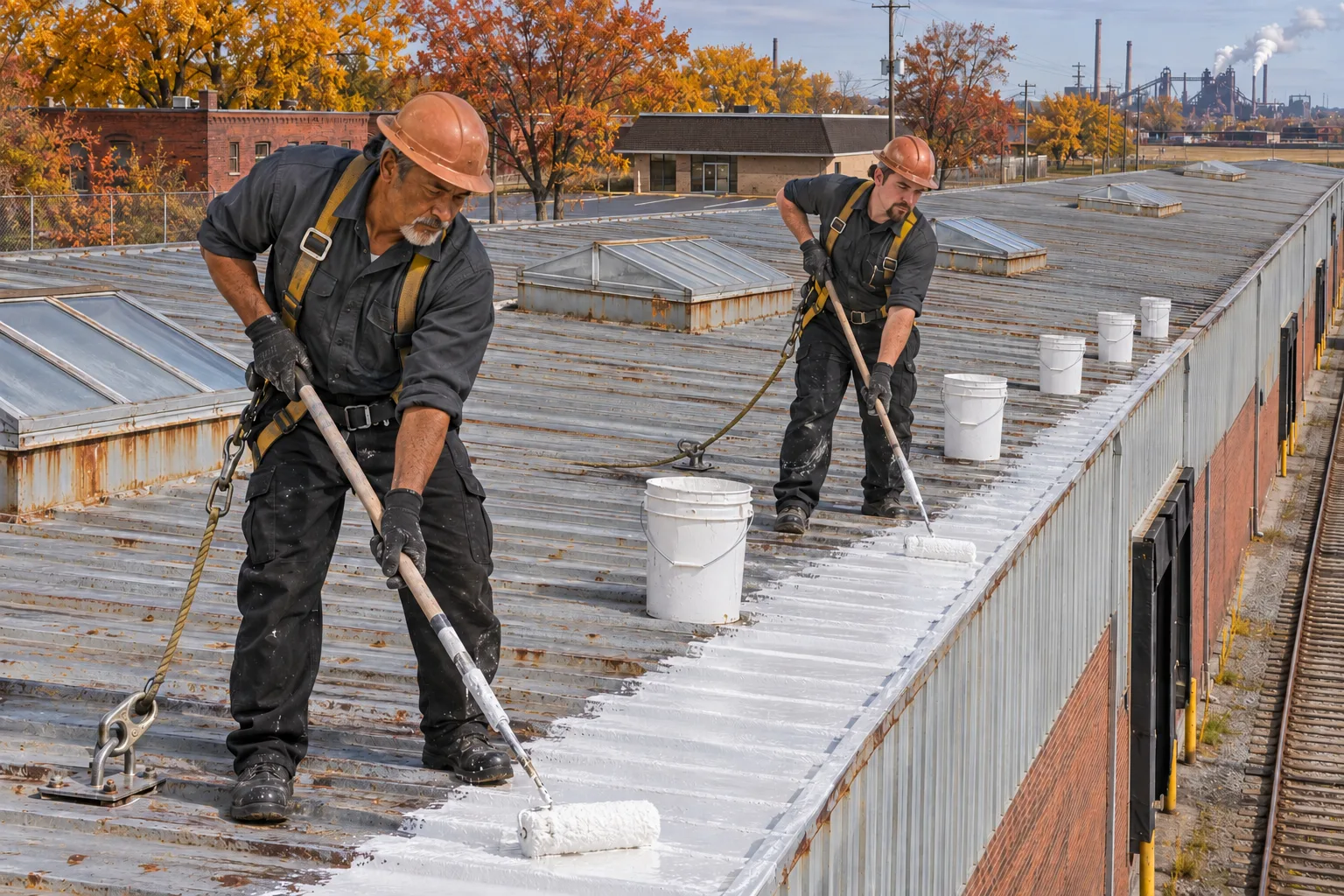
Pitched panels that drain quickly can take acrylic on warm days. Acrylic needs dry, warm weeks to cure.
Hammond acrylic roof coating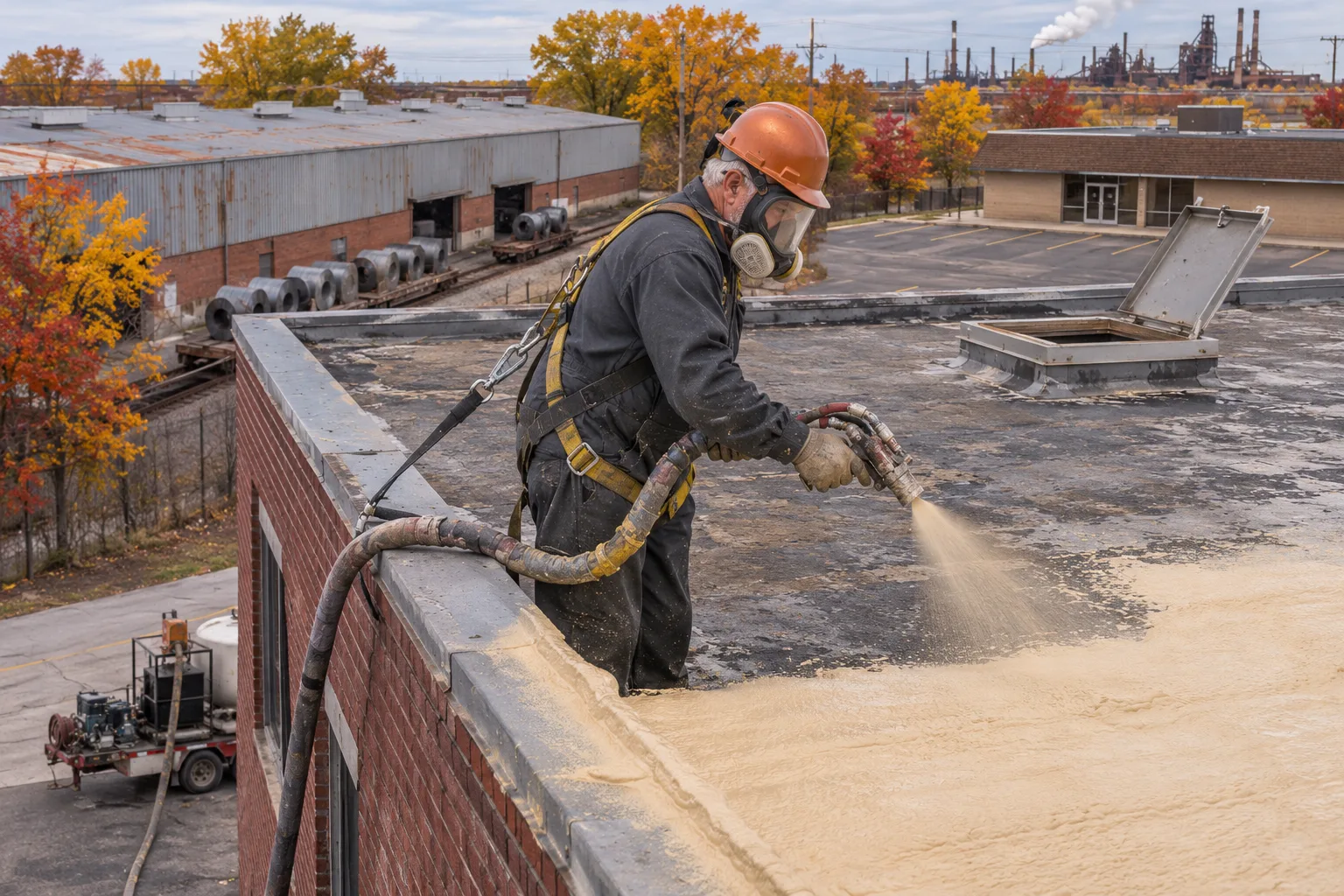
Where wet insulation was replaced, foam can add insulation and level the patched spots before its topcoat. The foam is then covered with a protective coat.
Hammond spray foam roofingBoth point to wet insulation above. Call and we will take moisture readings before anything is coated.
Moisture work comes first, then the usual prep and coating.
We walk the roof, note every old patch and soft spot, and look inside for stains and sagging tiles below the panels.
Readings are taken in a grid across the field and marked on a roof sketch as dry, damp, or wet.
Wet sections are opened, the insulation is dried or replaced, and the panels are closed with new fasteners.
The dry roof is washed, rust is primed, old patches are removed, and screws and laps are sealed.
Coating goes on to thickness across the field, with extra passes on repaired areas and laps.
We also coat commercial roofs in Gary, East Chicago, Munster, and Dyer.
Outside these towns? Call us or send us a message.
Answers for owners of older shop and retail roofs in Highland.
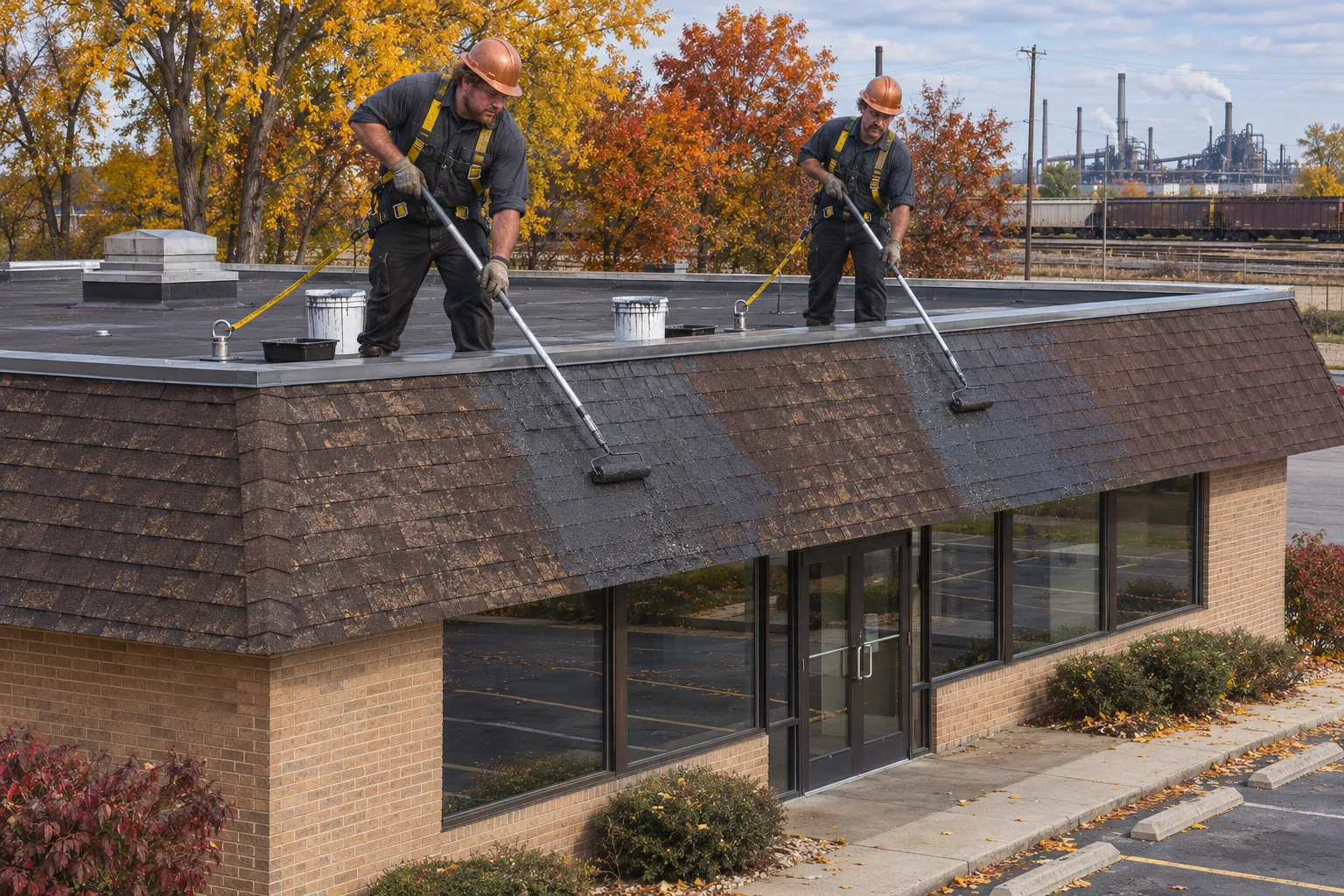
With an inspection and a moisture check. Wet insulation and heavy rust are repaired first, then the roof is cleaned, sealed at screws and seams, and coated.
Coating plans around $2.50 to $4.00 per square foot and replacement $5 to $8. Wet areas add repair cost, so the moisture survey is what turns that range into a firm price for your roof.
Every roof we inspect in Highland gets moisture readings before a system is chosen. Soaked areas are shown on a roof sketch with the repair price.
Old tar and caulk patches are removed first, since many trap water and few bond well with new coating. The panel underneath is cleaned, primed, and resealed.
Then replacement is usually the better path, and the report says so. Coating works when wet areas are limited enough to repair.
A meter is placed on the panels in a grid, and high readings are confirmed by opening a few spots. The results go on a roof sketch that guides repairs and becomes a baseline for later checks.
Send the address and tell us about any musty smells or stains inside. We will check moisture and price the work.