Cure Time
Acrylic Roof Coating Cure Time
Acrylic dries to the touch in a few hours and keeps curing after that. Rain or heavy dew before it sets can wash it off, so jobs follow the forecast closely.

As a Hammond acrylic roof coating contractor, we roll or spray acrylic over pitched metal roofs that drain quickly, scheduled for warm, dry stretches of the year.
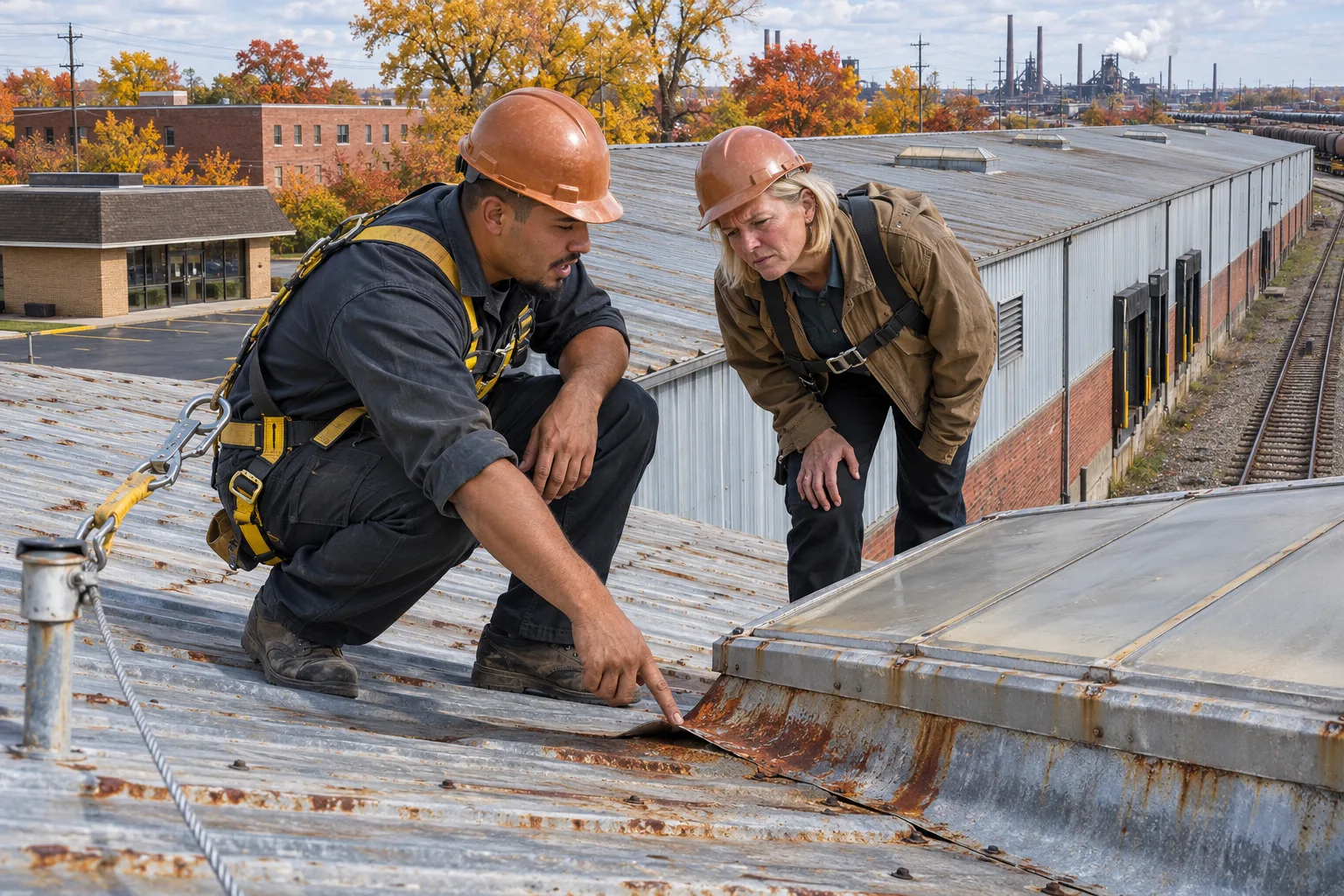
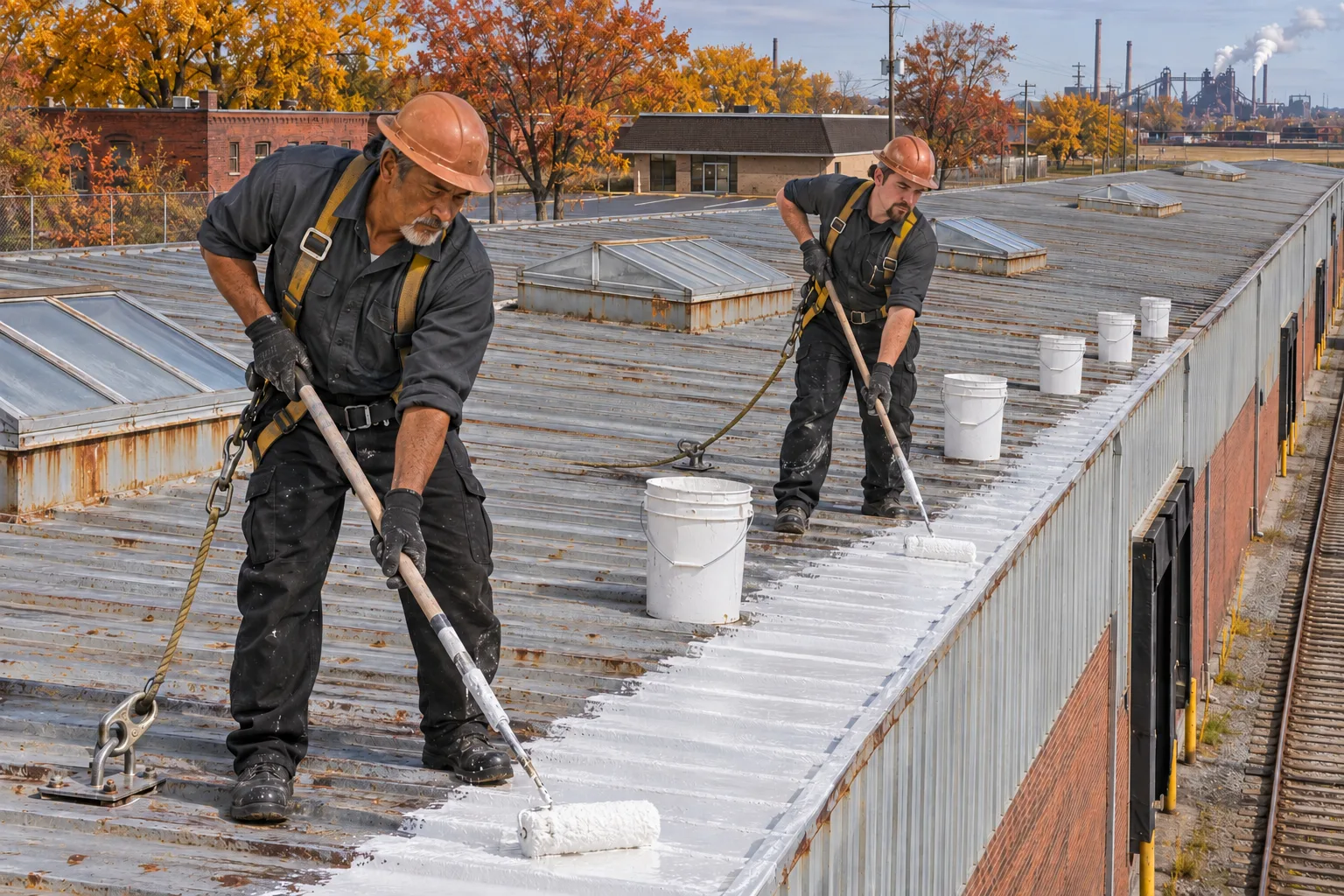
Hammond acrylic roof coating fits roofs that shed water fast and can be coated in warm weather. See where your roof lands.
| What You See On The Roof | Acrylic Fits | Repair, Then Acrylic | Another System |
|---|---|---|---|
| Pitched exposed-fastener panels that drain fast | Usually Fits | Rarely | Rarely |
| Chalky old acrylic coating, still bonded | Usually Fits | Sometimes | Rarely |
| Rust at laps and eaves on firm steel | Sometimes | Usually Fits | Rarely |
| Flat bays that hold water after rain | Rarely | Rarely | Usually Fits |
| A silicone coating already on the roof | Rarely | Rarely | Usually Fits |
| Shingled sections on the same building | Rarely | Rarely | Usually Fits |
Acrylic will not bond to old silicone, so those roofs stay with silicone.
Acrylic is forgiving to apply but picky about weather and water. These four conditions shape every acrylic job.
Acrylic dries to the touch in a few hours and keeps curing after that. Rain or heavy dew before it sets can wash it off, so jobs follow the forecast closely.
Water-based acrylic needs air and panel temperatures well above freezing while it goes on and through the first night. Many products list a minimum around 50°F and rising.
Water that sits for days softens acrylic and wears it away. Flat bays on an otherwise pitched roof get silicone instead, detailed where the two systems meet.
Surface rust along eaves and laps is ground back to firm steel and primed. Acrylic over untreated rust lets corrosion keep spreading underneath the new coat.
If the roof drains fast, acrylic is often the simplest fix once the laps and screws are sealed. Call and we will look at it.
Acrylic goes on in coats, with drying time between them. Weather decides the schedule more than anything else.
We check the pitch and drainage, look for any old silicone that would block adhesion, and mark rust, loose screws, and open laps across the panels.
Chalk, dirt, and pollen come off with a pressure wash, then the roof dries. Acrylic laid over a dusty panel peels in sheets later.
Failed screws are replaced, laps get reinforced sealant, and curb flashing is repaired. Fabric goes into the base coat at the details that move most.
Rust spots are wire-brushed and primed with a rust-inhibiting primer matched to the acrylic system before the base coat.
The base coat goes on, cures, and is followed by a topcoat, each at the listed thickness. Both are timed for dry days with warm nights.
Acrylic fits fast-draining roofs. When a roof drains slowly or needs more than a coat, one of these takes over.
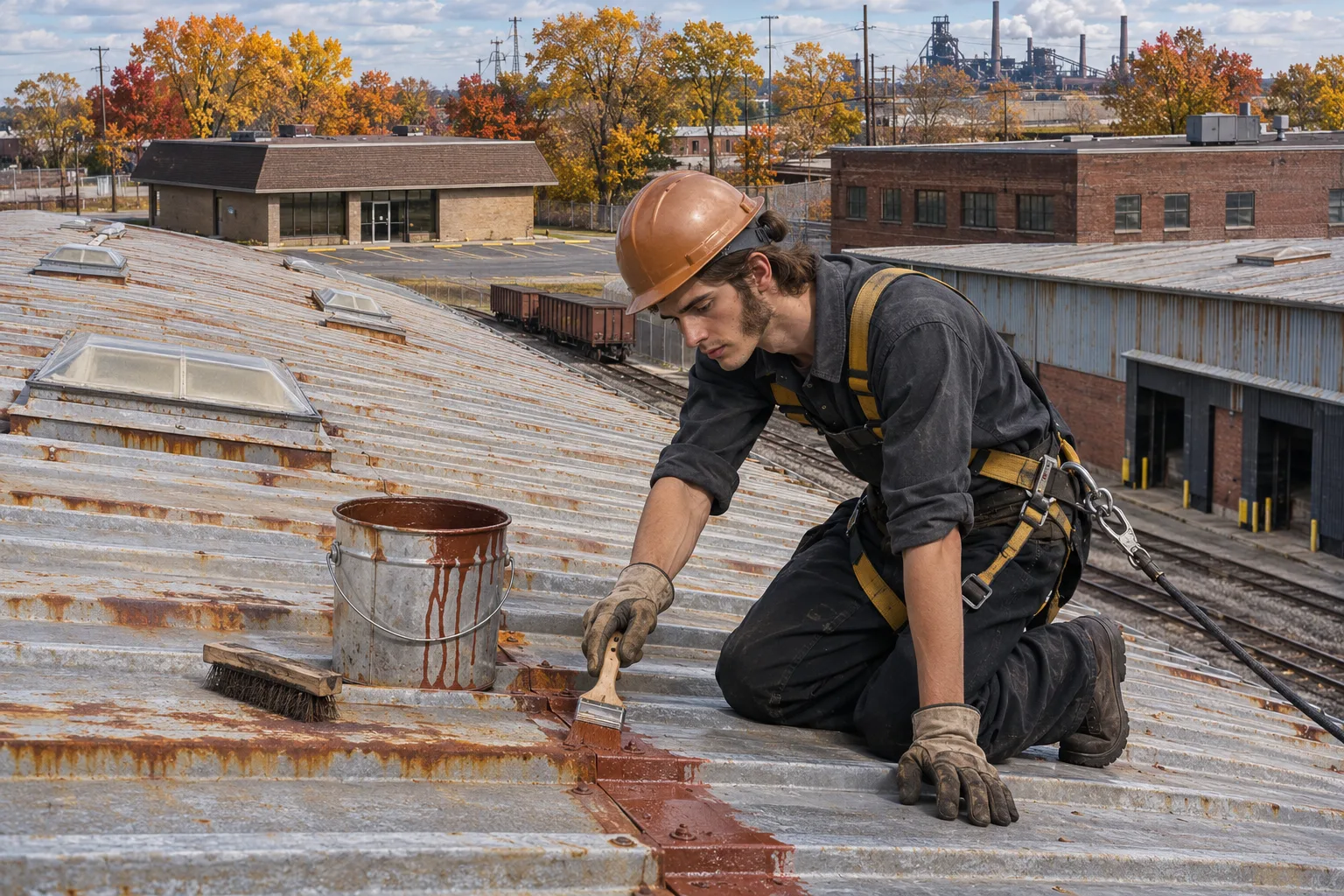
Steel roofs with heavy fastener and lap failure get the full metal coating system, which puts more of the work into sealing before the topcoat. It is the system most Hammond warehouses end up with.
Hammond commercial metal roof coating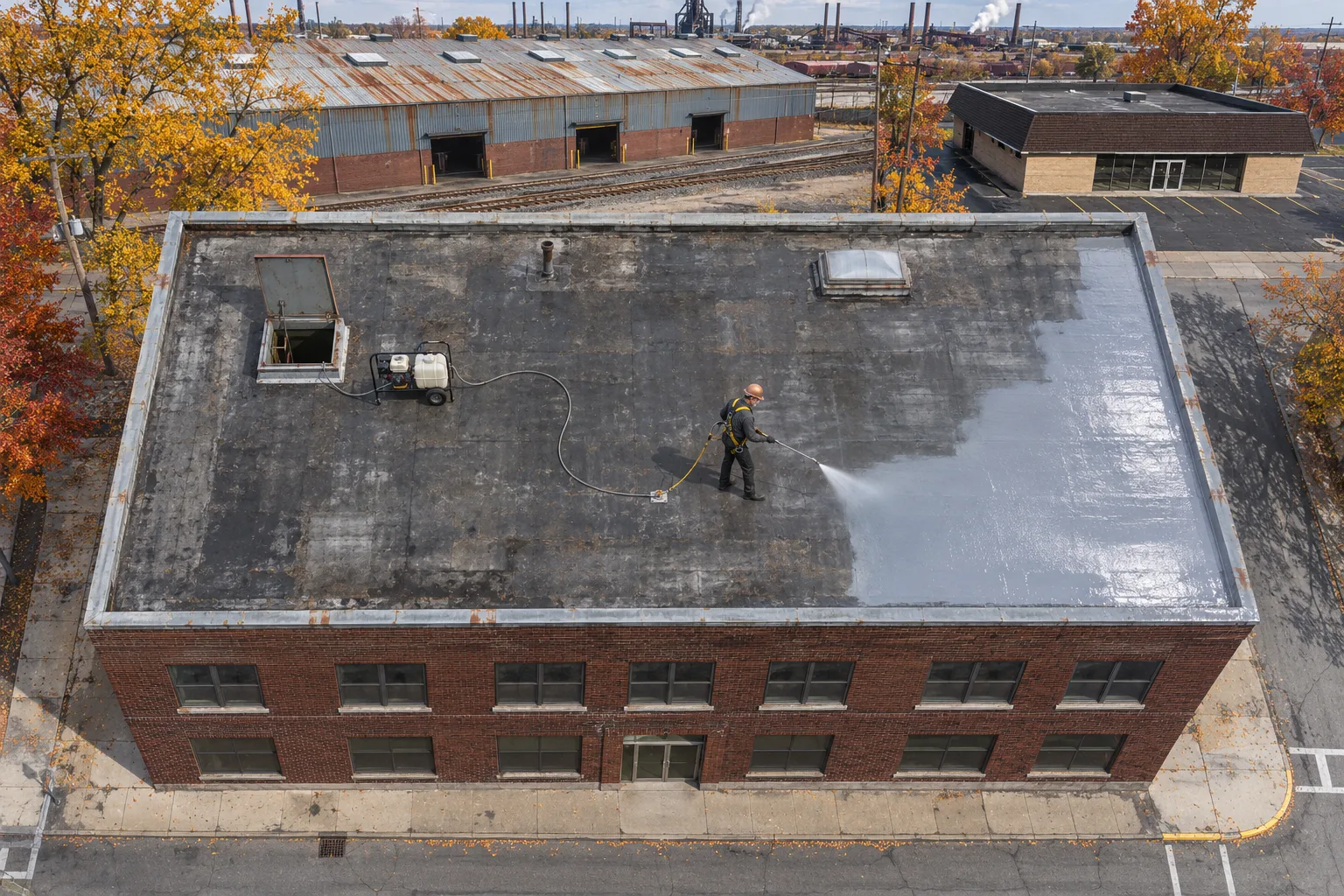
Sections that hold water switch to silicone, which stands up to ponding that would soften acrylic. The two systems meet at a reinforced, sealed joint.
Hammond silicone roof coating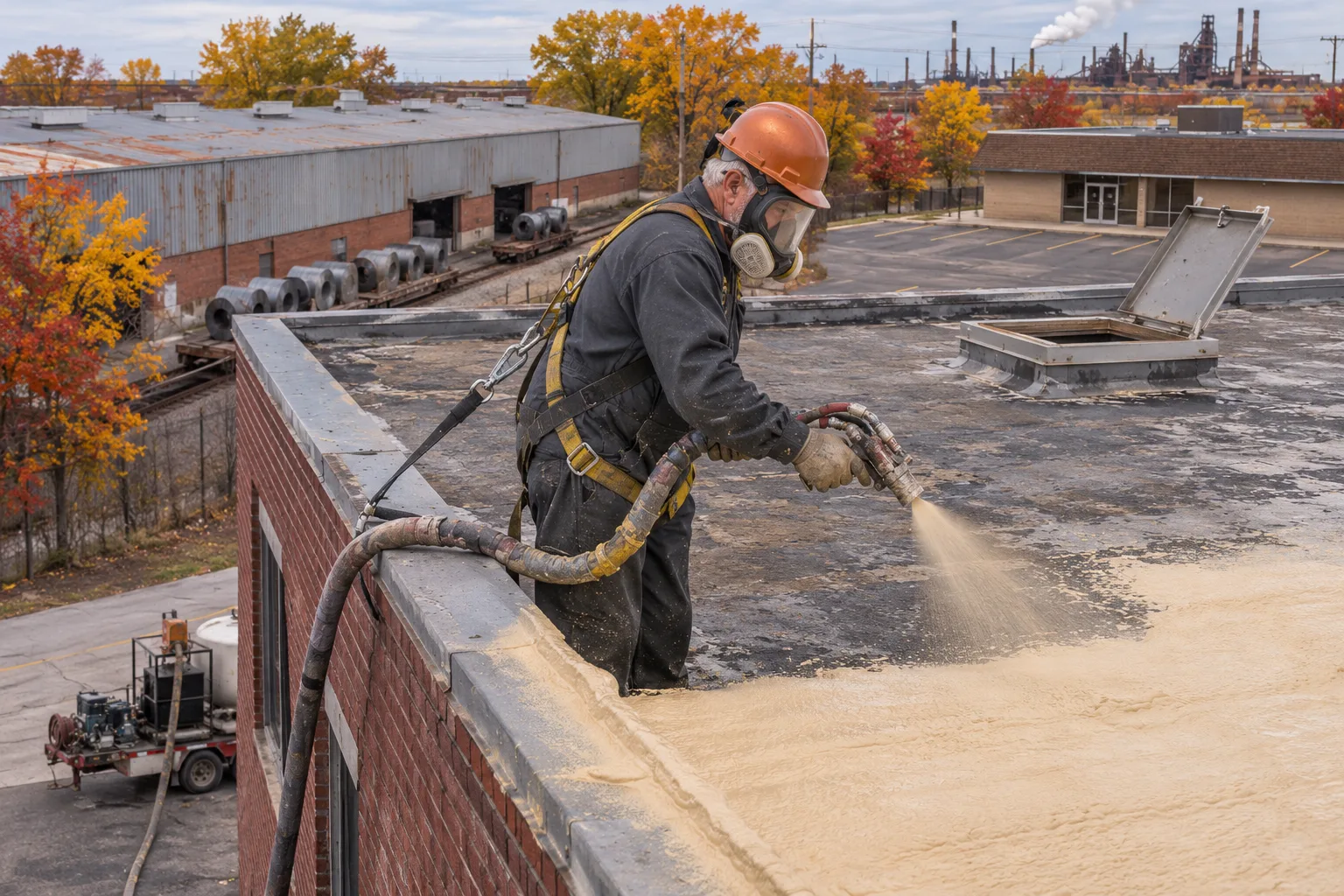
Buildings that lose heat through thin insulation can take spray foam and a protective topcoat instead. The foam then carries its own protective coating.
Hammond spray foam roofing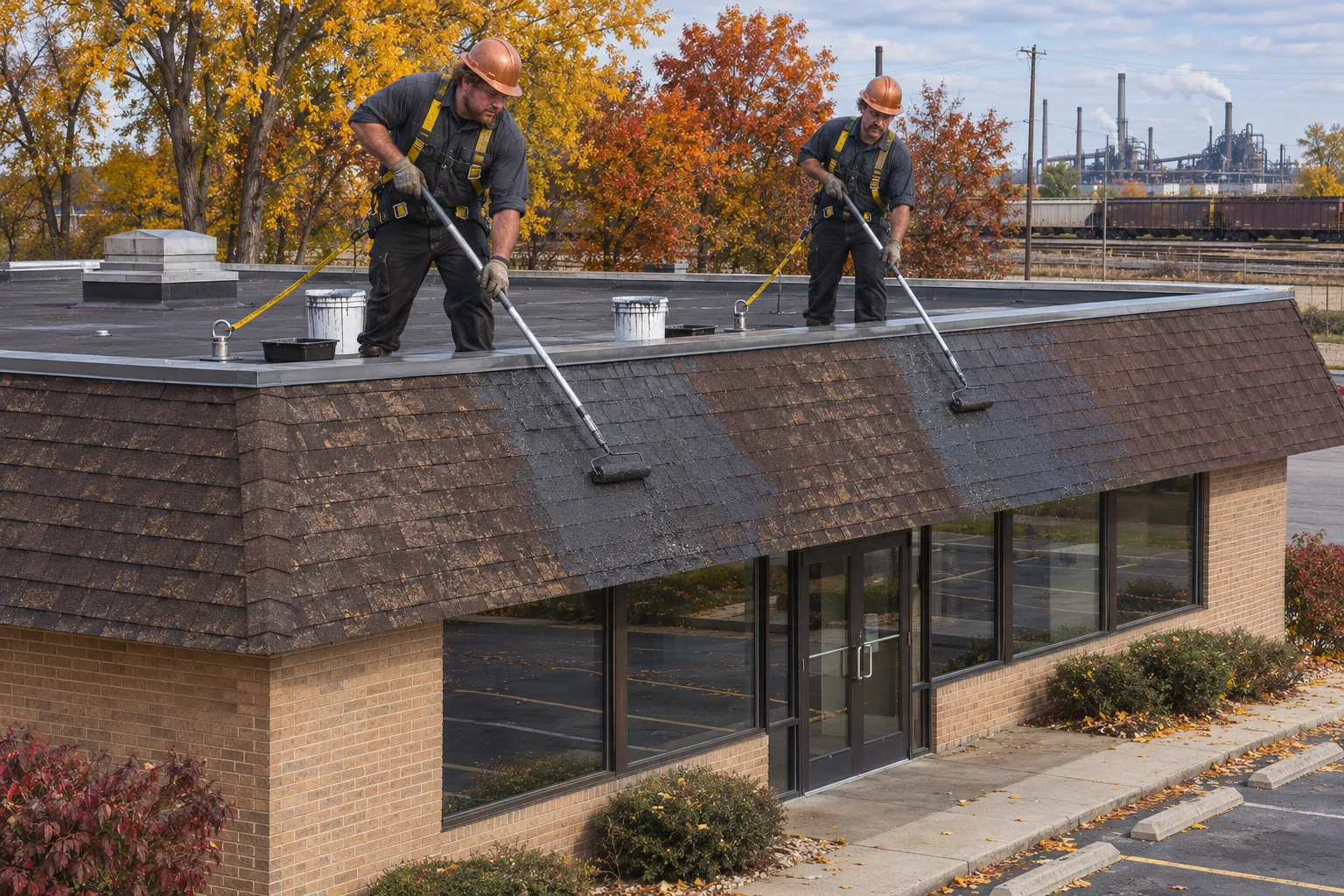
Asphalt shingle sections take a coating made for shingles, separate from the acrylic on the metal. Flashing at the joint with the metal is sealed in the same job.
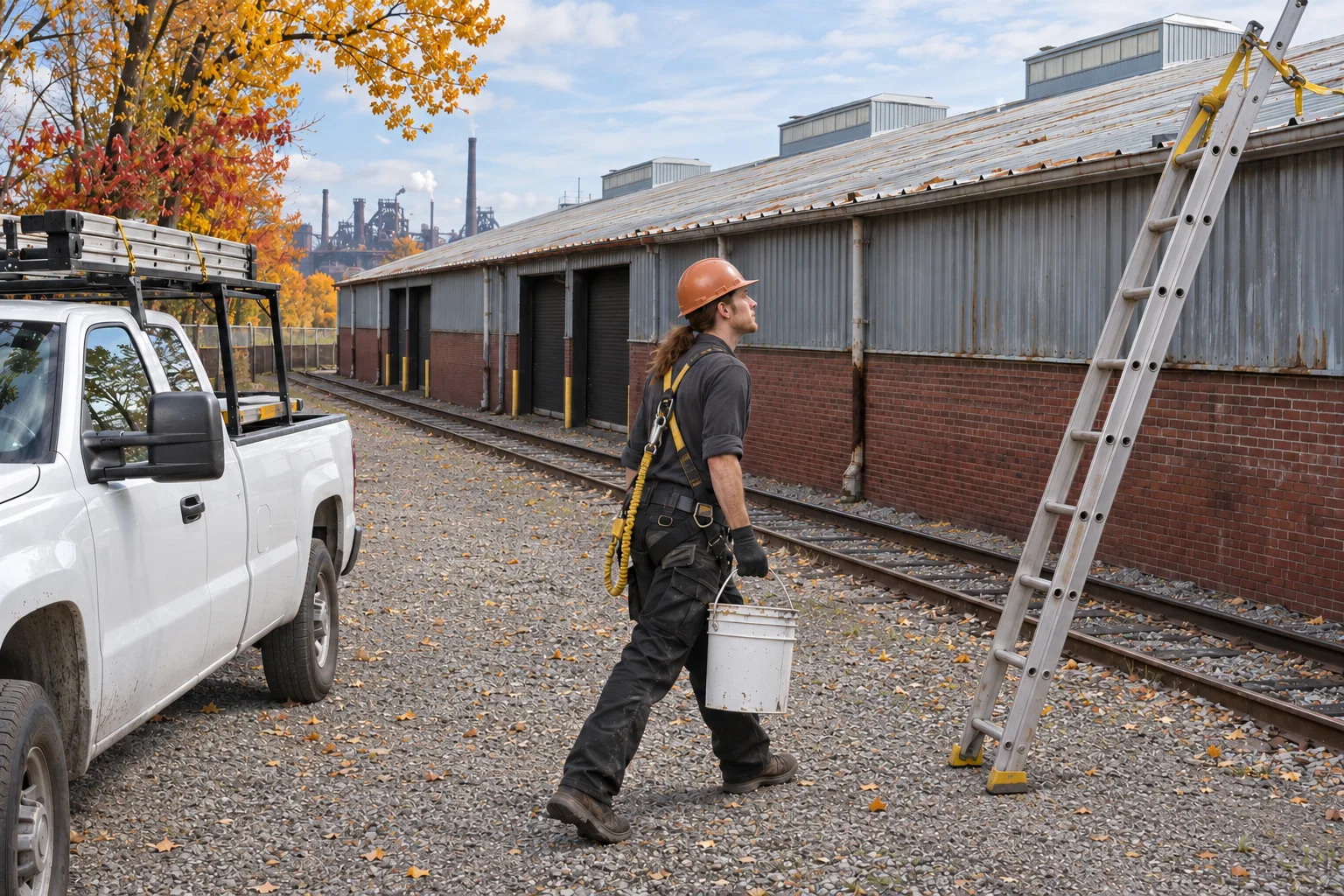
Hammond shingle roof coatingWhat an acrylic coat on a pitched steel roof means for the people who rely on it.
Answers about acrylic on pitched metal roofs in Hammond.
Acrylic sits inside the planning range of about $2.50 to $4.00 per square foot for coating, compared with about $5 to $8 to replace. The number of coats needed, rust treatment, primer, and access move the price after inspection.
Standing water softens it, cold and rain shorten its season, and it takes more coats than silicone to reach the same thickness. On a pitched roof that sheds water quickly, those limits matter much less.
It needs to set first, which takes longer than drying to the touch. Temperature, humidity, and thickness all change that window, so we schedule from the forecast and avoid days with rain or heavy dew on the way.
Large hail can bruise or cut the coating, while small hail mostly leaves marks. After a storm we look for cuts, bare metal, and cracked sealant at screws, then clean, patch, and recoat those spots.
Sun heats steel far above the air temperature, which works the seams and ages any coating. A white acrylic surface keeps the panels cooler; in July we coat in the morning, while panel temperatures stay within the product limits.
Older acrylic that still holds firm can be washed, spot-primed, and recoated with acrylic. Peeling areas are scraped back to a firm edge first, and any bare steel is primed before the new coats go on.
Send the address and tell us the roof pitch if you know it. We will check drainage and rust and price an acrylic system.