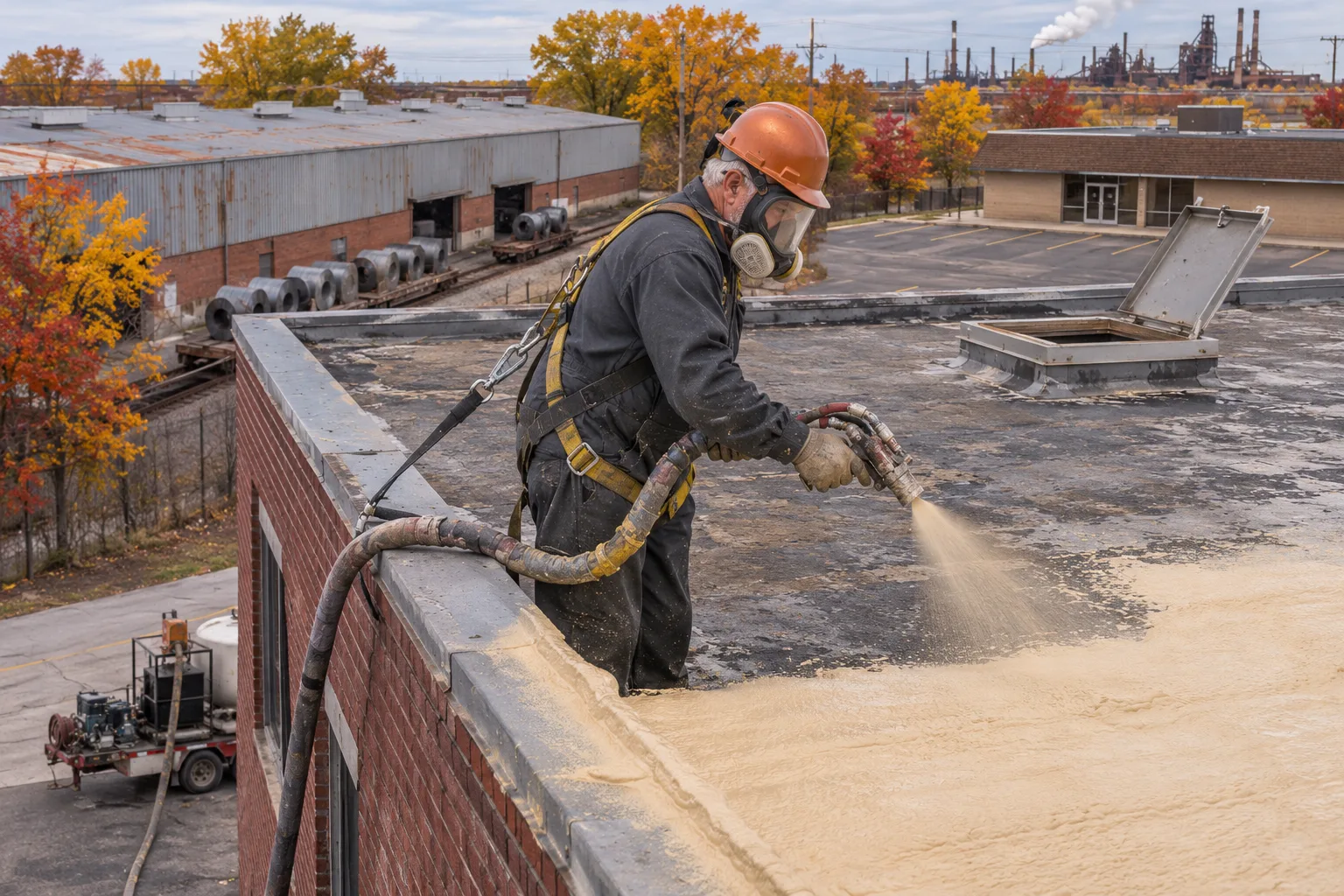
Spray Foam Roof Over Metal Panels
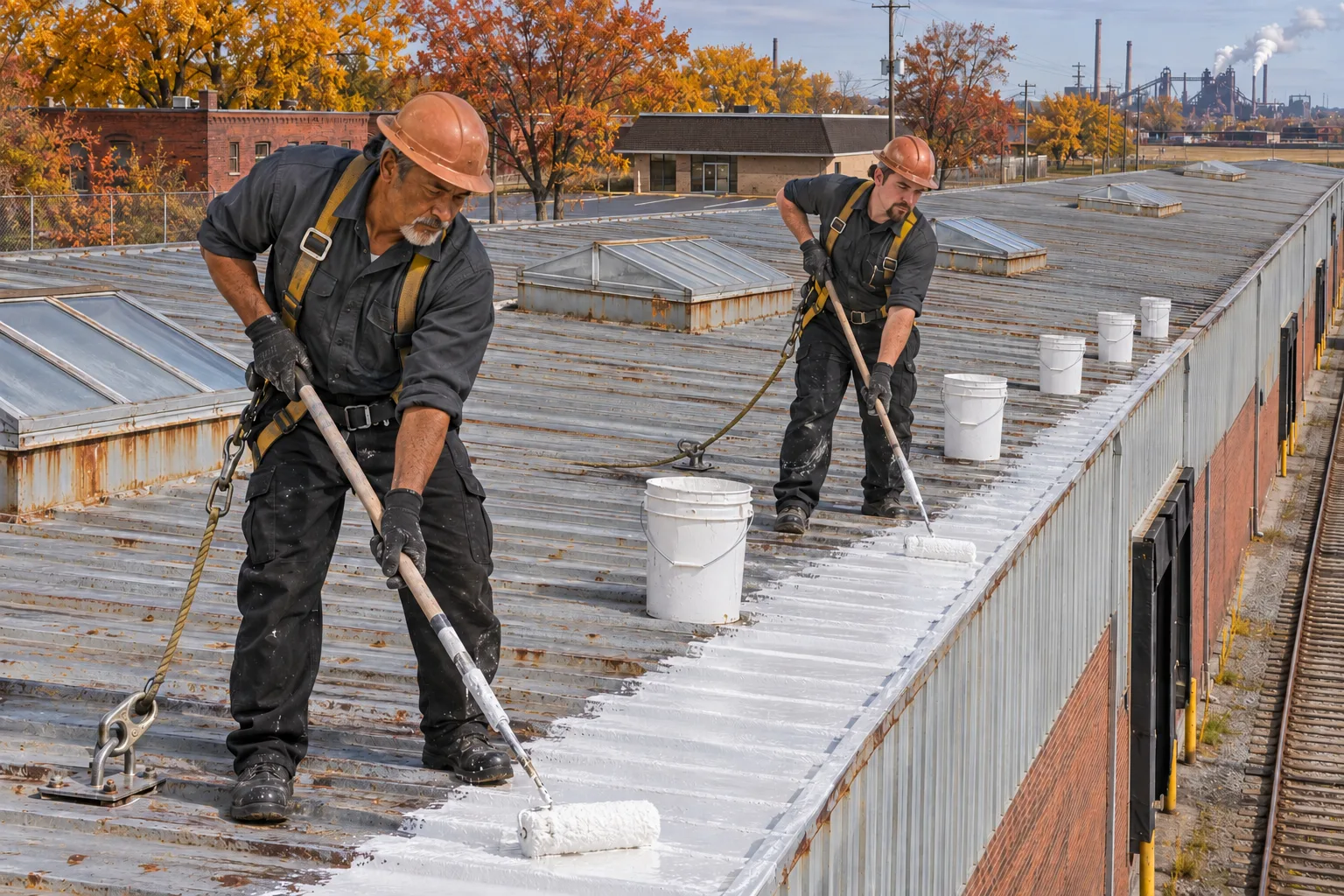
Foam can go directly over cleaned, primed steel. It fills the ribs, covers the screws, and leaves one smooth surface, so rust prep on the panels comes first. Firm, rust-free steel gives the foam its grip.
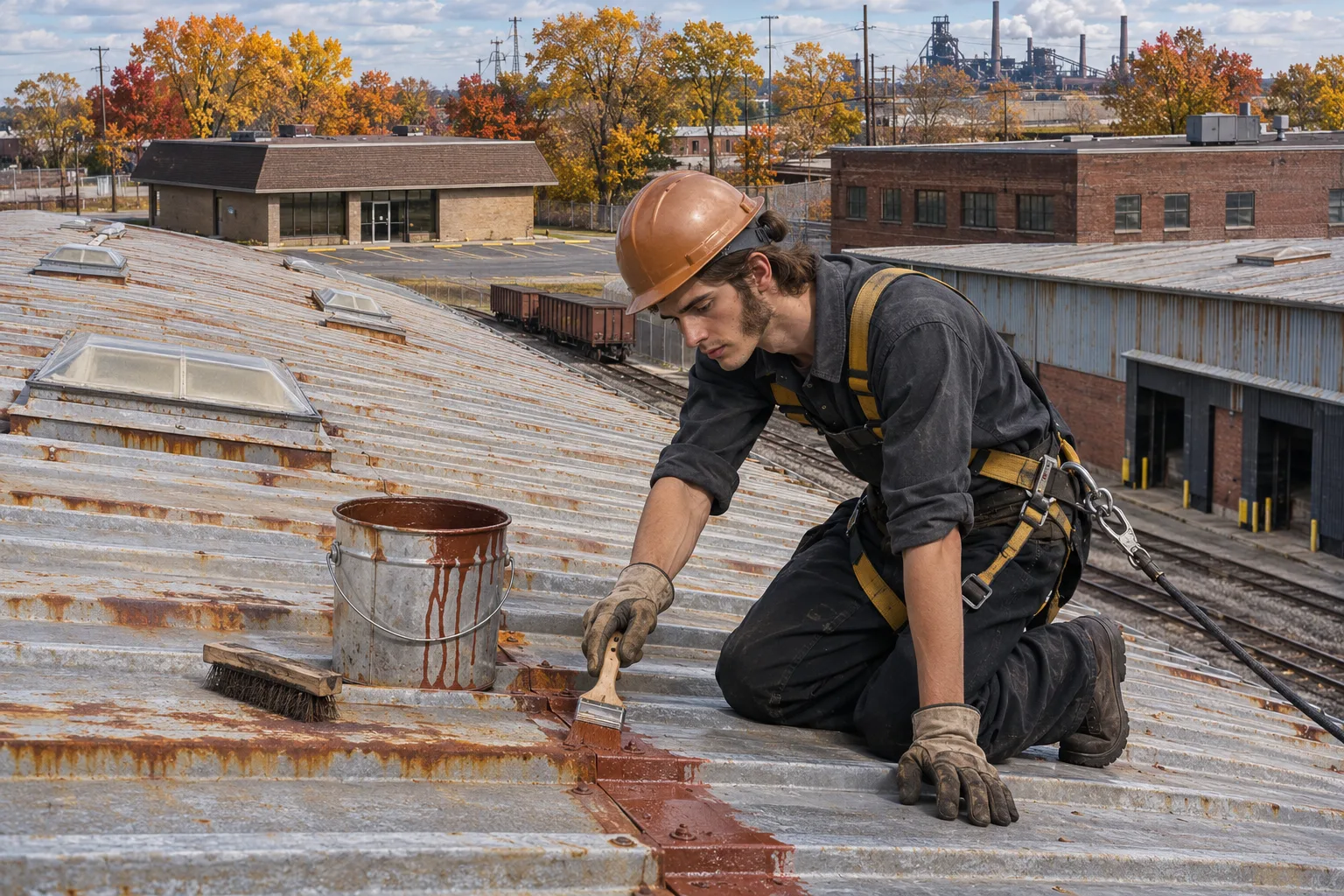
As a Hammond spray foam roofing contractor, we spray foam over primed metal or old flat roofs, then protect it with a coating against sunlight.


Hammond spray foam roofing fits dry roofs that need insulation as well as a seal. Compare your roof with the rows below.
| What You See On The Roof | Foam Fits | Repair, Then Foam | Another System |
|---|---|---|---|
| Ribbed metal roof with leaking screws | Usually Fits | Sometimes | Rarely |
| Flat roof over a building that loses heat | Usually Fits | Rarely | Rarely |
| Low areas that need building up to drain | Usually Fits | Rarely | Rarely |
| Wet insulation under the roof surface | Rarely | Usually Fits | Rarely |
| Roof crowded with air intakes near the work | Sometimes | Sometimes | Sometimes |
| Shingled sloped roof | Rarely | Rarely | Usually Fits |
Foam covers a lot, but these four conditions are settled before the spray rig is set up.
Foam can go directly over cleaned, primed steel. It fills the ribs, covers the screws, and leaves one smooth surface, so rust prep on the panels comes first. Firm, rust-free steel gives the foam its grip.
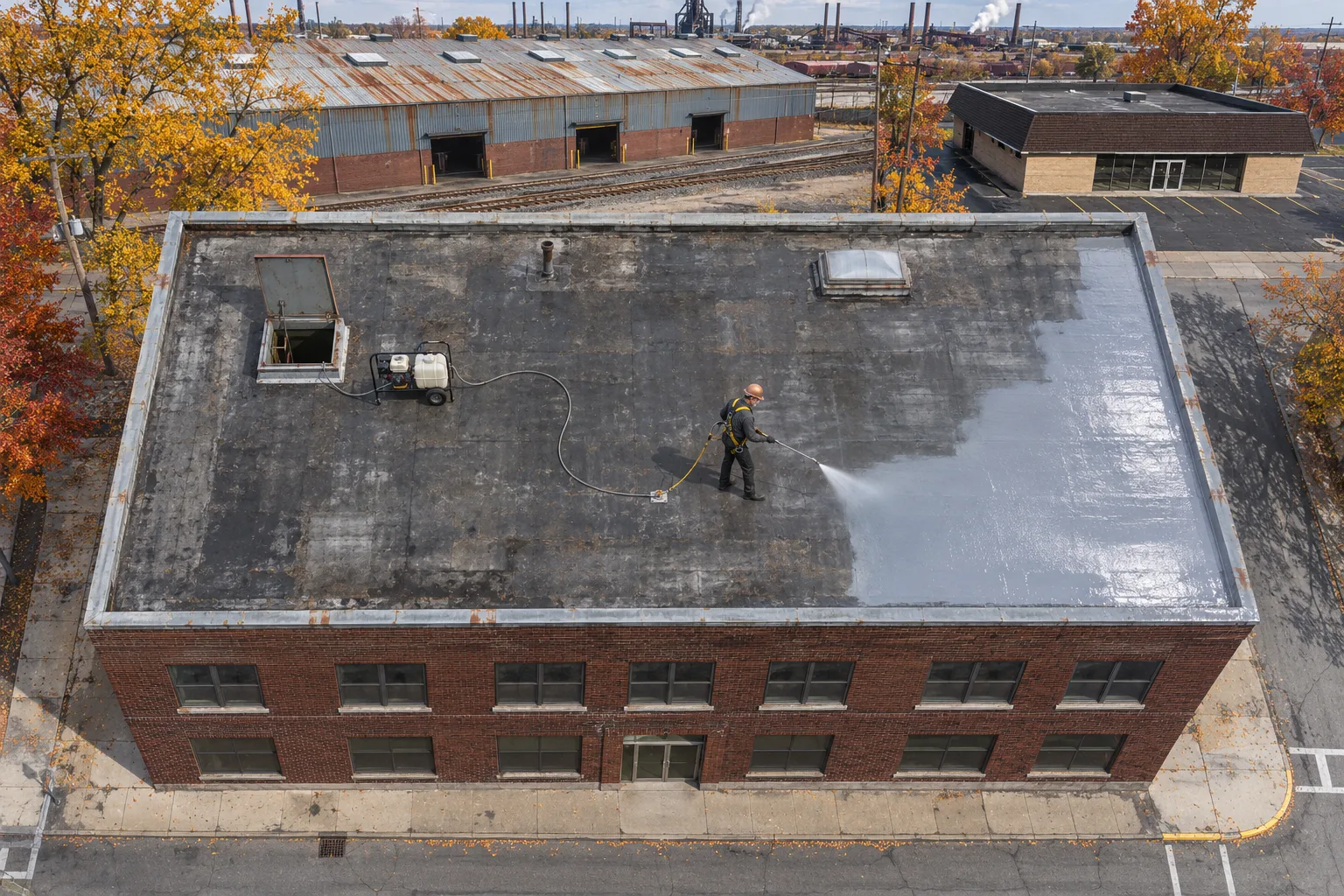
A continuous foam layer above the deck slows heat loss through the roof. Less heat escaping means less snow melting from below and refreezing at the edges and gutters. Gutters over entrances see the biggest change.
Readings find soaked insulation before any spraying starts. Foam over wet material traps the water in, so those areas are dried or replaced first. A dry deck is the starting point for every foam roof.
Rooftop units, intakes, and parked cars near the building need protection from overspray. Units are masked or shut down with the manager, and wind is checked before spraying. Wind over a set limit stops spraying for the day.
Foam addresses both at once on the right roof. Call, and we will check moisture and the panels before recommending it.
Foam is sprayed in layers and then coated. The prep before spraying matters as much as the foam itself.
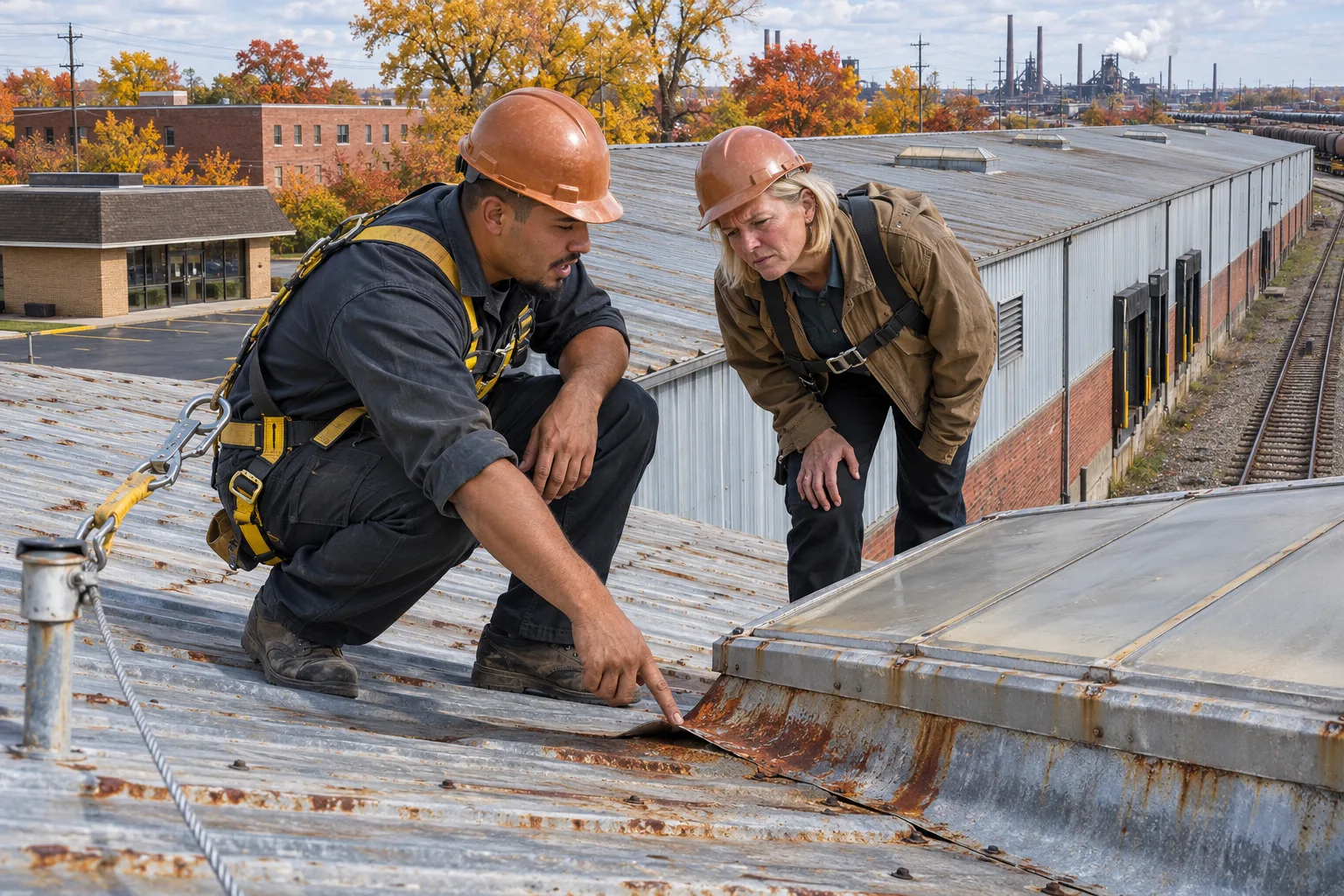
We take moisture readings across the roof, check screws and rust on metal panels, and note every intake, vent, and unit that needs protecting from overspray.
Any soaked insulation or membrane is cut out and replaced, and rusted-through panels are swapped. Foam goes only over dry, firm surfaces.
Panels are washed and primed, edges and intakes are masked, and wind is checked. Units nearby are shut down with the manager while spraying goes on near them.
Foam is sprayed in passes to the planned thickness, built up slightly in low areas so water runs to the drains. Thickness is checked with a probe as it cures.
A silicone or acrylic topcoat goes on soon after spraying, since bare foam breaks down in sunlight. Granules can be added along walkways.
Foam is the heaviest of the five systems. When the roof only needs a seal, one of these lighter options often fits better.

A steel roof with dry insulation and no heat complaints usually needs only its screws and laps sealed and a coating on top. That path is lighter and faster to apply.
Hammond commercial metal roof coatingSilicone is the usual topcoat over foam, and on its own it handles ponding on flat roofs. It goes on soon after spraying, before sunlight reaches the foam.
Hammond silicone roof coating
Acrylic can also protect the foam on roofs that drain well, and it recoats easily in later years. Acrylic needs warm, dry days to cure over foam.
Hammond acrylic roof coating
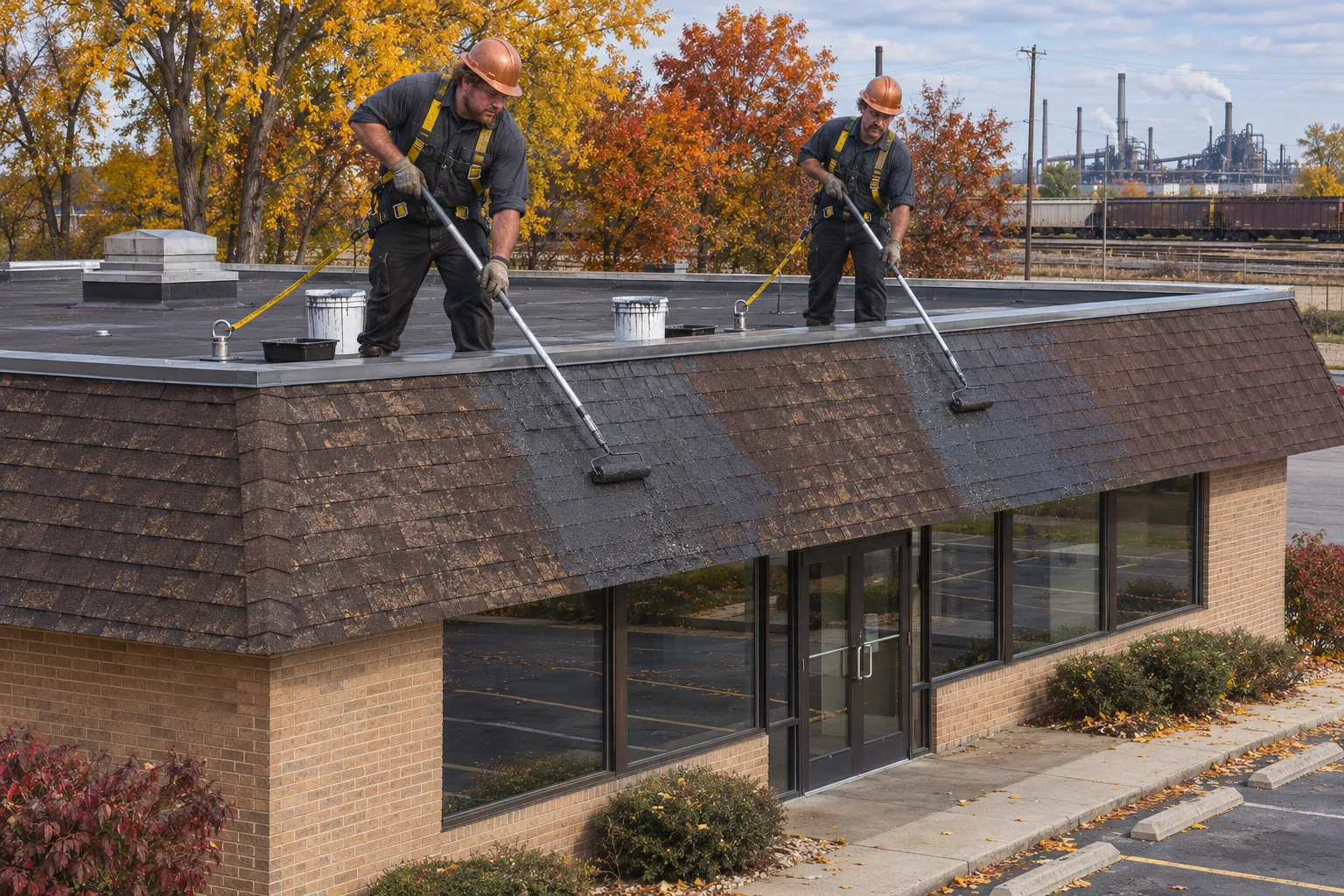
Sloped shingle roofs take a coating made for asphalt shingles, never foam. Shingles are coated after damaged ones are replaced.
Hammond shingle roof coatingFoam changes how the roof sheds water and how the building holds heat. Here is who notices.
Answers about foam on Hammond roofs.

In most cases, because it seals screws, laps, and seams under one layer. The leak source is still found and repaired first; rusted-through panels, failed curbs, and wet insulation are dealt with before foam goes down.
After an inspection, weighed against the planning ranges of about $2.50 to $4.00 per square foot for coating and $5 to $8 for replacement. Foam thickness, the topcoat, rust prep, roof size, and access all change the figure.
Yes, once they are cleaned, primed, and treated for rust. The foam fills the ribs and covers the screws, and a protective coating goes over it.
Heat stays inside instead of warming the roof, because the layer sits on top of the deck. With less heat escaping, snow melts less from below and refreezes less at roof edges and gutters.
A topcoat. Silicone or acrylic is applied over the foam soon after spraying, and it is the part that gets recoated in later years.
Thickness is set by the insulation the building needs and how much the low areas must be built up. It is measured with a probe during spraying and written on the job report.
Tell us about the roof and whether the building runs cold in winter. We will check moisture and price a foam system.