Residue
Oily Film On The Panels
A dull, greasy film that beads water is a sign of airborne residue. It comes off with a degreasing wash before any primer or coating touches the steel. A wipe test shows how heavy the film is.

As a Gary metal roof coating contractor, we clean industrial residue off steel roofs, prime the rust at the laps, and coat once a test patch bonds.
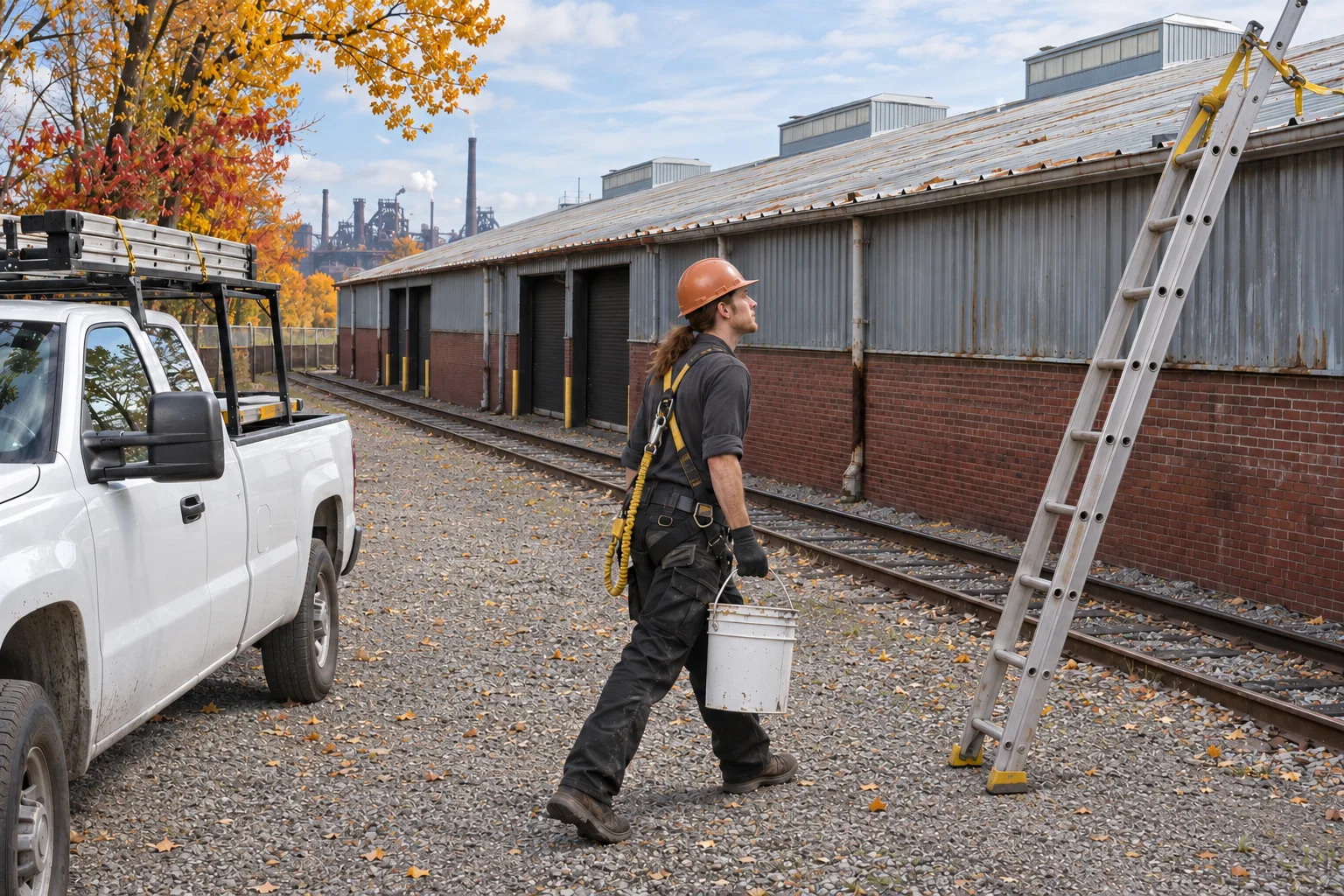
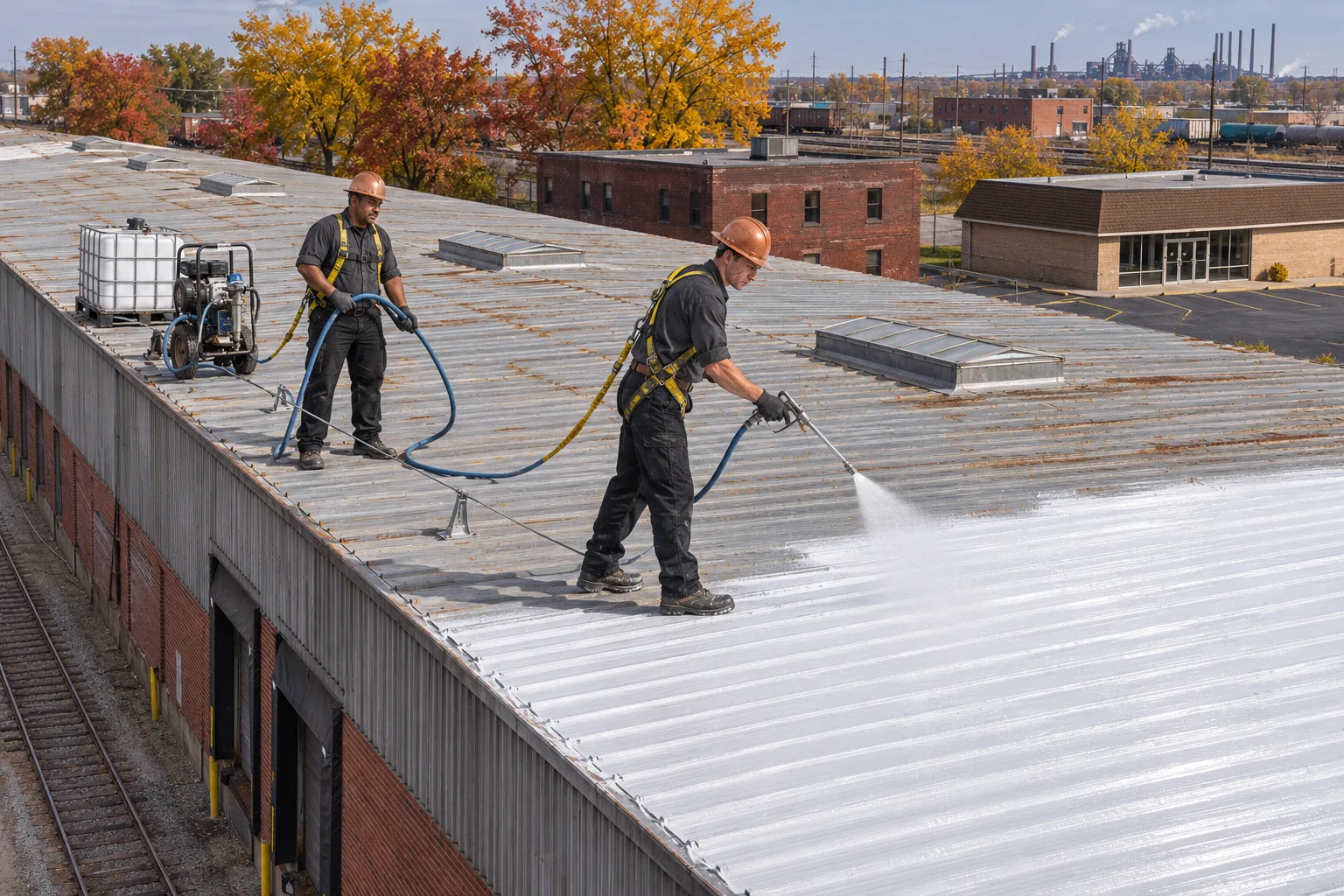
Gary metal roof coating near the mills starts with what sits on the panels: a film of dust, oil, and rust that blocks adhesion.
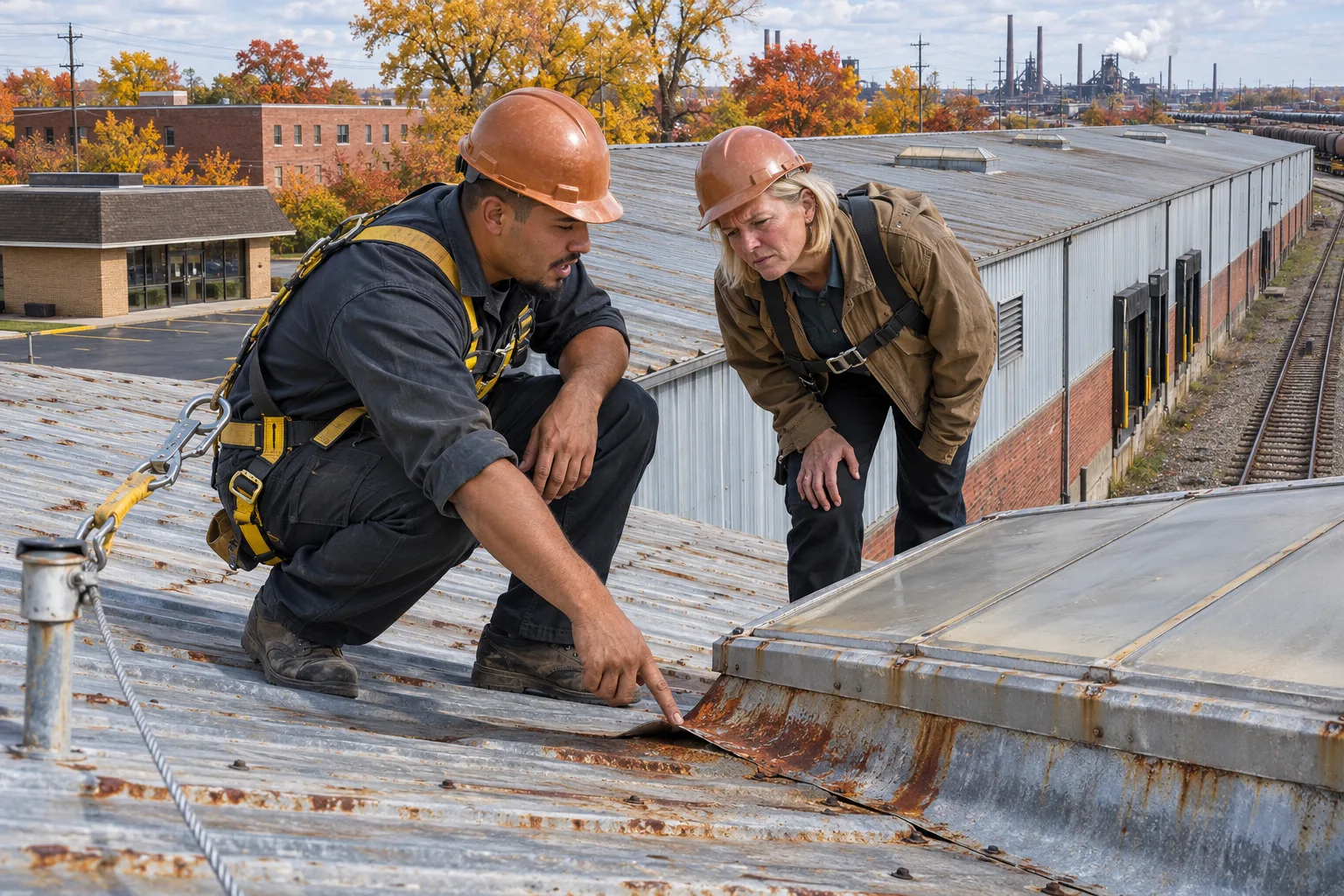
Steel buildings around the lakefront mills and rail yards collect grit that a plain rinse leaves behind. Coating laid over it peels within a season, so the wash uses a degreasing cleaner matched to the residue.
Rust under that film usually starts at side laps and eaves. It is ground back to firm steel and primed, and a small coated patch is pulled once cured before the full roof is done.
Four conditions show up again and again on Gary steel roofs, and each one changes the prep.
A dull, greasy film that beads water is a sign of airborne residue. It comes off with a degreasing wash before any primer or coating touches the steel. A wipe test shows how heavy the film is.
Orange streaks running downslope from a lap mean water has sat inside it. The lap is opened, cleaned, primed, and resealed with reinforced fabric. Fabric bridges the joint so water stays out.
Rail traffic and heavy equipment shake panels and back screws out. Loose ones are replaced with larger fasteners and new washers across the field. Larger screws grip where holes have stripped.
Process vents leave stains and heat-aged flashing around their curbs. Flashing at each one is rebuilt and the coating is detailed around the base. Curbs are cleaned of soot before flashing.
For a Gary building near heavy industry, coating protects the steel from the grime and moisture that sit on it.
Most Gary steel roofs take the metal system. Some sections call for one of these instead.
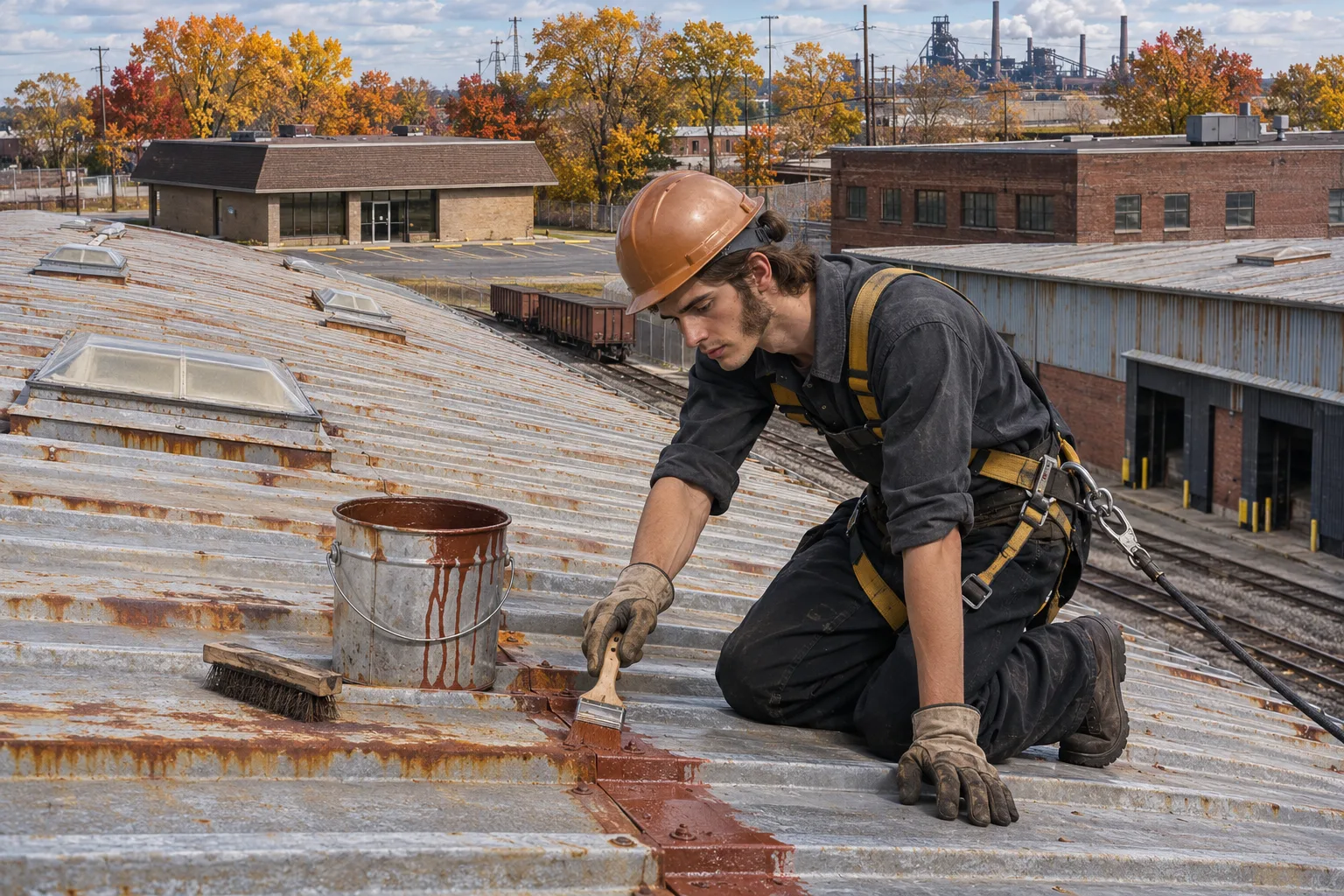
Residue removal, rust priming, and sealed screws and laps under a full coat make up the usual system for Gary warehouses. It is the default system for steel near heavy industry.
Hammond commercial metal roof coating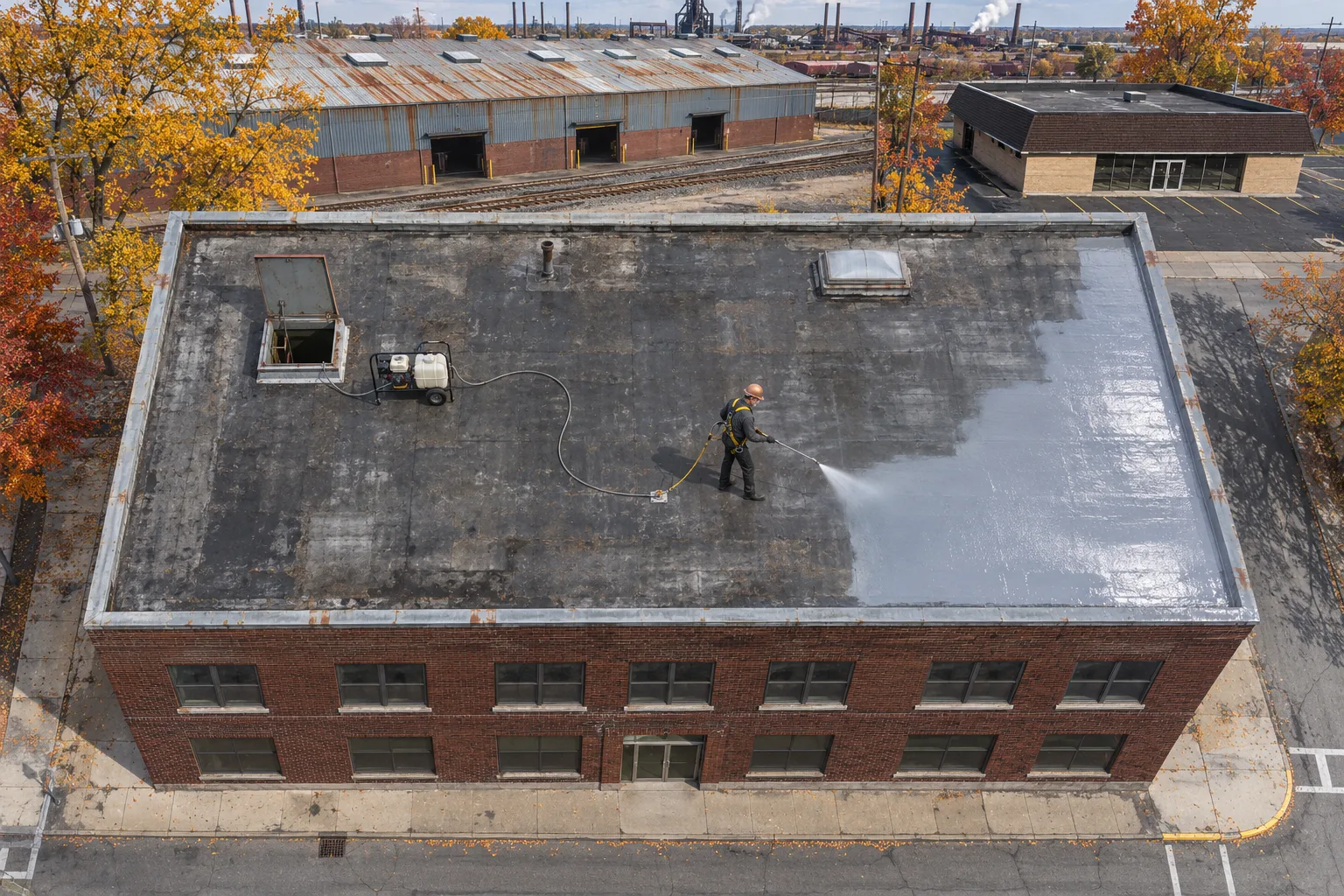
Flat connectors and lean-tos that hold water near the drains get silicone over the cleaned surface. The cleaned surface gets primer where needed first.
Hammond silicone roof coating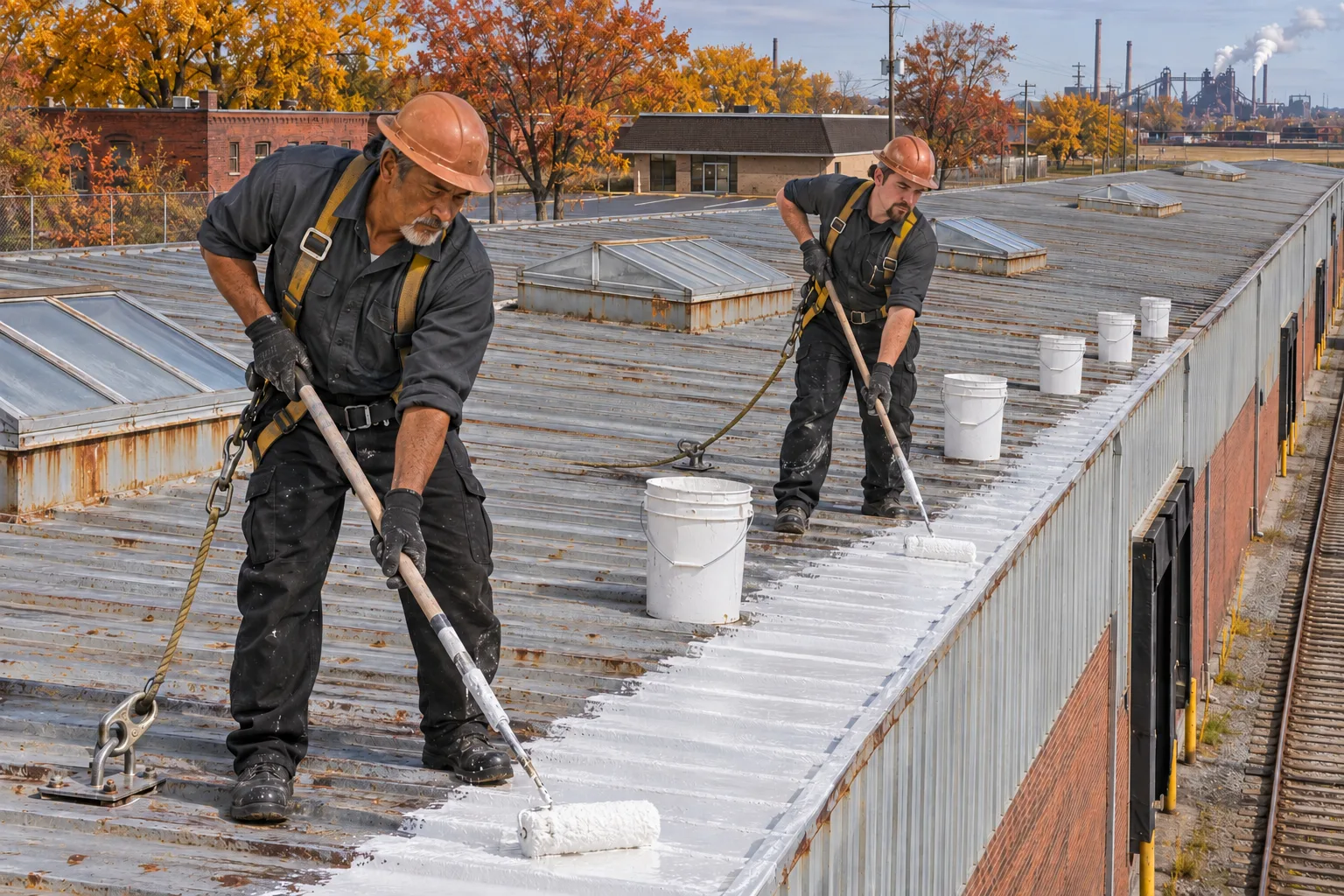
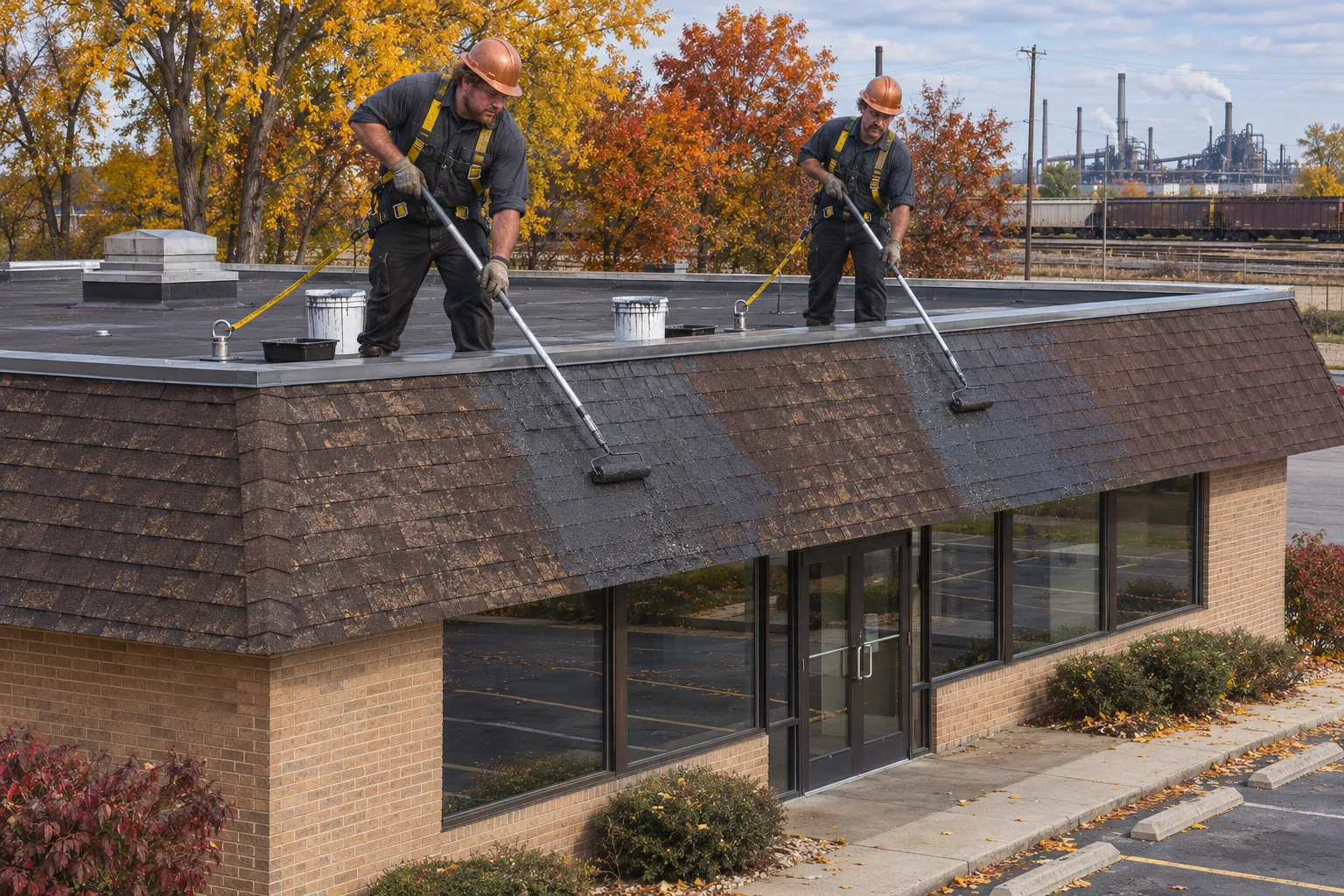
Buildings set back from the heaviest industry, with pitched panels that drain well, can take acrylic. Warm, dry weeks are booked for acrylic work.
Hammond acrylic roof coating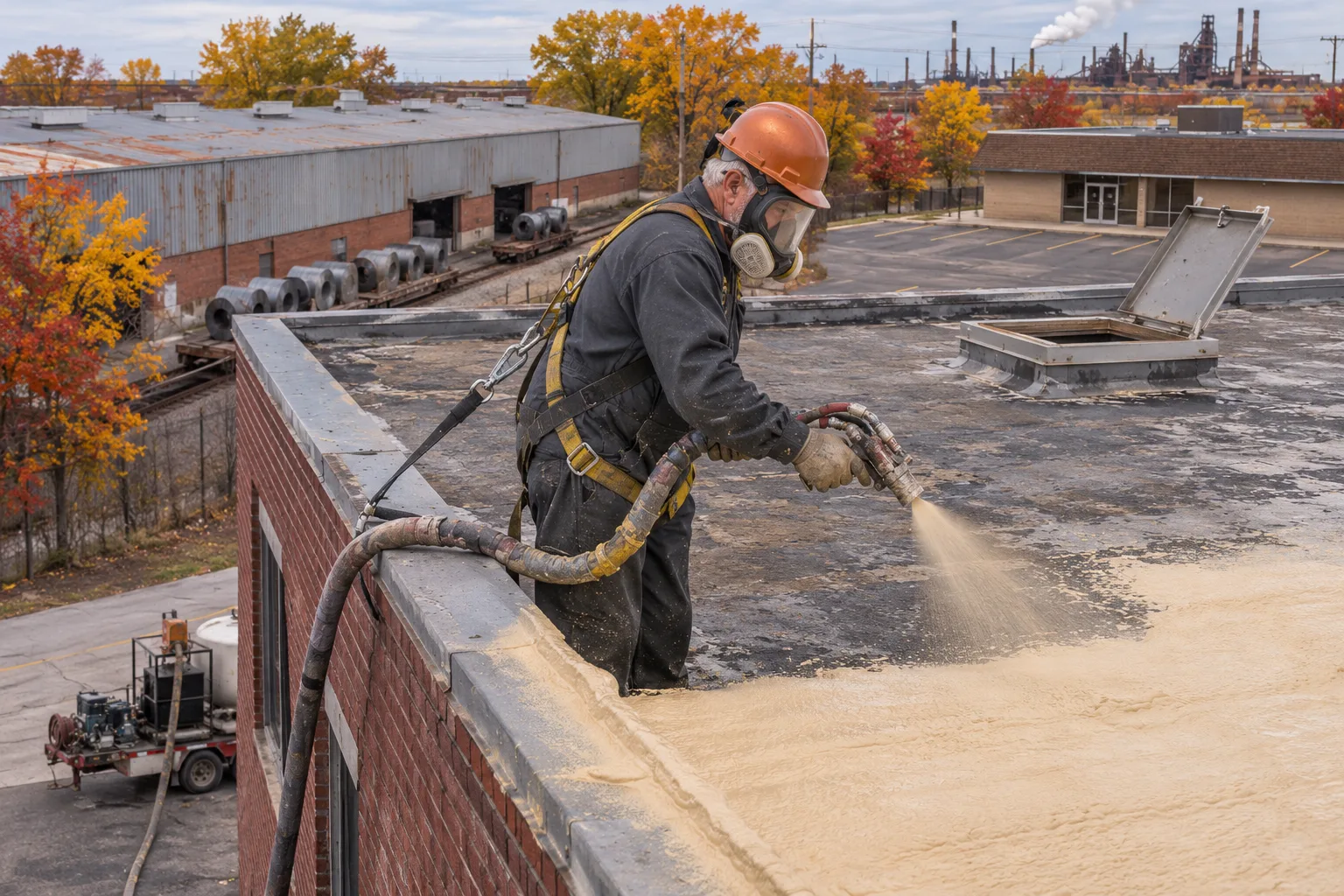
Shops that lose heat through bare panels can take foam and a topcoat over the primed steel. Foam also levels small dents left from past repairs.
Hammond spray foam roofingThat means water is sitting inside them. Call and we will open a few laps on your Gary roof to see how far it has gone.
On Gary roofs the cleaning and testing take longer than the coating itself.
We walk the roof, wipe test spots to see how much residue is on the panels, open laps where rust streaks show, and count the loose screws.
A degreasing cleaner goes on ahead of the pressure washer, and runoff is kept away from drains and walkways. The roof then dries fully.
Rust at laps, eaves, and vent curbs is ground to firm steel and primed promptly, before moisture can settle on the bare metal.
A small area is coated and pulled once cured. If it lifts, the cleaning or primer changes before the rest of the roof is touched.
Laps, screws, and vent curbs get their detail coat, then the whole field is coated to the specified thickness.
We also coat commercial roofs in East Chicago, Munster, Highland, and Dyer.
Outside these towns? Call us or send us a message.
Answers for owners of steel buildings in Gary.
Coating runs about $2.50 to $4.00 per square foot and replacement about $5 to $8 as planning figures. On Gary roofs, the extra cleaning for residue, the amount of rust grinding, and how many screws need replacing usually decide where a roof lands.
Yes. All of the work is on the roof surface, so shops, warehouses, and offices below keep running. Spraying near intakes is scheduled with the manager, and units are shut down only for that window.
We do, on commercial and industrial buildings across Gary. Every job begins with an inspection of the panels, screws, laps, and rust, then cleaning, repairs, and the coating that fits that roof.
Support buildings, warehouses, and shops near the mills make up much of our Gary work. Their roofs carry the heaviest residue, so they always get a degreasing wash and a test patch before coating.
Small holes can be patched with reinforced fabric or a new piece of panel, then coated. When the holes run along whole panel lengths, those panels are replaced before the rest of the roof is coated.
On roofs near the mills, yes. Residue varies from building to building, so a cured patch is pulled on each roof before the full coat, and the cleaning changes if it lifts.
Send the building address and where the leaks show up. We will check the residue, rust, and screws and price the coating.