Process Vents
Heat And Residue Around Vents
Exhaust vents and stacks leave residue rings and heat-aged flashing on the panels around them. Each curb is rebuilt and cleaned before it is coated. Soot is cleaned off before flashing goes on.

As an East Chicago metal roof coating contractor, we coat large plant and warehouse roofs in planned sections so work on the floor below keeps going.
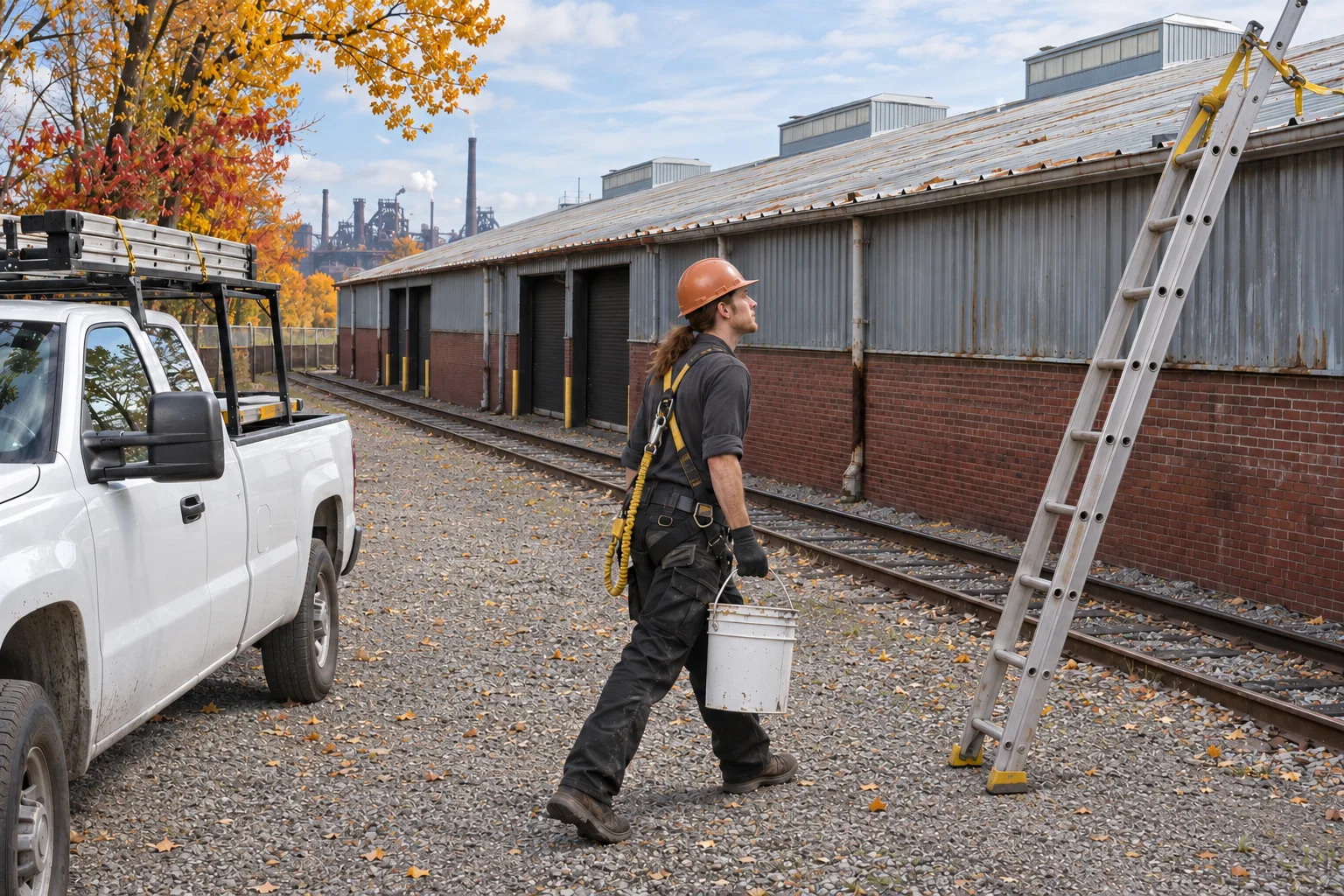
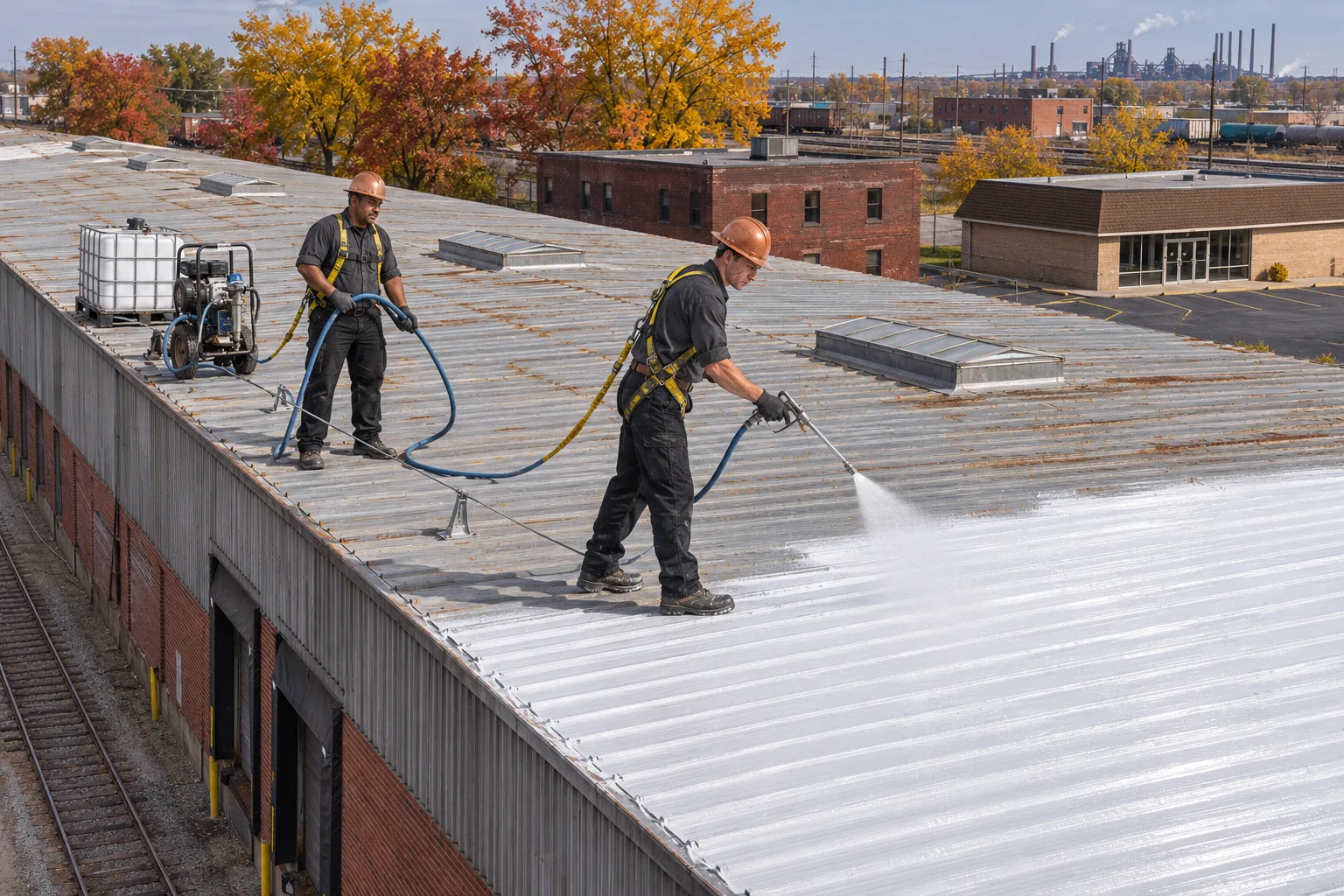
East Chicago metal roof coating on a big plant roof is planned like a production schedule: one section prepped, coated, and closed before the next opens.
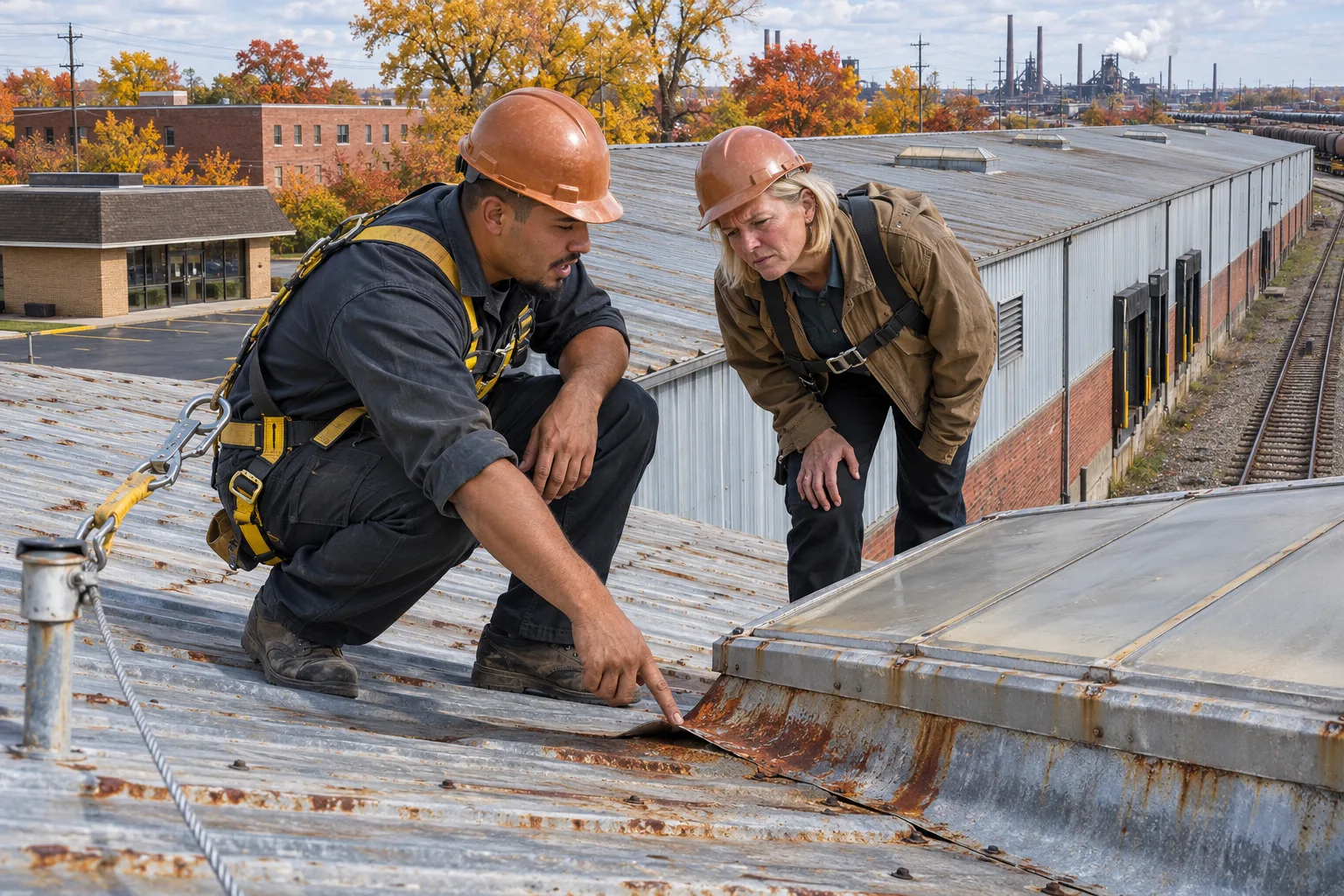
Large roofs over working floors are never opened all at once. We split the roof along expansion joints or bay lines, and each section is cleaned, repaired, primed, and coated before the crew moves on.
That keeps washed, exposed steel to a small area at any time and lets the plant plan around one zone instead of the whole building.
Plant roofs carry conditions that smaller buildings rarely do. These four shape the plan.
Exhaust vents and stacks leave residue rings and heat-aged flashing on the panels around them. Each curb is rebuilt and cleaned before it is coated. Soot is cleaned off before flashing goes on.
Wide roofs drain to interior sumps that clog with grit. Water that backs up there calls for silicone, and the drain bowls are cleared and checked first. Bowls and clamping rings are checked too.
Long buildings move at expansion joints and between bays. Those joints get flexible detailing, and they make natural lines for splitting the work. Fabric lets the joint move without cracking.
Cranes, presses, and rail cars shake the structure, and screws work out faster. Loose ones are replaced across the active section before coating. Larger screws hold where holes are worn.
On a working plant roof, the benefits show up in the operation as much as in the roof.
Plant roofs often mix systems by section. These are the four we use most on East Chicago buildings.
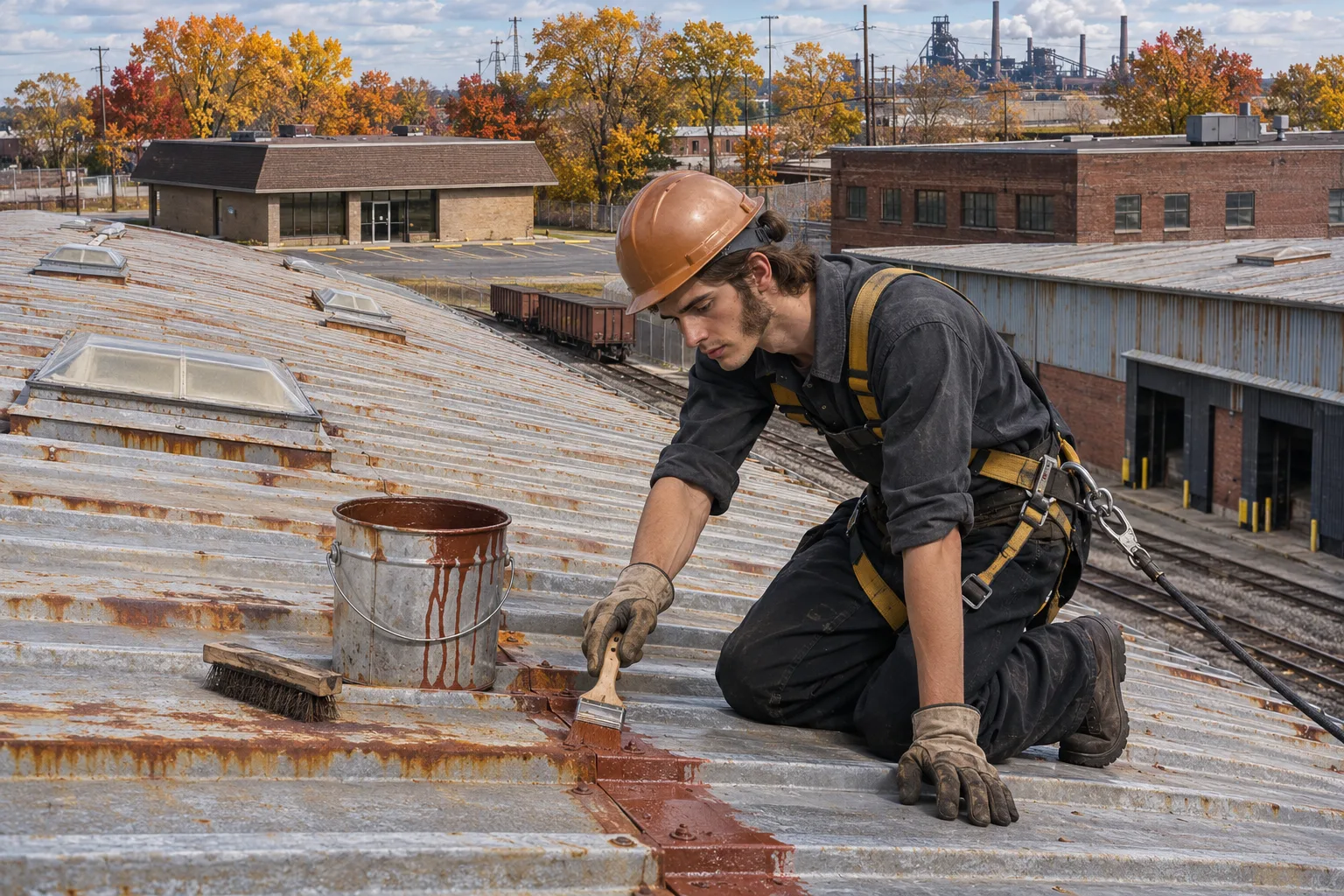
Exposed-fastener steel over the production bays gets the full metal system, one section after another. Each section is closed before the next one opens.
Hammond commercial metal roof coating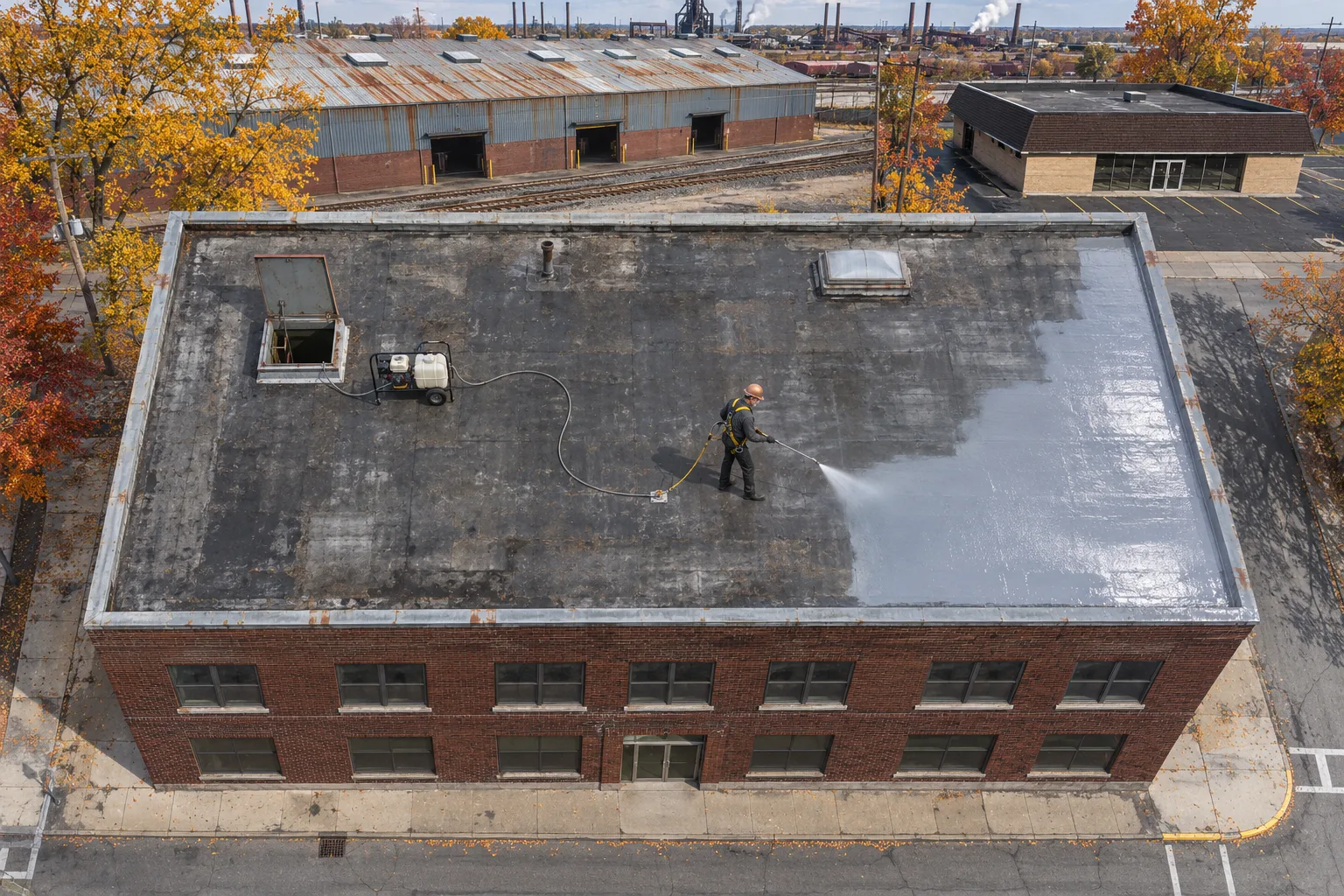
Areas that pond around interior drains get silicone over the primed panels. Drain bowls are cleared before any silicone goes on.
Hammond silicone roof coating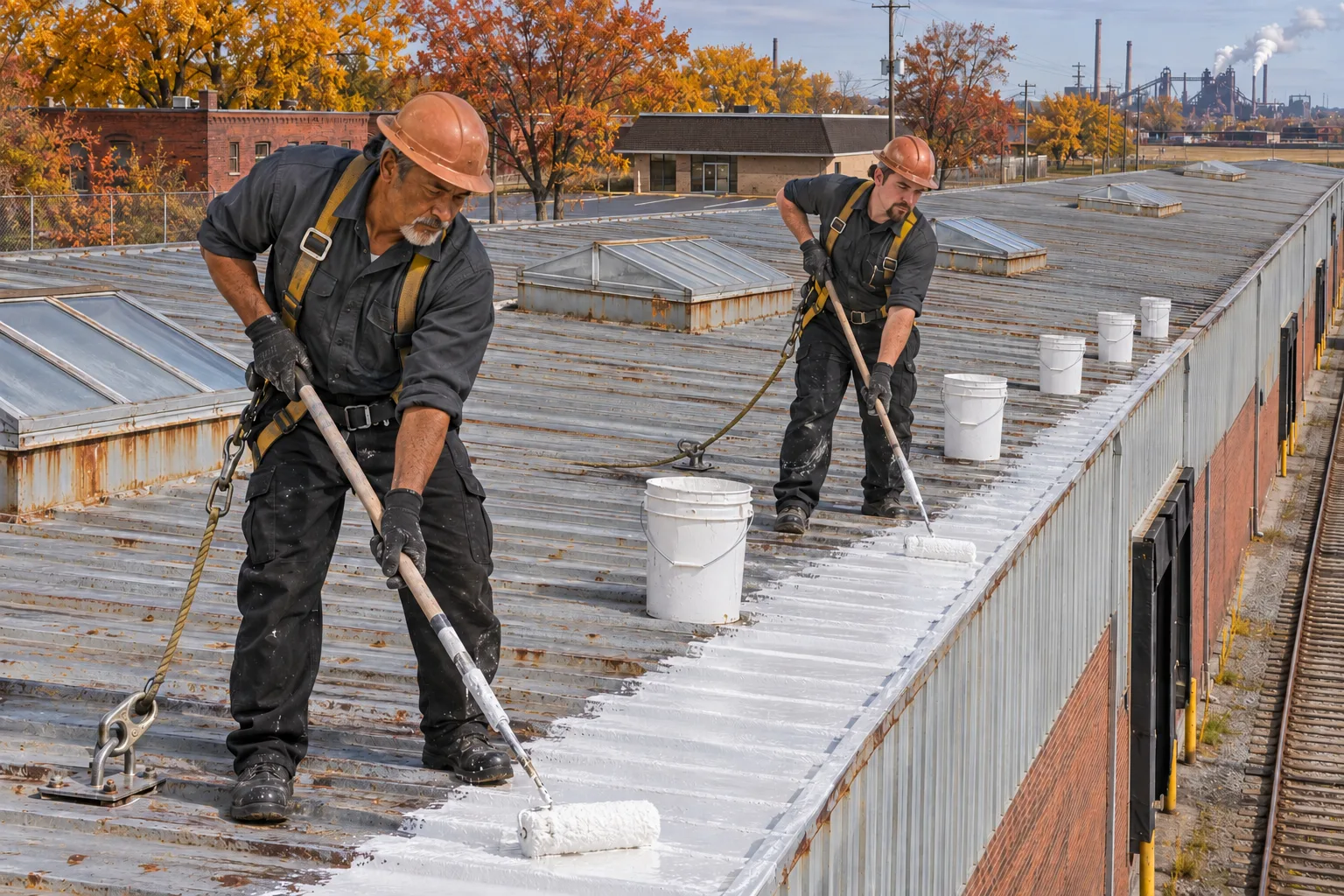
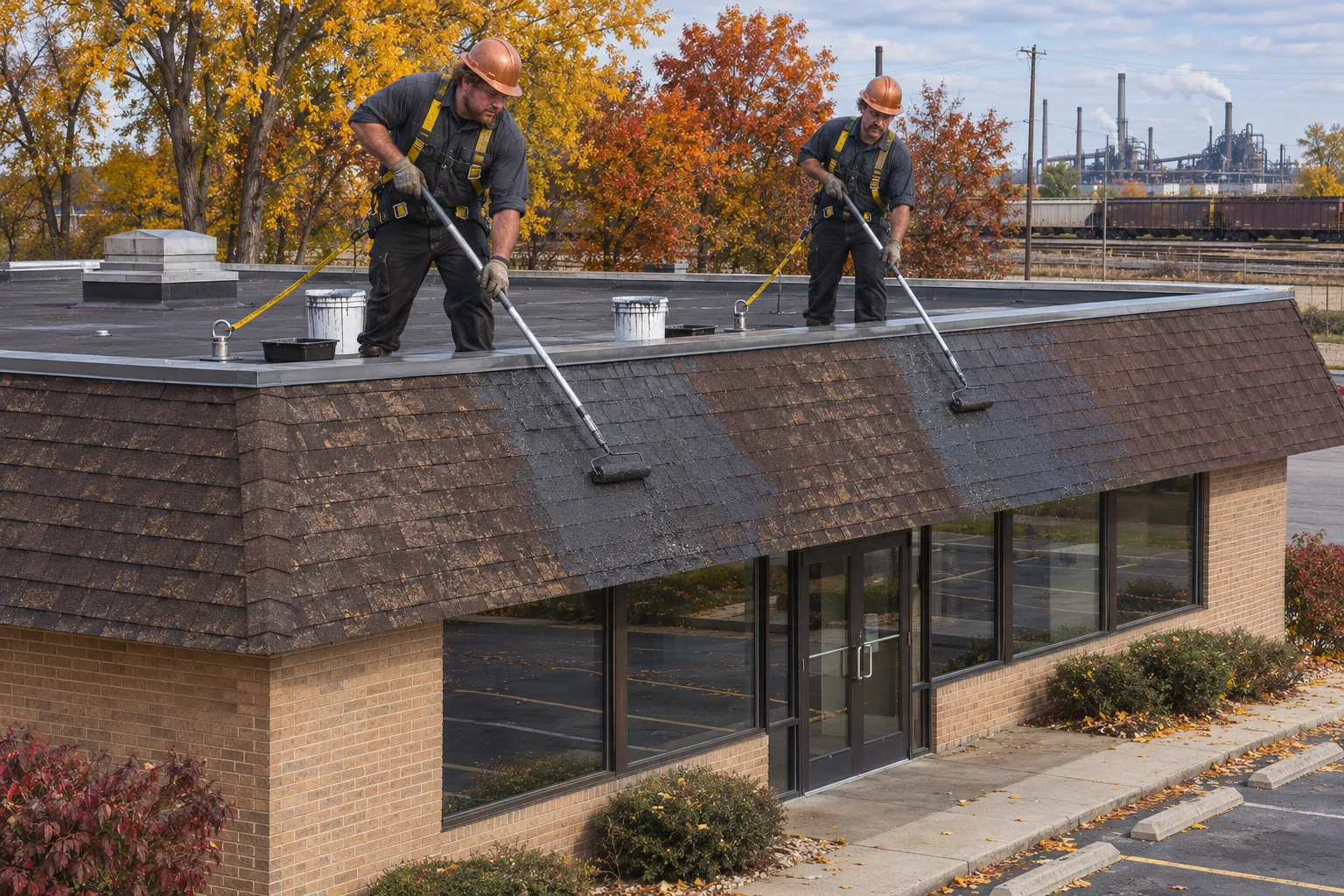
Sloped storage roofs that drain fast can take acrylic during the warm months. Acrylic and metal coating meet at sealed joints.
Hammond acrylic roof coating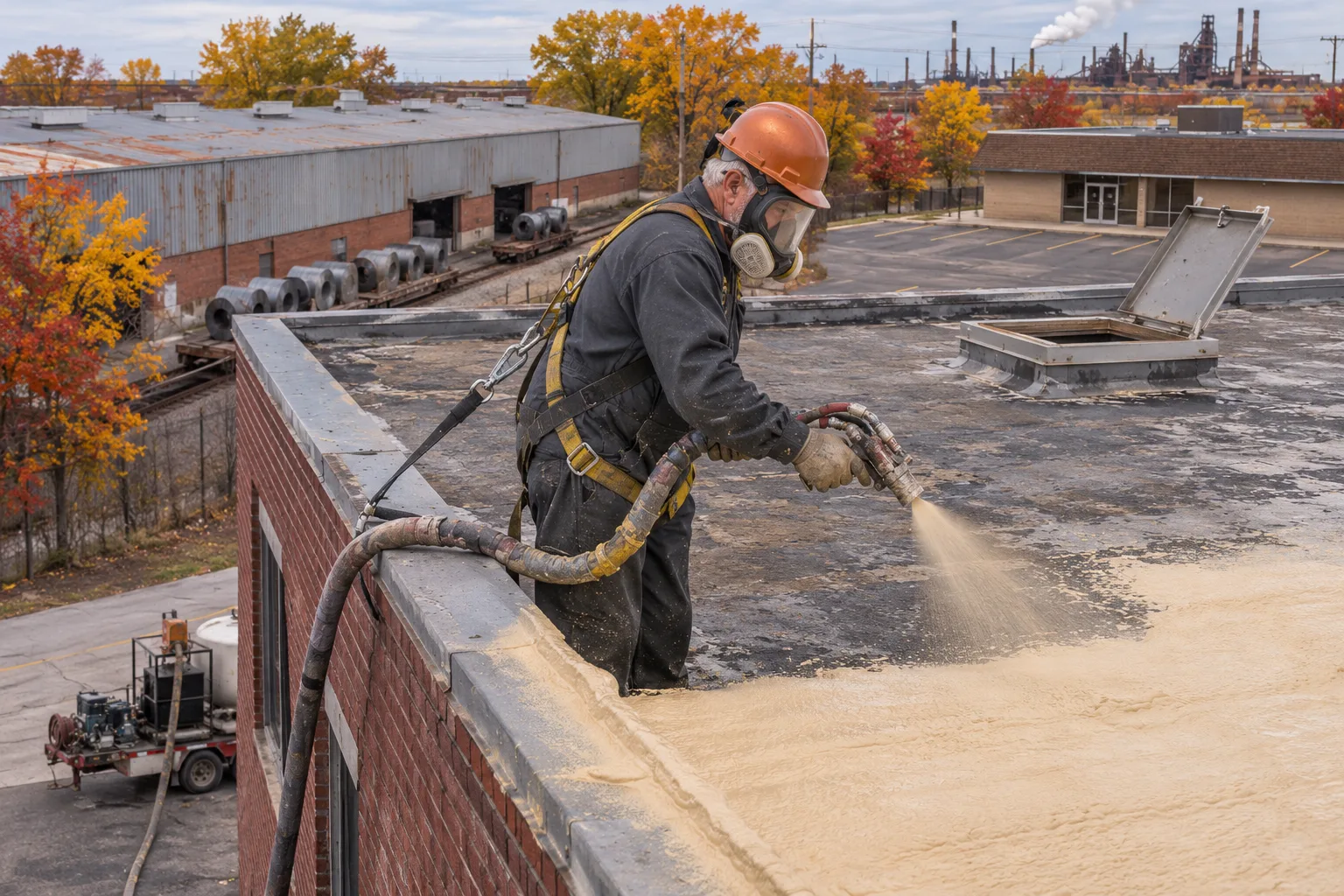
Offices and break areas that run cold can take foam and a topcoat. The topcoat over foam matches the roof around it.
Hammond spray foam roofingThat is how plant roofs here are planned. Call and we will walk the roof and map out the sections with you.
Each section runs through the same five steps before the next one opens.
We walk the whole roof with the facility manager, mark bays, joints, vents, and drains, and agree on section lines and the order they will be done.
Only the section being worked is washed and degreased, so most of the roof stays undisturbed at any time.
Loose screws, open laps, and vent curbs in that section are repaired and primed before any coating goes down.
Intakes and vents inside the work area are masked or shut down with operations while spraying is underway.
The section is coated to thickness, checked, and closed before the crew moves to the next one.
We also coat commercial roofs in Gary, Munster, Highland, and Dyer.
Outside these towns? Call us or send us a message.
Answers for plant and warehouse owners in East Chicago.
On large roofs, yes. The roof is divided into sections, each finished before the next begins, so only one area is ever open. Smaller shop and office roofs are usually done in one pass.
Rail-side warehouses and plants across East Chicago are part of our area. Access is planned around spurs and docks, and screws loosened by rail vibration get extra attention.
We can, once residue is cleaned off and a test patch confirms adhesion. Rust treatment and fastener sealing follow, and the work is staged in sections so operations inside can continue.
Call with the plant address and roof size. We schedule an inspection with the facility manager, walk the roof together, and return a written section plan with repairs and a price.
It does if it is left on the panels. A degreasing wash and a pulled test patch come before primer, so the coating bonds to clean steel.
They can, and big plant roofs often do. Production bays might take the metal system while pooling areas near interior drains take silicone, with each joint between systems sealed and reinforced.
Tell us about the building and how it operates. We will walk the roof and price it section by section.