Fasteners
Backed-Out Screws And Dry Washers
Panels move every time the sun hits them and every night they cool, so screws work loose and rubber washers crack. Water then follows the screw shank and drips well away from the actual hole.

As a Hammond metal roof coating contractor, we walk your roof, mark every open lap and failed screw, then coat the panels in one continuous layer.
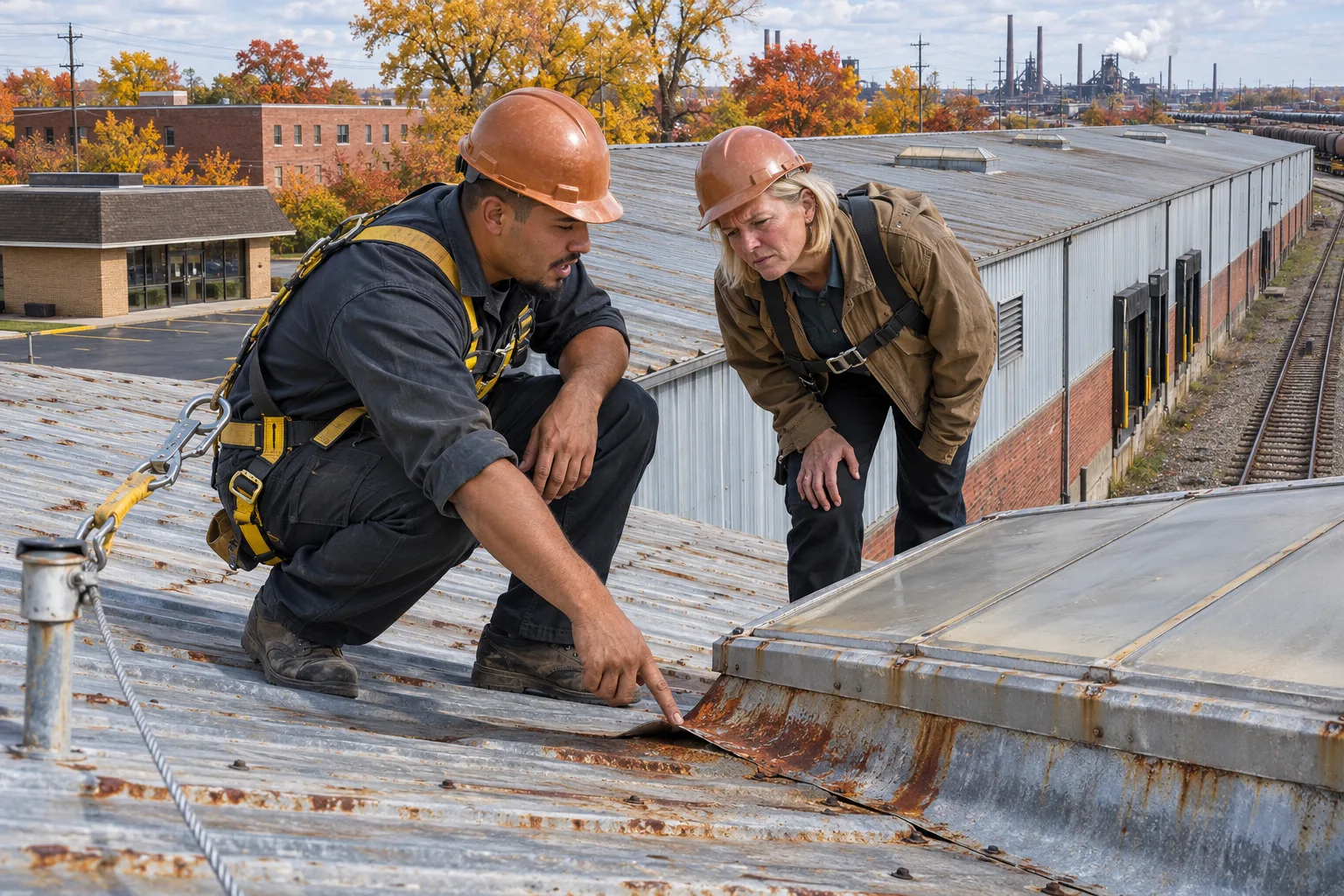
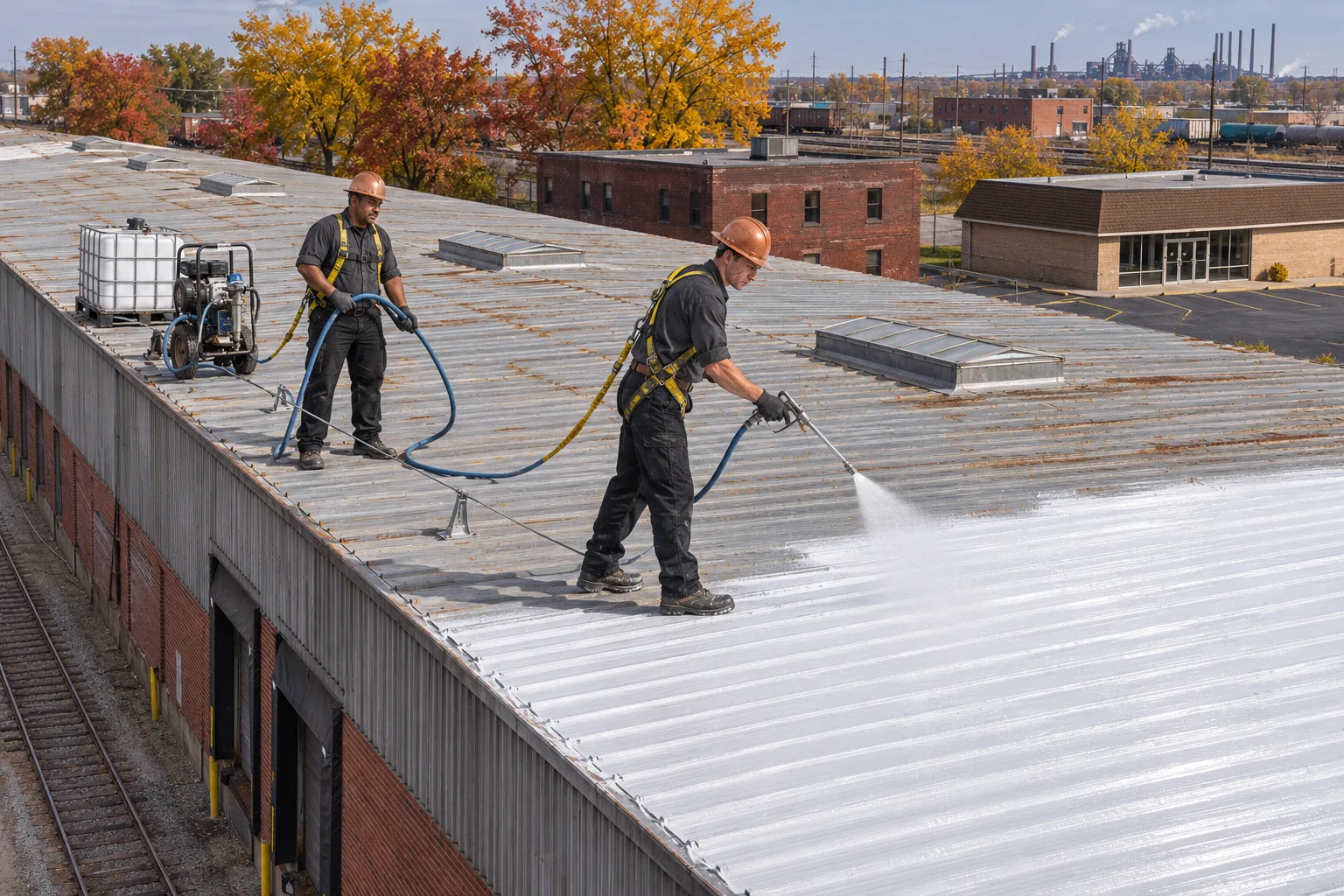
Hammond metal roof coating starts with the problems you can see from a ladder or the ceiling below. These six show up most on the city's warehouses and shops.
Panels move every time the sun hits them and every night they cool, so screws work loose and rubber washers crack. Water then follows the screw shank and drips well away from the actual hole.
Laps that once sat tight start to gap after years of movement and freeze-thaw. Sealant dries out, wind lifts the panel edge, and meltwater creeps sideways under the lap toward the purlins.
Orange bloom usually starts where water lingers: panel edges, laps, and around curbs. Caught while the steel is still firm, it can be wire-brushed, primed, and coated instead of cut out.
Skylight frames, exhaust fans, and unit curbs break the panel pattern, and the flashing around them is often the first thing to fail. Ceiling stains near equipment usually trace back here.
Ponding on low-slope sections and near clogged gutters holds water against laps for days. Any coating chosen for that roof has to tolerate standing water, which steers the system choice.
Condensation and slow leaks soak the insulation blanket, and wet insulation sags, smells, and holds water against the steel. It has to be found and dealt with before any coat goes on top.
Five steps, in this order, on every roof we coat. The order matters: coating over a missed fastener or a wet section only hides the problem for a season.
We walk the whole roof, check every lap and curb, probe for soft or wet insulation, and photograph what needs repair. You get a written list of findings before anything else happens.
Panels get pressure-washed to remove chalk, dirt, and mill dust. Active rust is wire-brushed or ground down to firm steel, then a rust-inhibiting primer goes on the bare spots.
Stripped or backed-out screws are replaced with oversized fasteners and new washers. Each screw head and every lap gets sealant or reinforced fabric so the coating bridges a tight surface.
Before coating the full roof, we coat a test area and pull it once cured. A clean bond tells us the prep and primer are right for this roof and its residue.
The coating is sprayed or rolled to the thickness the product sheet calls for, measured in mils as we go. Edges, curbs, and laps get an extra pass where water works hardest.
Five systems cover the commercial roofs we see across the city, from steel warehouses to shingled church halls. Each one fits a different kind of roof.
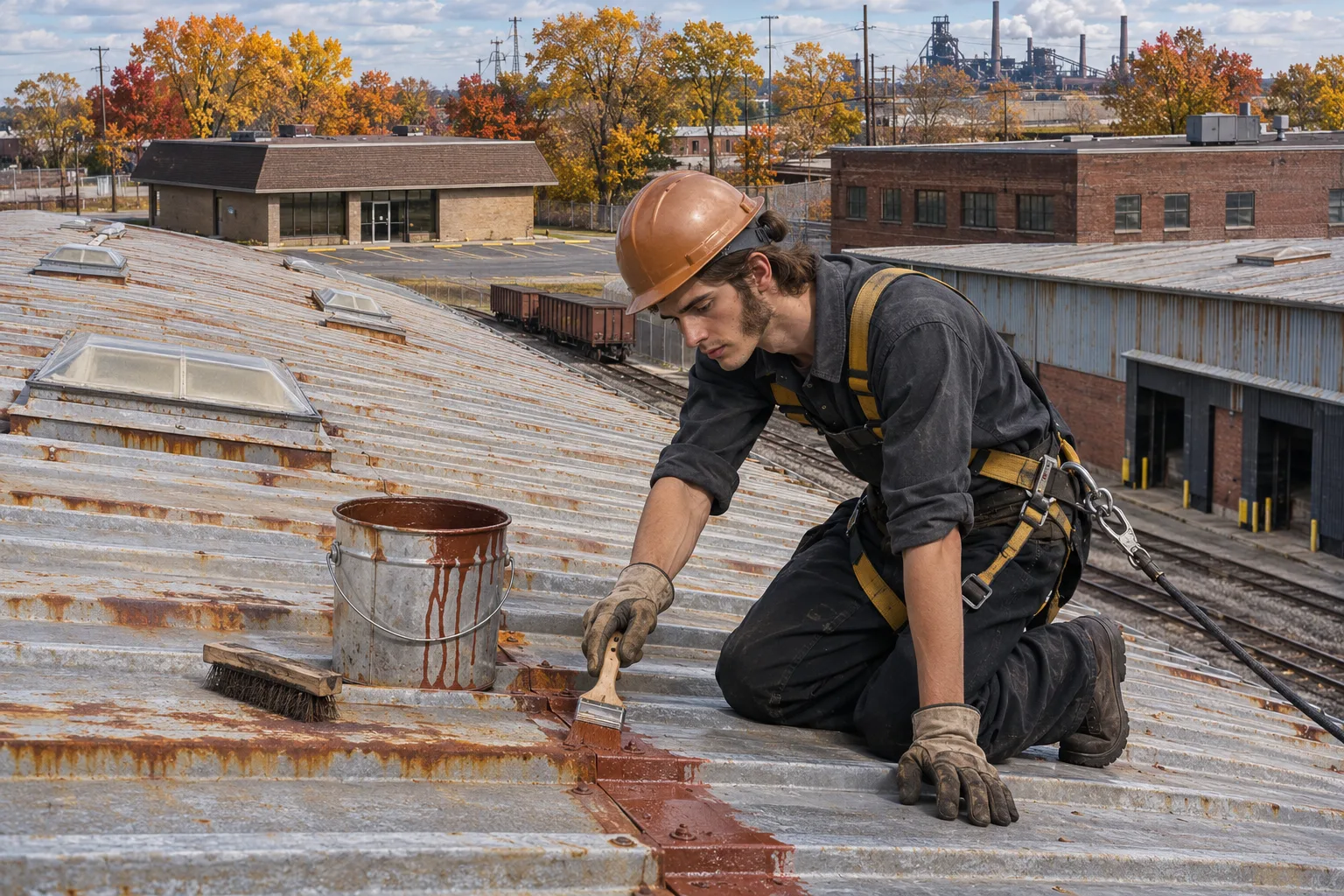
For exposed-fastener and standing-seam steel roofs that still have firm panels. We treat rust, reseal every screw and lap, and coat the whole field so the panels shed water again.
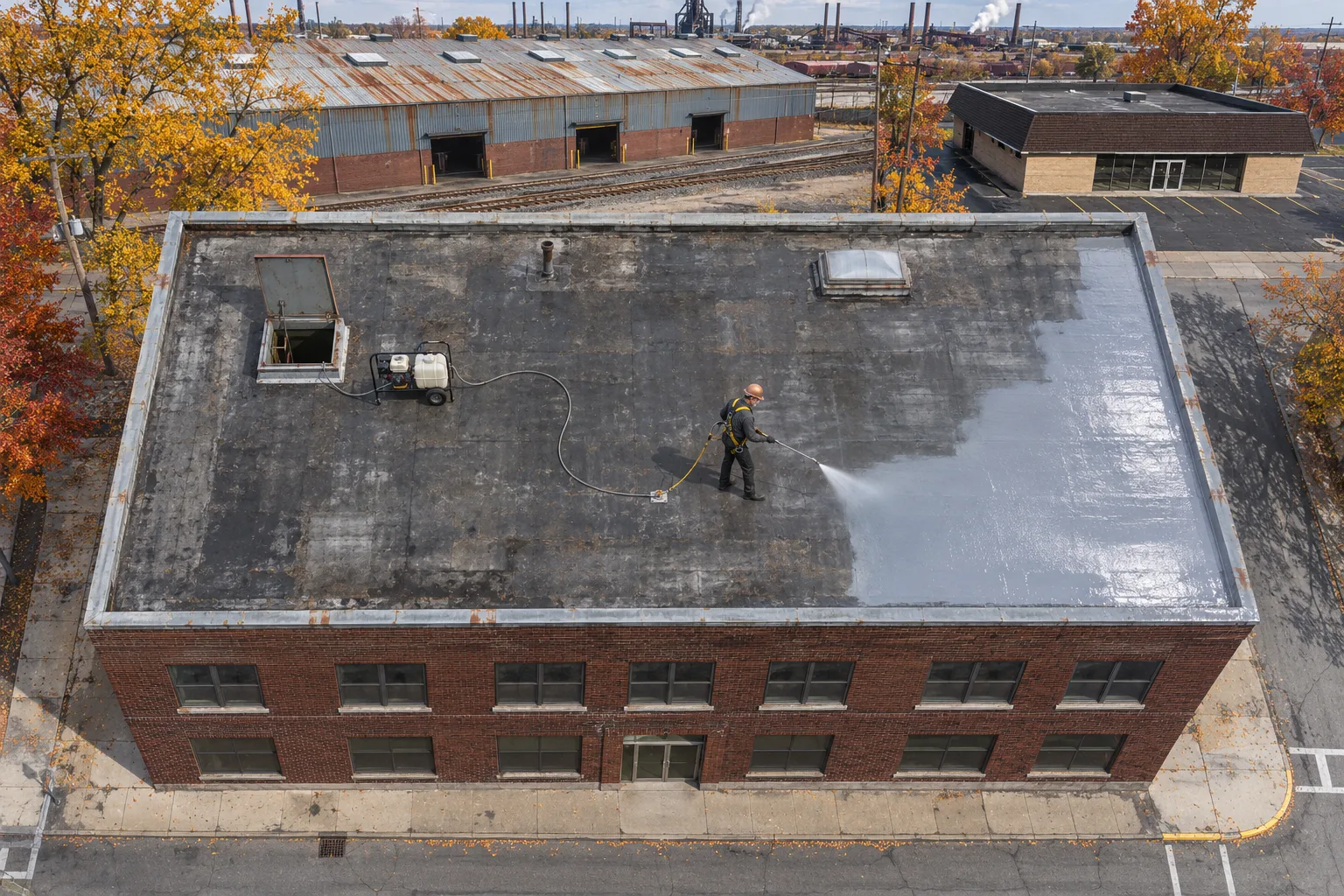
Silicone sits through standing water without breaking down, which makes it the usual choice for low-slope roofs with ponding near drains or along valleys.
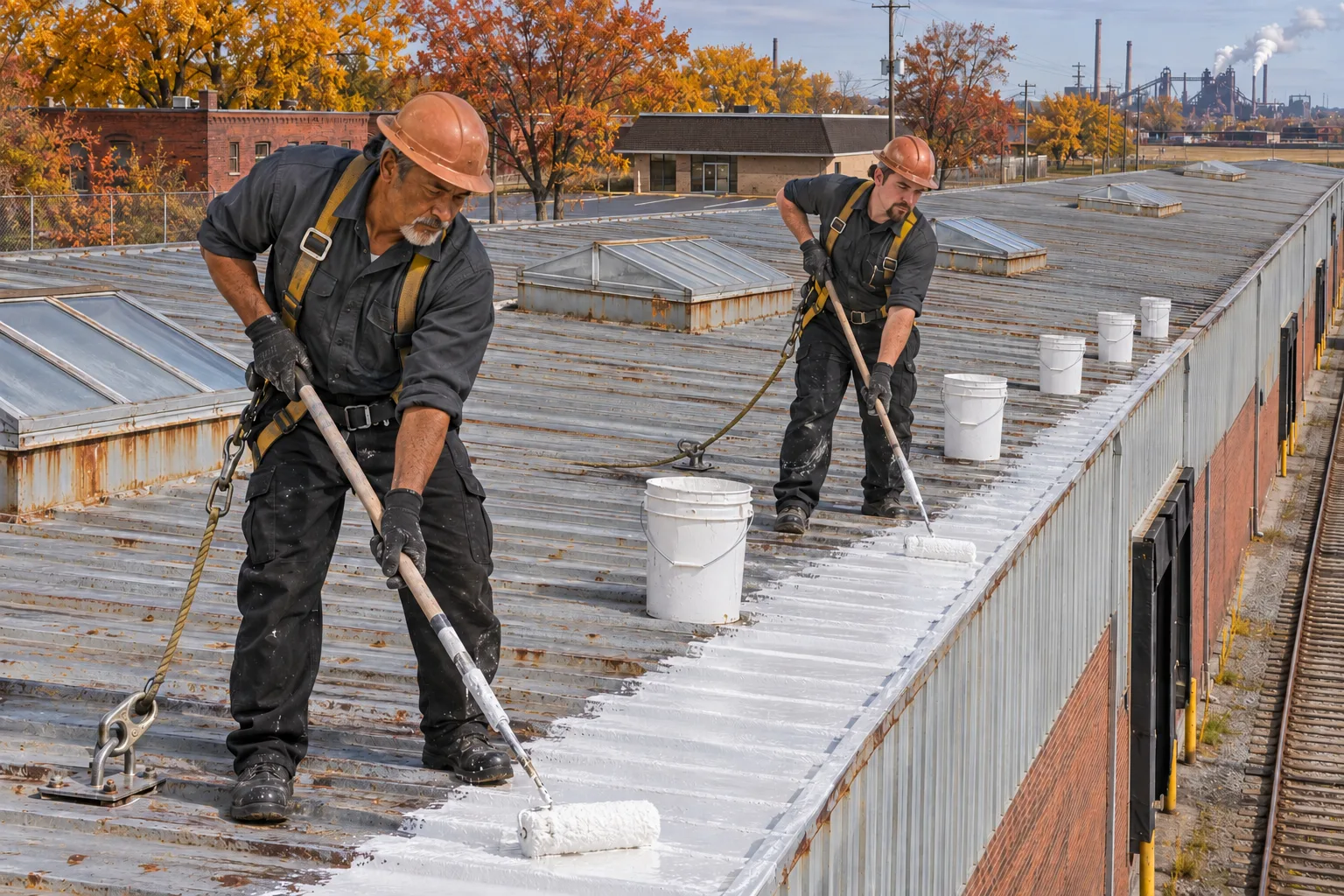
Water-based and easy to recoat, acrylic works on sloped metal roofs that drain fast. It needs warm, dry days to cure, so it is scheduled for late spring through early fall.
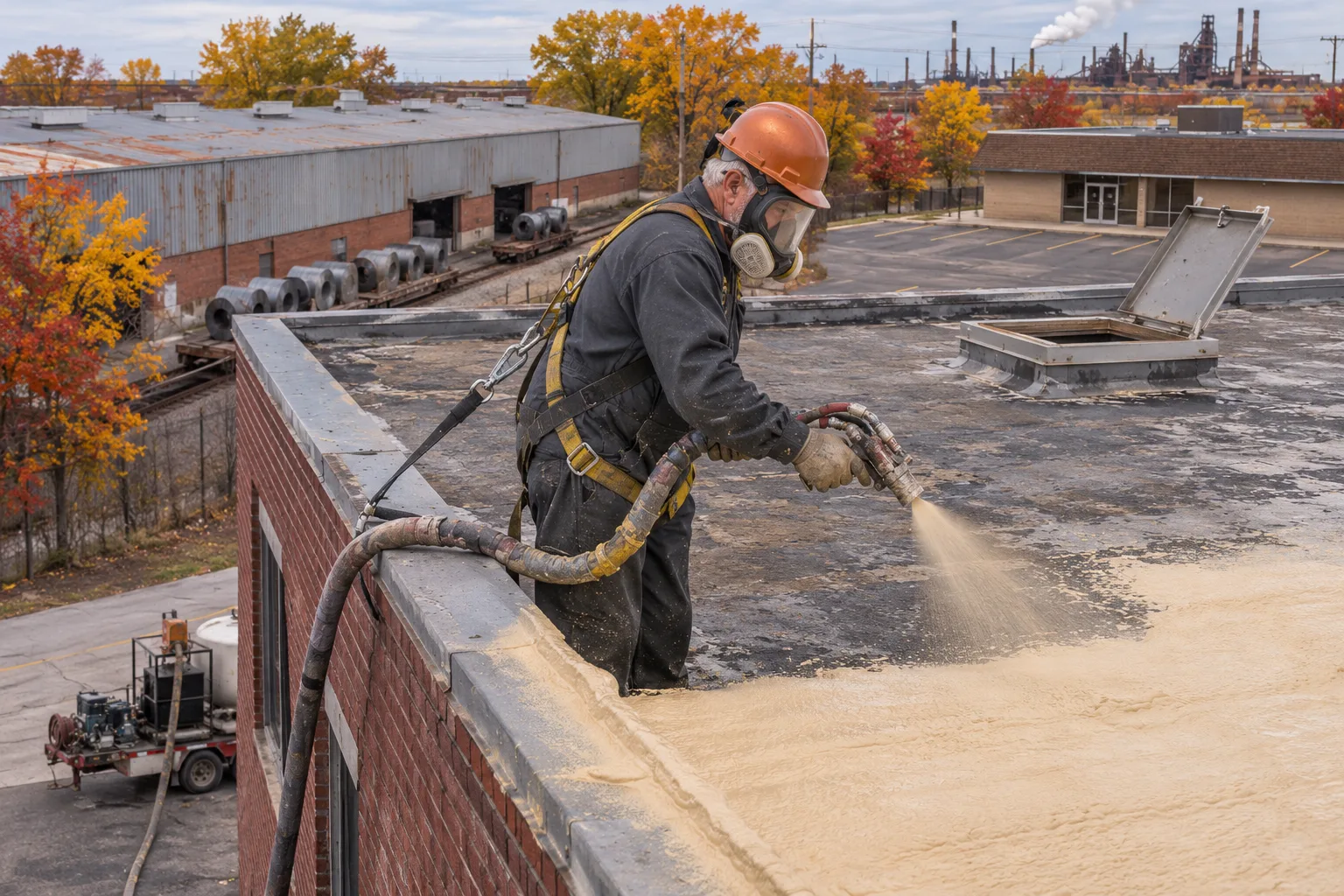
A layer of foam sprayed over the existing roof fills panel ribs, covers fasteners, and adds insulation, then gets a protective topcoat against sunlight.
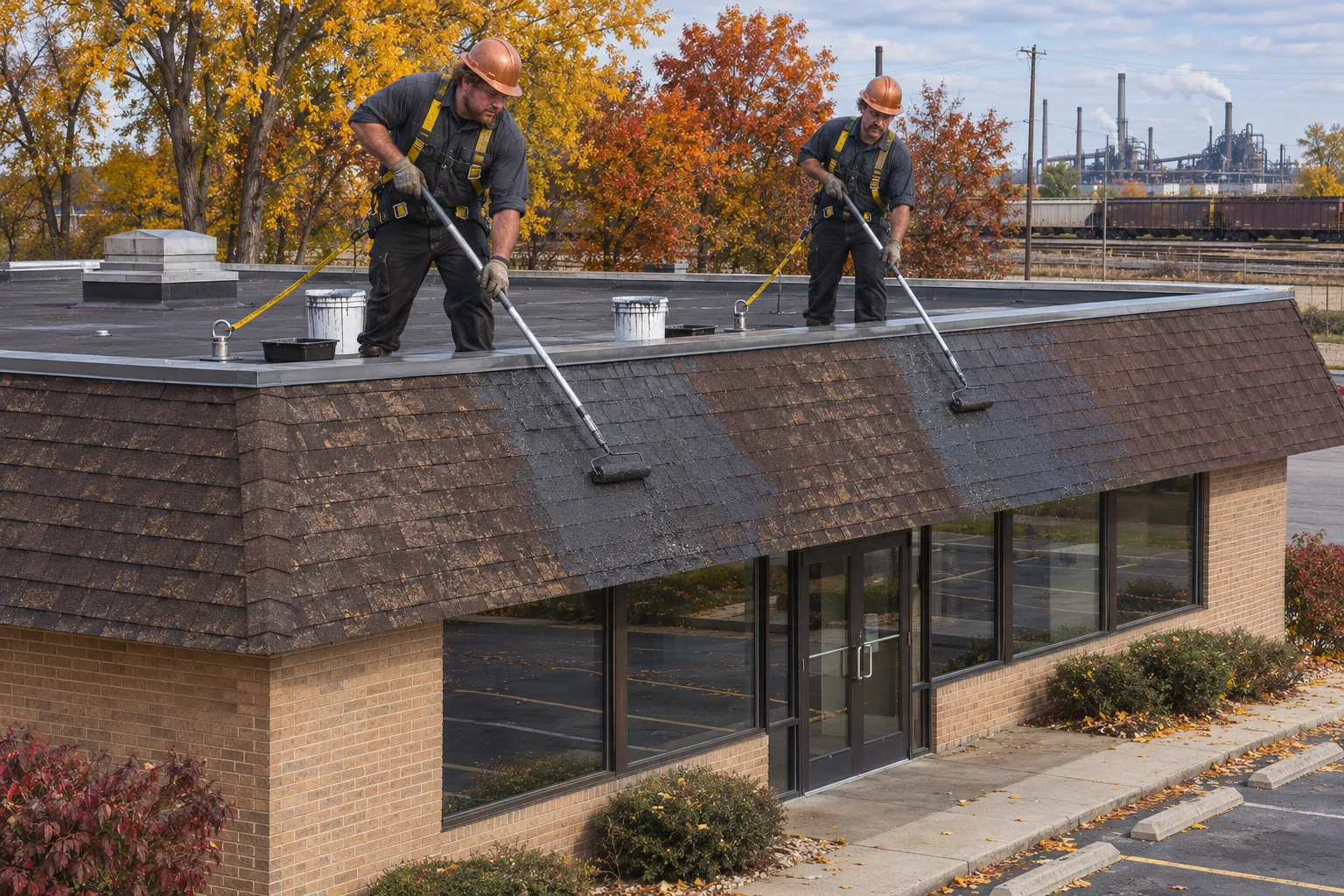
Asphalt shingles that still lie flat can be cleaned, repaired, and coated to lock down granules and seal small cracks on offices and church halls.
Snowmelt finds every open lap and backed-out screw on a metal roof. We can inspect yours and price the repairs and the coating together.
Most metal roofs can be coated, some after repairs, and a few should be replaced first. Match what you see on your roof to the rows below.
| What You See On The Roof | Coat It | Repair, Then Coat | Replace Instead |
|---|---|---|---|
| Chalky or faded paint on firm panels | Usually Fits | Rarely | Rarely |
| Surface rust that brushes off to solid steel | Sometimes | Usually Fits | Rarely |
| Loose screws and cracked washers | Rarely | Usually Fits | Rarely |
| Open laps or lifted panel edges | Rarely | Usually Fits | Rarely |
| Rust holes you can push a screwdriver through | Rarely | Sometimes | Usually Fits |
| Insulation that is wet across large areas | Rarely | Sometimes | Usually Fits |
The dots show what usually fits. The inspection makes the call for your roof.
The benefits land on different people in the building. Here is what changes for each of them once the leaks at laps and screws are closed.
Each town leans toward different buildings, so each one starts the inspection from a different place.
We coat commercial roofs in Hammond, Gary, East Chicago, Munster, Highland, and Dyer.
Outside these towns? Call us or send us a message.
Steel-frame buildings near the mills collect dust and oily residue that has to come off before any coating will bond.
Large roofs over working plants get coated one section at a time so the floor below keeps operating.
Storefront strips and office buildings stay open while the crew works above, so access and timing get planned with tenants.
Older shop and retail roofs often hide wet insulation, so we map dry and wet areas before choosing what gets coated.
Shop and warehouse roofs in Dyer carry skylights and rooftop units, and the flashing around them leaks first.
Short answers to what owners ask on the first roof walk. More answers are in our metal roof coating FAQ.
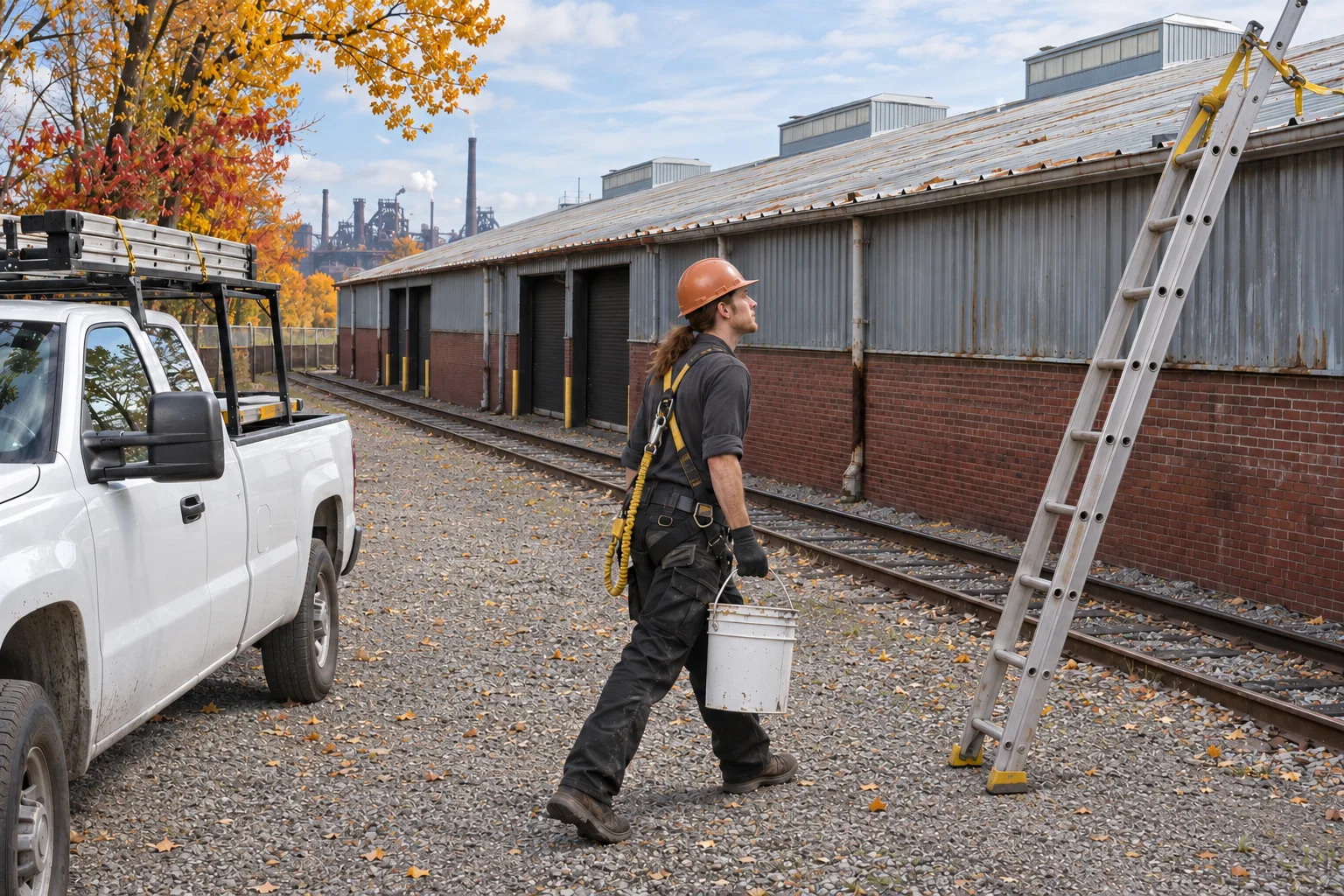
Usually it does, as long as the panels are still firm. A warehouse roof is wide and simple, so coating covers a lot of area while trucks keep moving at the docks below. Panels rusted through or soft at the purlins get replaced in those spots first, then the whole field is coated.
For a barn or shop with exposed screws, coating is one of the most practical fixes. We wash the panels, swap stripped screws for larger ones, seal every lap, and treat rust spots. Animals, equipment, and stored grain can stay inside, since the work is all on the roof surface.
Bare metal showing at screw heads or laps is the clearest sign. Heavy chalking on your fingers and thin spots near drains point the same way. Look in spring, after snow and ice have worked on the roof, and recoat while the old layer still holds; that job is mostly cleaning and one new coat.
Planning numbers run about $2.50 to $4.00 per square foot to coat and about $5 to $8 per square foot to replace.
Where a roof lands in that range depends on how many screws need replacing, how much rust needs grinding and primer, the system and thickness chosen, and how hard the roof is to reach.
Coating systems carry product ratings of roughly 10 to 20 years, and the real number comes from the roof. Prep quality, the mils applied, standing water, foot traffic to rooftop units, and how hard hail and winters hit all shorten or stretch it. A yearly look and a recoat before metal shows keep it going.
It turns a roof full of separate panels, laps, and screw heads into one continuous surface that sheds water. Rust is treated and primed underneath, so corrosion stops spreading at the laps. The panels stay in place and nothing is torn off.
Tell us about the roof and the building address. We inspect, list what needs repair, and price the coating before any work starts.