Fasteners
Fastener Sealing Before Coating
Rubber washers harden and screws loosen as panels expand. We tighten or replace each one, stepping up a size where the hole is stripped, and cap the head with sealant or a fabric patch.

As a Hammond commercial metal roof coating contractor, we reseal screws and laps on steel roofs, prime the rust, and coat the full panel field.
Hammond commercial metal roof coating fits steel roofs whose panels still hold a screw. Find your roof's condition in the rows below.
| What You See On The Roof | Coat The Metal | Repair, Then Coat | Choose Another Path |
|---|---|---|---|
| Exposed-fastener panels with faded paint | Usually Fits | Rarely | Rarely |
| Standing-seam roof leaking at the panel ends | Sometimes | Usually Fits | Rarely |
| Screws backed out across most of the field | Rarely | Usually Fits | Rarely |
| Hail dents with sealant cracked at fasteners | Sometimes | Usually Fits | Rarely |
| Panels rusted through along the eaves | Rarely | Usually Fits | Sometimes |
| Low-slope bays that hold water for days | Rarely | Sometimes | Usually Fits |
Bays with long ponding usually move to silicone, matched to the metal coating at the edges.
These four conditions decide most of the prep on a Hammond steel roof. Each one is repaired before the coating goes on.
Rubber washers harden and screws loosen as panels expand. We tighten or replace each one, stepping up a size where the hole is stripped, and cap the head with sealant or a fabric patch.
Dents on steel are mostly cosmetic. Cracked sealant at screws, split laps, and punctures are what leak, so those get repaired and the roof is coated over the dented panels.
Exposed-fastener roofs have hundreds of screws and long laps that open with movement. Laps get butyl tape or reinforced sealant, then the coating bridges every joint at once.
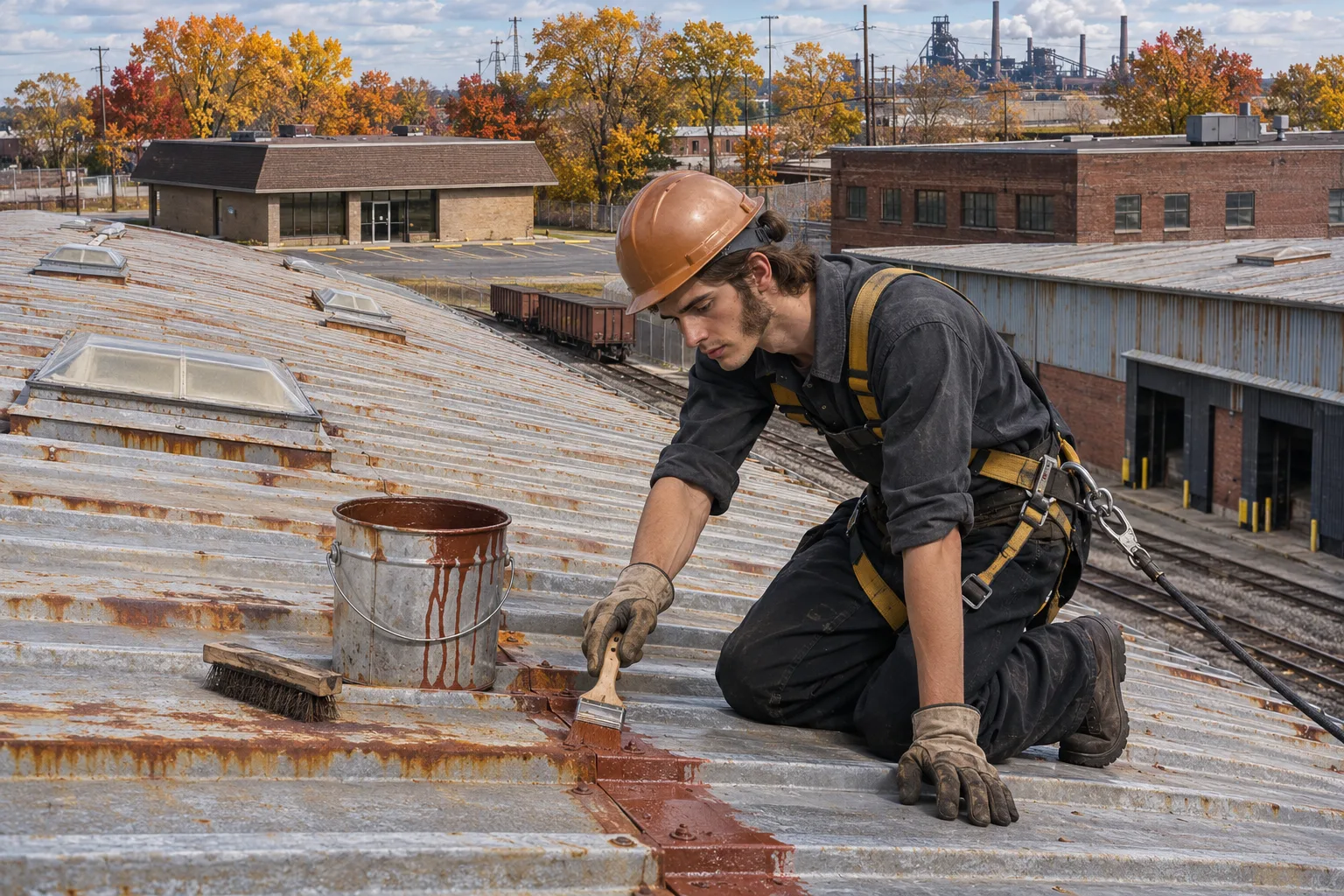
Industrial dust and oil hide rust and block adhesion. A degreasing wash, wire brushing or grinding to firm steel, and a rust-inhibiting primer come before any topcoat.
That is the most common leak source on Hammond steel roofs. Call, and we will check how many need replacing before anything is coated.
Steel roofs need more prep than coating. Most of the work happens before the first coat goes on.
We count loose and stripped screws section by section, open laps at the eaves and ridge, and tap rusted spots to see how deep the corrosion runs. Interior stains are traced to their source.
A pressure wash with a cleaner matched to the residue removes chalk, mill dust, and oil film. Coating will not hold to a dirty panel, so this step is never skipped.
Active rust is wire-brushed or ground to firm steel along laps, eaves, and curb bases. A rust-inhibiting primer follows quickly so bare steel never sits open overnight.
Failed screws come out and oversized fasteners with new washers go in. Every head, plus each side and end lap, gets sealant or reinforced fabric before the base coat.
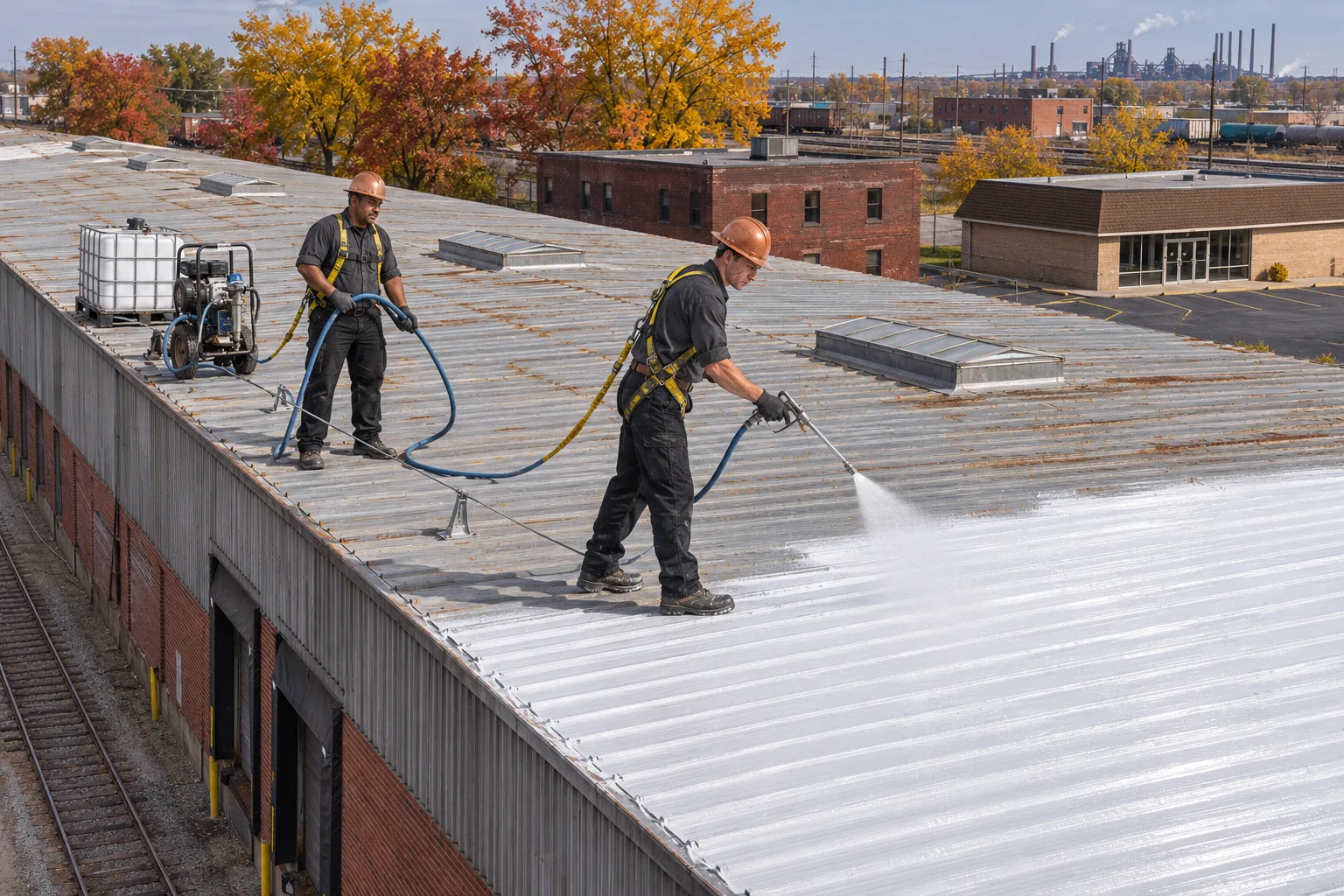
The base coat goes on first, then the topcoat to the mil thickness on the product sheet. Wet-mil gauges are used across the roof so thin spots are caught while the coating is still wet.
Steel roofs in the city are coated in more than one way. These four systems also go on metal, each for a different roof condition.
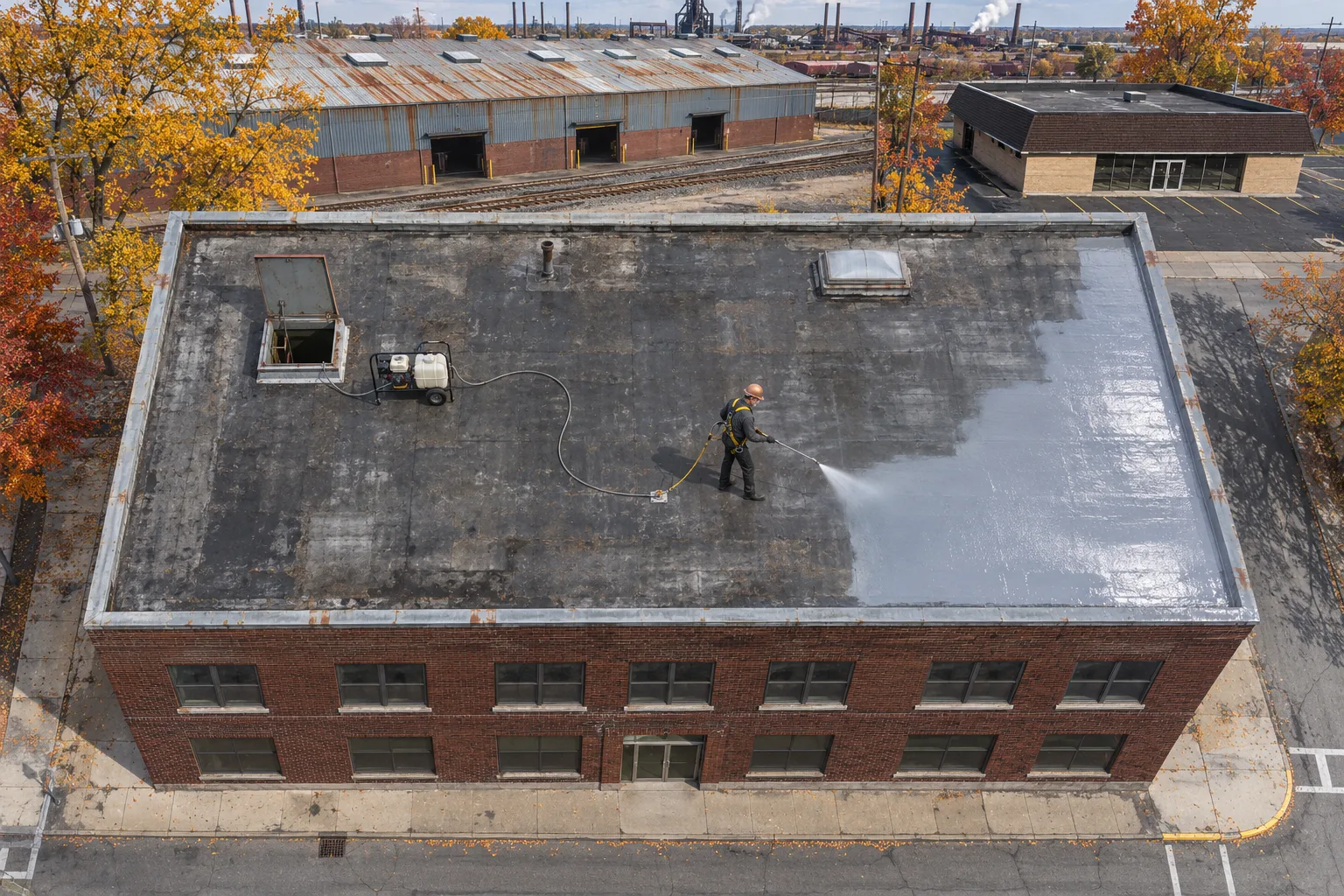
Where a metal roof flattens out and holds water near drains, silicone goes over the primed panels in those bays. It handles standing water that would wear down other coatings.
Hammond silicone roof coating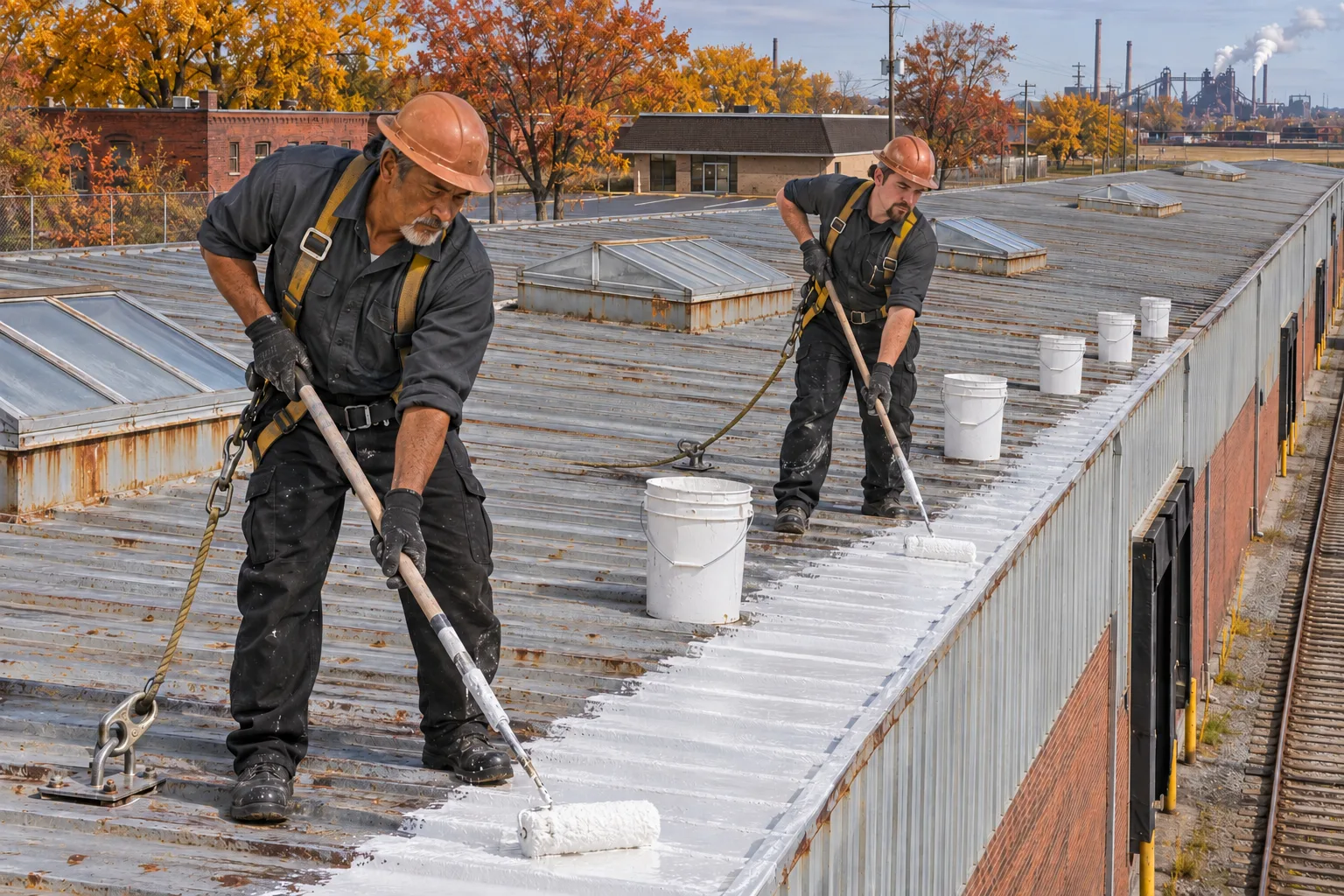
On steeper panels that drain quickly, acrylic gives a white, easy-to-recoat finish. It needs warm, dry weather to cure, which sets its season.
Hammond acrylic roof coating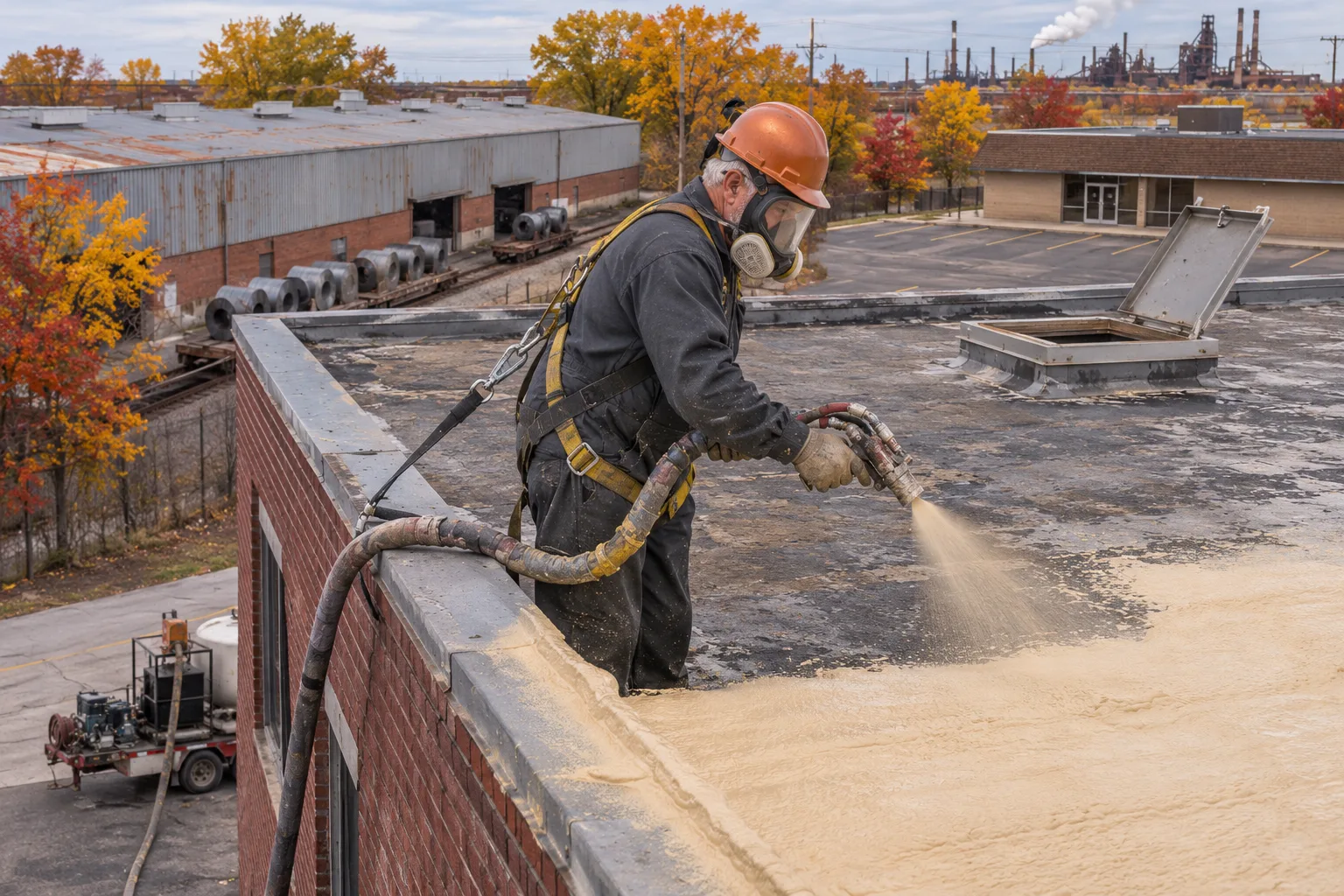
When the building loses heat through the roof, foam sprayed over the panels adds insulation and buries every screw and rib before its topcoat.
Hammond spray foam roofing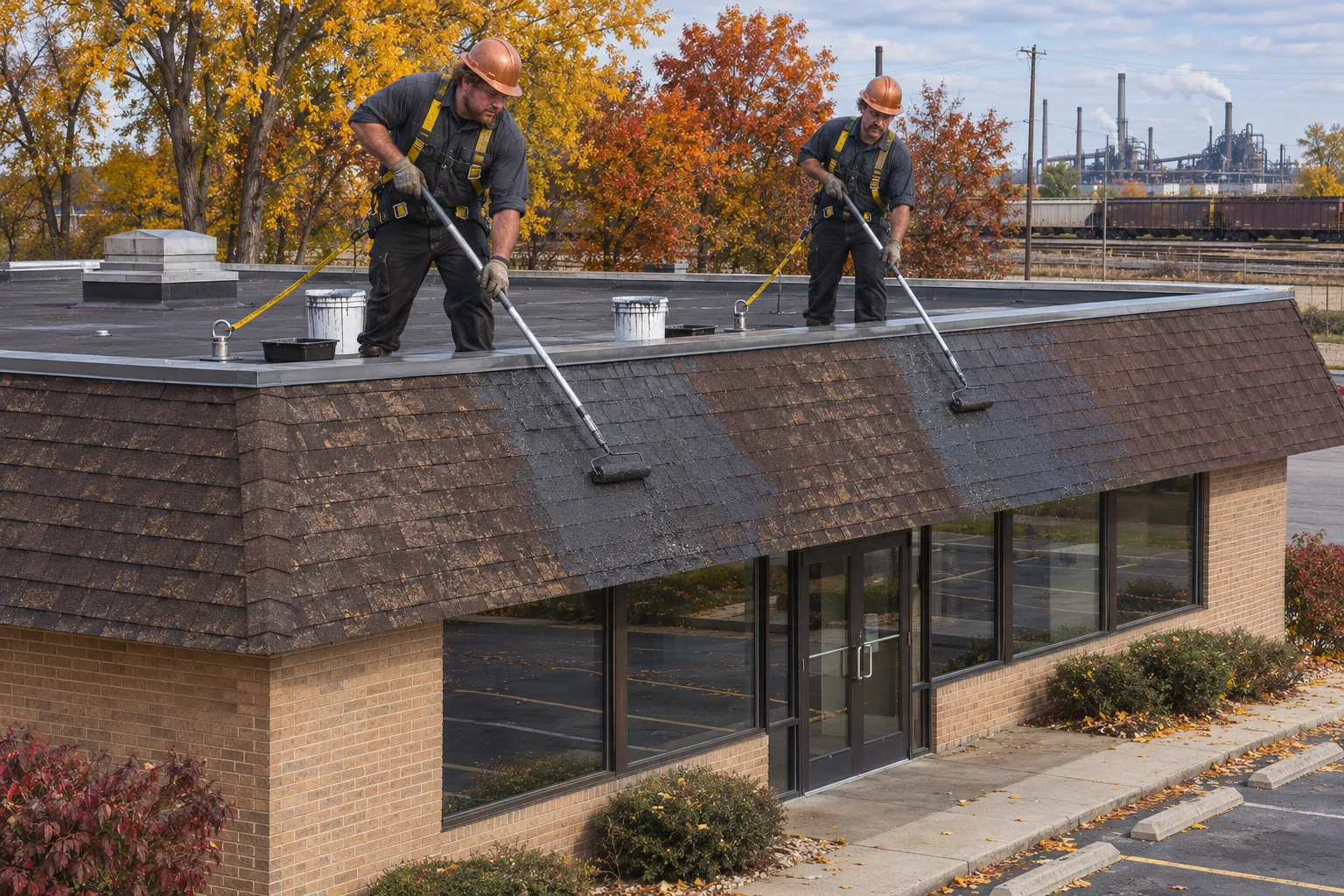
Some steel buildings have a shingled office or front addition. Those shingles get their own coating made for asphalt, matched at the joint with the metal.
Hammond shingle roof coatingWhat coating a steel roof does for the people who own, run, and use the building.
Answers about coating steel roofs on commercial buildings in Hammond.
Plan on about $2.50 to $4.00 per square foot to coat, against about $5 to $8 to replace. A roof with tight screws and light rust lands near the low end; heavy grinding, many replaced fasteners, extra primer, and hard access push it higher.
Screws are where steel roofs leak first. Washers dry out and screws back out as the panels move, so each one is tightened or replaced and capped before coating, giving the membrane a tight surface to bridge.
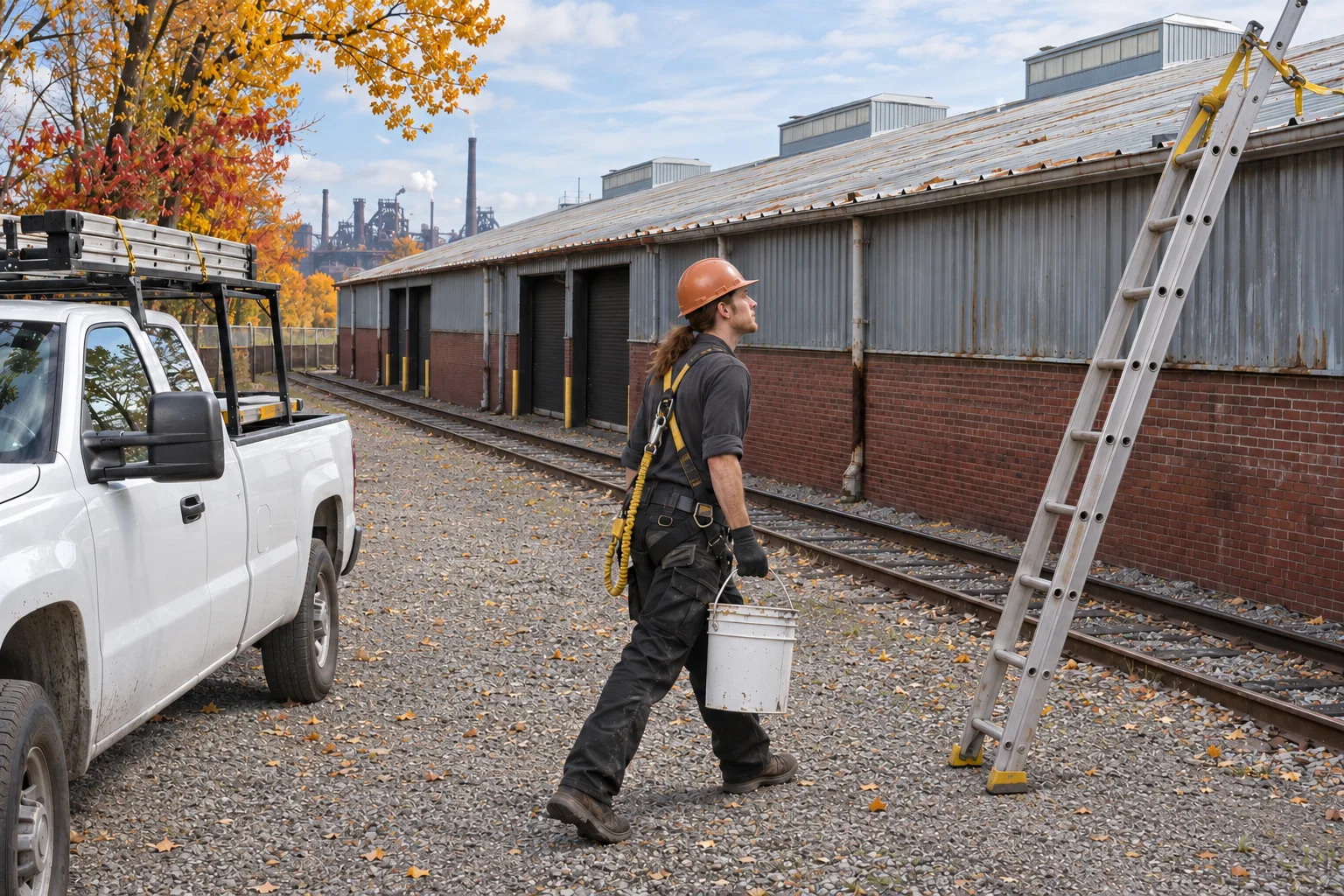
Yes, and those roofs are common candidates. Train vibration and daily heat cycles loosen screws faster, so fastener replacement, lap reinforcement, and edge rust treatment are a bigger part of the prep before the coating covers the field.
Residue removal comes first: a degreasing wash, then grinding or brushing active rust and priming it. A small coated patch is pulled once cured to confirm the bond before the rest of the roof is coated.
Over several winters it can. Water trapped in a lap freezes, expands, and pushes sealant loose, and panel movement keeps working the screws. Sealing the laps and screws, then coating, leaves meltwater far fewer ways in.
Dents alone rarely justify replacement. If the panels, laps, and screws hold after the storm, the damage is repaired and the roof is coated; if an insurance claim is open, document the damage before work starts.
Send the building address and a note on where it leaks. We will count the screws and laps that need work and price the full job.